

Economicspost
A Tale of Two Economies
How the modern financial system evolved from supporting the real economy to competing with it, and why restoring productive investment is essential for long-term prosperity.
452
An open-source project exploring how to build a modern public bank for today’s economy, creating a practical model that communities can adapt and build on together.

Public banks invest in public social infrastructure
The economy needs enormous investment in housing, infrastructure, energy, new businesses, and local development, but the cost of capital remains high and many of the projects communities need most are difficult to finance through conventional private markets. At the same time, governments, businesses, and households are paying more to borrow, which means more of the money available for investment is ultimately being absorbed by financing costs.
A public bank offers another way to approach that problem. Instead of relying entirely on private financial institutions to determine where capital goes, we can build financial infrastructure designed to keep more capital circulating within the communities and economies it serves.
The goal of this project is to develop an open-source model for public banking that communities can study, improve, adapt, and eventually implement themselves. Rather than designing a single institution behind closed doors, we can openly develop the governance structures, financial models, technology, legal frameworks, operating procedures, and implementation strategies needed to make public banking practical.
That does not necessarily mean starting by creating a new bank from scratch. We can explore partnerships with existing credit unions and community banks, new public lending institutions that operate through existing financial infrastructure, and eventually the possibility of establishing a fully chartered public bank. The project can compare these approaches and identify a path that is realistic under current economic and regulatory conditions.
The first implementation can become a working example for the larger project. What works can be documented and shared. What doesn't work can be improved. Over time, the goal is to create a practical blueprint that makes it easier for other communities to build public financial institutions of their own.
Public banking doesn't need to be a model that every community has to reinvent from the beginning. We can build the tools, knowledge, and infrastructure together and make them available for anyone to use.
Communities need significant investment in housing, infrastructure, energy, small businesses, and local development, yet financing many of these projects has become increasingly expensive. When the cost of capital rises, projects that could create real long-term value become harder to build, while more public and private money is diverted toward interest and financing costs.
A public bank gives us a way to rethink that relationship. Instead of treating finance primarily as a way to extract returns from an economy, we can use it as infrastructure for investing in one. Public capital can support productive projects, generate returns, and recycle those returns into future investment.
The opportunity today is to combine that idea with modern technology and existing financial infrastructure. We may not need to recreate a traditional bank from the ground up. A new public banking model could potentially begin through partnerships with credit unions, community banks, public agencies, or other existing institutions and grow from there.
A public bank should focus on investments that strengthen the economy it serves. That could include financing housing, infrastructure, small businesses, clean energy, local development, and projects that provide long-term public value but may be poorly served by conventional financing.
It should also work alongside existing financial institutions rather than unnecessarily replacing them. Credit unions and community banks already have relationships, infrastructure, and experience that could make them natural partners. A public bank could provide additional capital, share risk, or help finance projects that would otherwise be difficult for smaller institutions to support.
Most importantly, the bank should be financially sustainable. Public benefit and financial discipline do not have to be opposing goals. Capital that is invested responsibly can generate returns, preserve public resources, and be reinvested into the next generation of projects.
One possible starting point is partnering with an existing credit union rather than creating a new financial institution from scratch. A credit union already has much of the difficult infrastructure in place, including regulatory oversight, deposit accounts, lending systems, compliance, and established relationships with the financial system.
The public bank project could build alongside that infrastructure, developing new funding sources and lending programs focused on public priorities such as housing, local businesses, infrastructure, and community development. The credit union could handle regulated banking operations while the project focuses on where capital should be directed and how the model should be governed.
This approach could give us a practical way to begin experimenting with public banking on a smaller scale. If it works, the partnership itself could become part of the open-source model, giving other communities a path to create similar programs with credit unions in their own regions.
Another approach is to begin with a public or community investment fund rather than a bank. The fund could raise capital and invest it into specific projects such as housing, small businesses, clean energy, infrastructure, or local development without taking deposits or providing traditional banking services.
Starting with a fund would allow the project to focus on one of the most important functions of a public bank: directing capital toward productive investments. It could also give us a way to test how projects are selected, how risk is managed, how returns are reinvested, and how investment decisions can remain accountable to the community.
Over time, the fund could establish a track record and build the financial and organizational infrastructure needed for something larger. It could remain an independent investment vehicle, partner with existing financial institutions, or eventually become part of a fully chartered public bank.
The most direct approach would be to create a new public bank from the ground up. This would give the project greater control over how the institution is governed, how capital is deployed, what services it provides, and how its financial returns are reinvested.
A new bank would also be the most difficult path. It would require significant initial capital, regulatory approval, experienced management, compliance systems, risk controls, and the operational infrastructure needed to safely manage public money. Those requirements make it unlikely to be the easiest place to start.
It could, however, remain the long-term goal. The earlier approaches could allow us to develop the model, build partnerships, establish a track record, and learn how a public financial institution should operate before pursuing a charter. If we eventually create a new public bank, much of the groundwork would already have been tested in practice.
The goal is not just to create one public bank. It is to develop a model that other communities can understand, adapt, and build themselves.
As the project develops, we can openly document the research, financial models, governance structures, technology, partnership agreements, operating procedures, and lessons learned along the way. Some parts of a financial institution will necessarily remain private for security, regulatory, and customer privacy reasons, but the underlying blueprint can remain open.
If one approach works, another community should not have to start from zero. They should be able to take what we have built, adapt it to their local laws and needs, improve it, and contribute those improvements back to the project.
Over time, this could become a shared toolkit for building public financial institutions rather than a blueprint for just one bank.
This project is still at the beginning. The next step is to research these different approaches, understand the legal and financial requirements, talk with existing institutions, and start developing a model that could actually be tested.
There is room for people with experience in banking, credit unions, finance, law, government, software, community development, housing, and economics, as well as anyone interested in researching and developing the idea.
The work can happen openly through Dream Cloud. We can break the larger idea into smaller problems, share what we learn, and gradually turn the concept into something that can be tested in the real world.
How the modern financial system evolved from supporting the real economy to competing with it, and why restoring productive investment is essential for long-term prosperity.
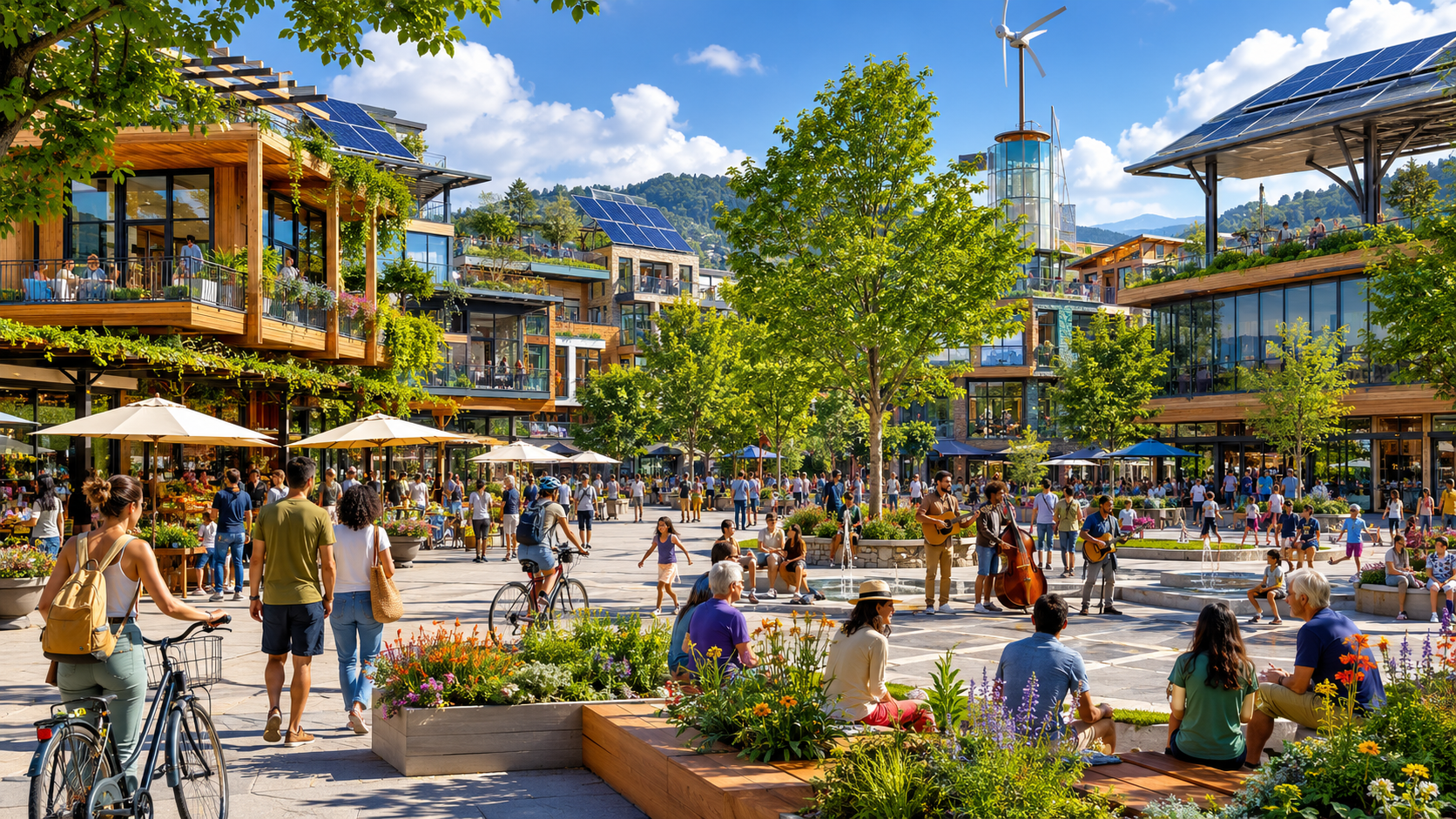
Humanism is a post capitalist economic system that places the value of human life above materialistic priorities such as capital, property, and the accumulation of wealth

A fully open-source AI robot featuring natural conversation, autonomous navigation, computer vision, and a modular 3D-printed body.
An all-in-one platform for managing properties, direct bookings, and guest experiences.