

Economicspost
Building Public Wealth
Exploring how public banks, investment funds, and public development can expand long-term investment while building public wealth.
220
Humanism is a post capitalist economic system that places the value of human life above materialistic priorities such as capital, property, and the accumulation of wealth

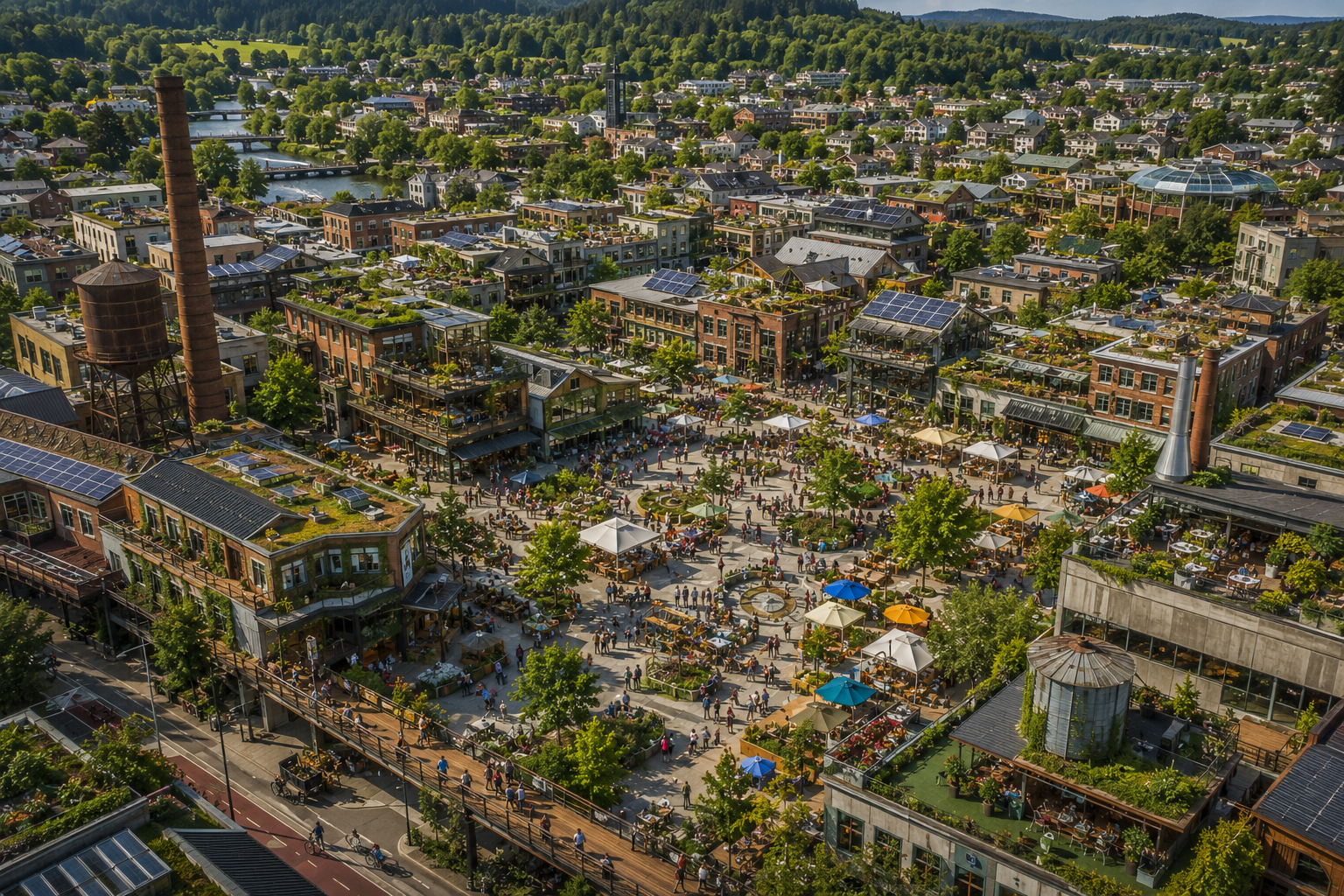
Humanist village market center designed for walkable social interaction
Humanism is a philosophy centered on the value, dignity, and potential of every human being. It begins with the belief that every person possesses inherent worth and that the institutions we create should exist to improve human life. Throughout history, humanism has encouraged reason, compassion, education, scientific inquiry, and cooperation as the foundation for building healthier and more prosperous societies.
Today, we believe humanism can evolve beyond its traditional role as an ethical philosophy. Modern civilization faces challenges that extend far beyond individual morality. Healthcare, housing, education, technology, business, government, and the economy all shape the quality of human life. If these institutions influence how people live, work, and thrive, then they should also be guided by the same human-centered principles.
Humanism is therefore more than a personal philosophy. It is a post-capitalist economic framework that places the well-being of humanity above the accumulation of capital, property, or wealth. Wealth remains an essential tool for creating prosperity and innovation, but it is not the ultimate purpose of civilization. The success of an economy should be measured not only by financial growth, but by whether people are healthier, freer, more secure, better educated, and able to reach their full potential.
At its core, humanism asks a simple question: What best serves humanity? Rather than beginning with ideological commitments to a particular economic or political system, humanism begins with people. Every law, institution, business, and public policy should ultimately be evaluated by its ability to improve human life, strengthen communities, and create a future in which every person has the opportunity to flourish.

Humanism is one of the world's oldest philosophical traditions, with roots that extend back to the civilizations of ancient Greece and Rome. Early philosophers emphasized the importance of reason, ethics, education, and civic responsibility, believing that human beings possessed the ability to improve themselves and society through knowledge and thoughtful action. Rather than accepting ideas solely through tradition or authority, they encouraged critical thinking, open inquiry, and the pursuit of wisdom as essential parts of a flourishing civilization.
During the Renaissance, humanism experienced a remarkable revival as scholars rediscovered and studied the literature, philosophy, and history of the classical world. This renewed focus on human potential helped inspire extraordinary advances in art, science, architecture, education, and political thought. Renaissance humanists believed that education and intellectual curiosity could cultivate both individual character and the advancement of society, helping lay the foundation for many of the cultural and scientific achievements that followed.
The ideas of humanism continued to develop during the Enlightenment, a period that emphasized reason, individual liberty, scientific discovery, and universal human rights. These principles influenced many of the political and social institutions that exist today, including constitutional government, freedom of expression, public education, and the growing recognition that all people possess inherent dignity and deserve equal treatment under the law. While these ideas emerged alongside many other philosophical traditions, humanism became an important voice in shaping modern discussions about ethics, justice, and human rights.
Today, humanism is recognized around the world as a philosophy centered on human dignity, compassion, reason, and the pursuit of human flourishing. Although different organizations and individuals may interpret humanism in different ways, its central message has remained remarkably consistent throughout history: every human being possesses inherent worth, and society should strive to create the conditions that allow people to live healthier, freer, more meaningful lives.
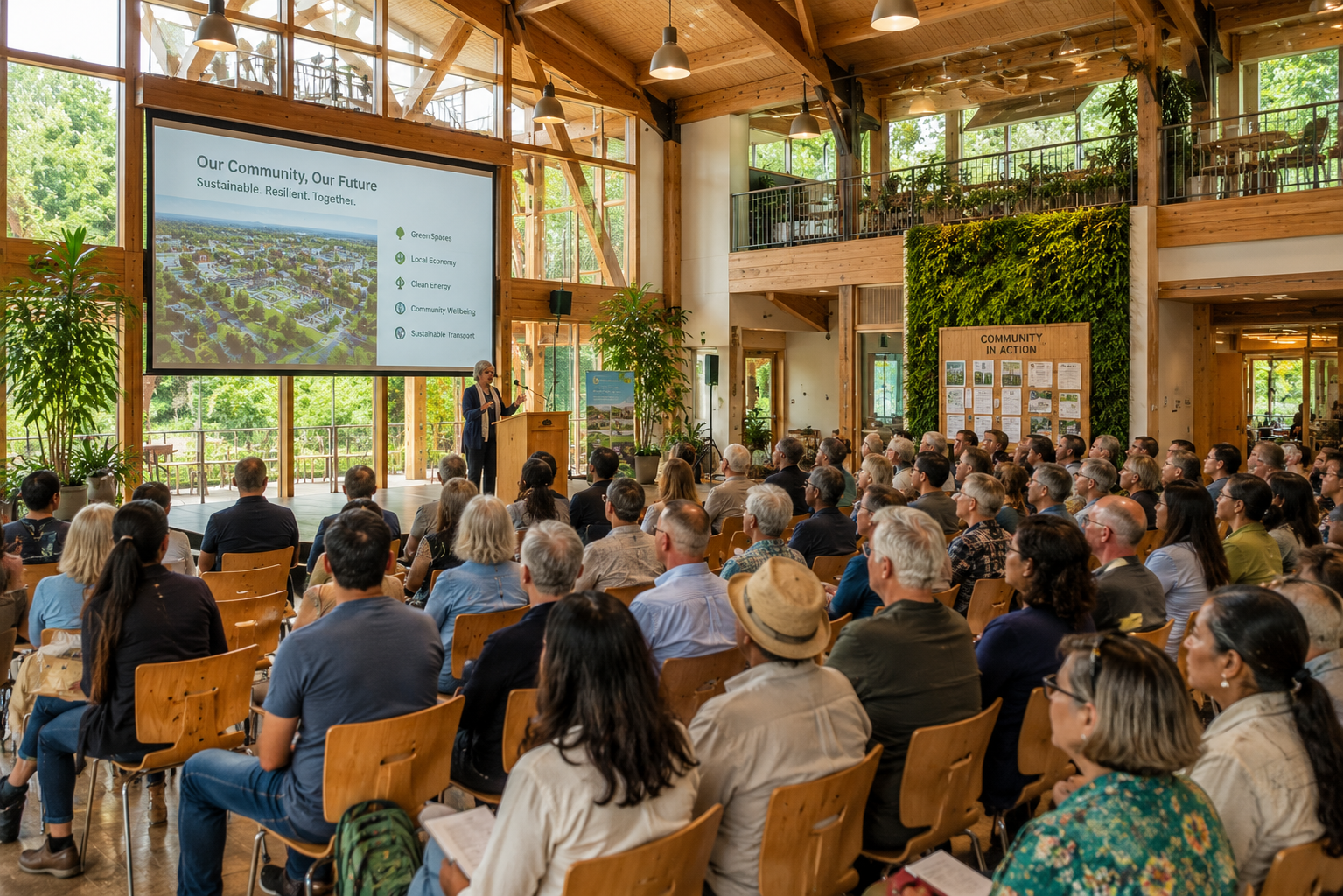
Every successful civilization is built upon a shared set of values. While people may differ in culture, religion, political beliefs, or personal backgrounds, societies function best when there is broad agreement on fundamental principles such as honesty, compassion, fairness, responsibility, and respect for one another. These shared values create trust between neighbors, businesses, institutions, and governments, making cooperation possible on a large scale.
Modern society has become increasingly divided by political parties, economic ideologies, religious differences, and cultural disagreements. While diversity of thought is healthy, the absence of a common ethical foundation can make it more difficult to solve problems that affect everyone. Challenges such as healthcare, housing, education, technological change, environmental stewardship, and economic opportunity require cooperation across many different groups. A society that cannot agree on its most basic values will often struggle to build lasting solutions.
Humanism offers a foundation that begins not with political ideology or economic doctrine, but with our shared humanity. It recognizes that every person possesses inherent dignity and that the institutions we build should ultimately exist to improve human life. By establishing a common philosophy centered on human well-being, compassion, reason, and cooperation, humanism provides a framework through which people with different beliefs can work together toward the shared goal of building a healthier, more prosperous, and more peaceful civilization.
Over the past several centuries, capitalism has helped drive unprecedented economic growth, technological innovation, and improvements in living standards. Competitive markets have encouraged entrepreneurship, rewarded innovation, and created extraordinary wealth across much of the world. Many of the products, services, and technologies that shape modern life were made possible by the incentives created through private enterprise and investment. These achievements should be recognized as important milestones in human progress.
At the same time, economic success has increasingly become measured by the accumulation of capital rather than by improvements in human well-being. Financial markets, corporate profits, and economic output often receive greater attention than the health, security, education, and quality of life of the people those systems are meant to serve. While wealth is an essential tool for building prosperous societies, it is not an end in itself. An economy should exist to improve human lives, not simply to maximize financial returns.
Humanism proposes a post-capitalist economic framework that builds upon the strengths of market economies while redefining their ultimate purpose. Rather than asking only how much wealth an economy creates, humanism asks whether that wealth contributes to healthier families, stronger communities, greater opportunity, scientific progress, and a higher quality of life. Economic systems should be judged not only by their efficiency, but by their ability to help humanity flourish.
Humanism begins with a simple principle: the purpose of an economy is to serve humanity. Capital, property, markets, and financial institutions all play important roles in creating prosperity, but they are tools rather than the ultimate objective. The true purpose of economic activity is to improve the lives of people by creating opportunity, expanding knowledge, supporting innovation, and providing the resources necessary for individuals and communities to flourish.
Unlike traditional economic ideologies, humanism is not defined by a rigid commitment to either public or private ownership. Instead, it evaluates every institution according to how effectively it serves human well-being. In some cases, competitive private markets may produce the best outcomes. In others, public investment, nonprofit organizations, cooperatives, or community ownership may better serve society. Humanism does not begin with ideology—it begins with people.
This flexible approach allows societies to adapt as new challenges and opportunities emerge. Advances in technology, artificial intelligence, automation, medicine, and scientific discovery will continue to reshape civilization in ways previous generations could not have imagined. A humanist economy remains focused on the same guiding principle regardless of changing circumstances: every economic decision should ultimately be judged by its ability to improve human life and contribute to the long-term flourishing of humanity.
Every economic system must decide how it measures success. Traditional economic models often focus on indicators such as economic growth, corporate profits, stock market performance, or the accumulation of wealth. While these measurements provide valuable information, they do not fully capture whether people's lives are actually improving. An economy can grow while families struggle with housing costs, declining health, financial insecurity, or limited opportunity.
Humanism proposes a broader standard for measuring progress. A successful society is one in which people are healthier, better educated, financially secure, free to pursue meaningful lives, and able to contribute to their communities. Economic growth remains important, but it is valuable because of what it allows people to achieve—not because wealth itself is the ultimate objective.
Under a humanist framework, prosperity is measured by the flourishing of humanity. Every institution should ultimately be evaluated by its contribution to human well-being, whether through innovation, opportunity, education, healthcare, scientific advancement, environmental stewardship, or stronger communities. The greatest achievement of an economy is not the amount of wealth it creates, but the number of lives it improves.

Humanism is more than an economic or political philosophy. It is a way of thinking about how we treat one another in every aspect of life. Governments play an important role in shaping society, but they are only one of many institutions that influence human well-being. Families, businesses, schools, neighborhoods, charities, and communities all contribute to the kind of civilization we create together.
A humanist society encourages individuals and organizations to recognize the humanity of the people around them. Employers should value their employees, businesses should treat customers honestly, landlords should act responsibly toward their tenants, and public officials should serve with integrity. Every economic relationship involves another human being, and every decision carries consequences that extend beyond financial transactions alone.
By applying humanist principles throughout society, ethics become more than personal beliefs—they become the foundation of everyday life. Humanism encourages people to build trust, act with compassion, accept responsibility for their actions, and consider how their choices affect others. In this way, the philosophy extends beyond government policy and becomes a guide for building stronger relationships, healthier communities, and a more humane civilization.
Humanism recognizes that every institution in society exists to serve humanity. Businesses create goods and services, schools educate future generations, hospitals improve health, governments protect rights and provide public services, and financial institutions help allocate resources throughout the economy. Each institution plays a different role, but they all share the same fundamental purpose: improving the well-being of the people they serve.
A humanist society evaluates every institution according to how effectively it fulfills that purpose. Healthcare should promote health rather than simply treat illness. Education should develop human potential and lifelong learning. Businesses should create value while treating employees and customers with dignity. Housing should provide safe and stable communities. Financial institutions should support productive investment and long-term prosperity. Governments should protect individual rights while building the public infrastructure necessary for society to thrive.
Together, these institutions form the foundation of civilization. Humanism does not seek to eliminate them, but to align them around a common purpose. When every institution is guided by the principle of improving human life, they become partners in building a healthier, more prosperous, more innovative, and more peaceful society. The following sections of this project explore each of these institutions in greater detail and examine how they can better serve humanity in the twenty-first century.
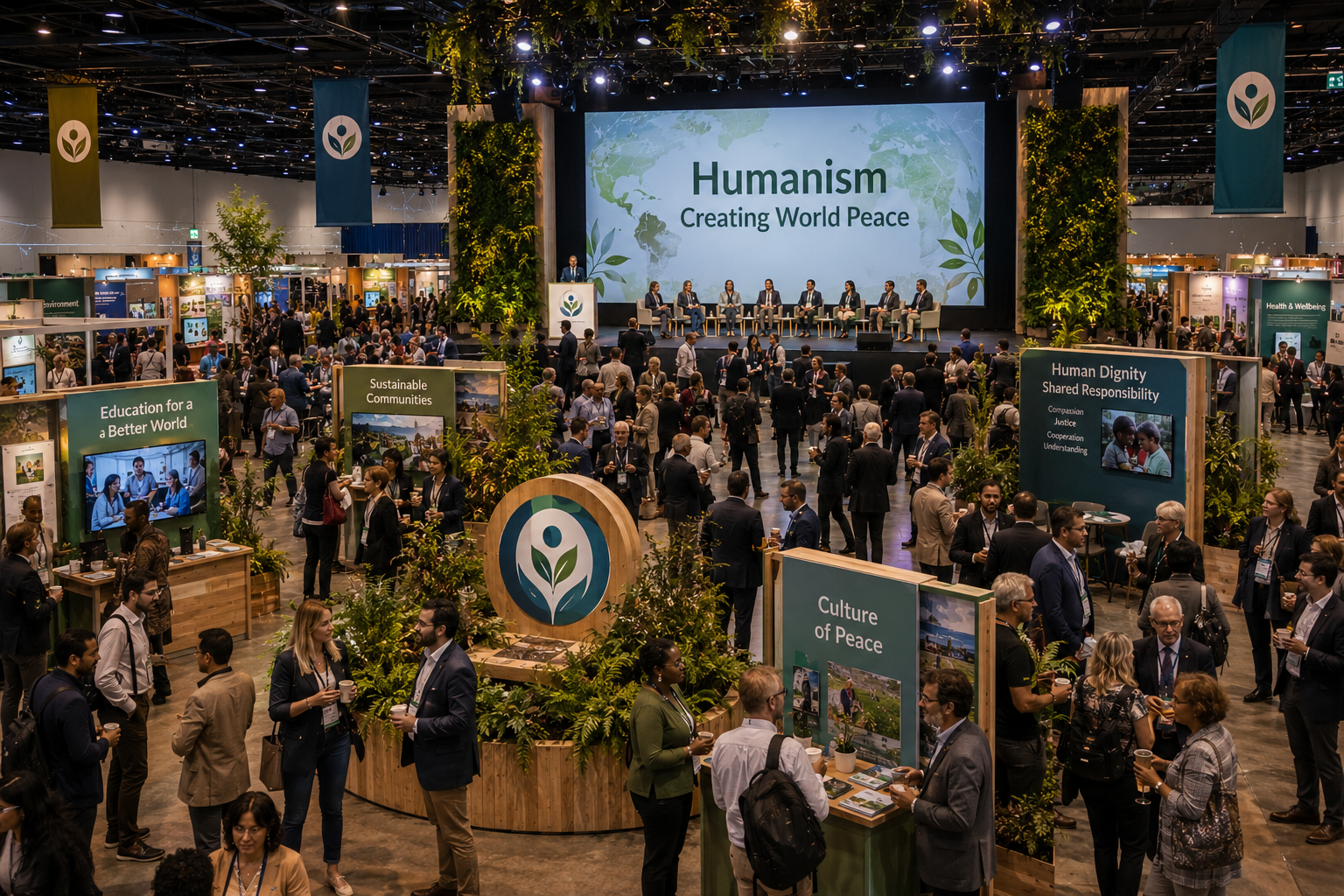
For thousands of years, war has shaped the course of human history. It has destroyed civilizations, displaced millions of people, consumed vast amounts of wealth, and claimed countless lives. While nations have often gone to war over territory, resources, security, political power, or ideology, the consequences are ultimately borne by ordinary people. Every war represents a failure to resolve conflict through peaceful means and a reminder of the enormous human cost of violence.
Humanism proposes a different path forward by placing the value of human life above political, economic, or ideological interests. No nation, institution, or ideology should value victory more highly than the lives of the people affected by war. Humanism encourages diplomacy, international cooperation, economic partnership, cultural exchange, and peaceful conflict resolution whenever possible. The objective is not simply to avoid war, but to build relationships between nations that make war increasingly unnecessary.
Achieving lasting peace will not happen overnight, but it begins with a shared commitment to humanity itself. As more people and institutions adopt the principle that every human life possesses equal worth, the incentives that have driven conflict throughout history can gradually be replaced by cooperation and mutual prosperity. Humanism offers a long-term vision in which the success of civilization is measured not by military conquest or geopolitical dominance, but by humanity's ability to live together in peace.
Humanism is more than a philosophy of the present. It is a vision for the future of civilization. As humanity enters an era defined by artificial intelligence, robotics, biotechnology, space exploration, and unprecedented global connectivity, the decisions we make today will shape the lives of generations to come. These advances have the potential to improve billions of lives, but only if they remain guided by a commitment to human dignity, well-being, and the common good.
The future of humanism is the continued expansion of its principles into every institution that shapes society. By placing human flourishing at the center of economics, government, business, education, healthcare, science, and international cooperation, we can begin building a civilization that measures its success by the lives it improves rather than the wealth it accumulates. Humanism provides a common foundation upon which people from every nation, culture, and background can work together toward a shared future.
The work of building that future belongs to all of us. Every generation inherits the responsibility to improve the world it leaves behind, and every individual has the opportunity to contribute to that progress. Humanism is an invitation to place humanity first, to build institutions that serve people, and to work together toward a more peaceful, prosperous, and compassionate civilization. The future is not something we inherit, but rather something we create together.
Exploring how public banks, investment funds, and public development can expand long-term investment while building public wealth.

How the modern financial system evolved from supporting the real economy to competing with it, and why restoring productive investment is essential for long-term prosperity.

A fully open-source AI robot featuring natural conversation, autonomous navigation, computer vision, and a modular 3D-printed body.

An all-in-one platform for managing properties, direct bookings, and guest experiences.