Exotec Skypod: Robotic Automated Storage and Retrieval System
Explore how Exotec combines autonomous mobile robots, high-density storage racks, and intelligent warehouse software to automate inventory storage, retrieval, and order fulfillment.
Explore how Symbotic combines autonomous mobile robots, high-density storage structures, and intelligent warehouse software to automate inventory storage, retrieval, and distribution.

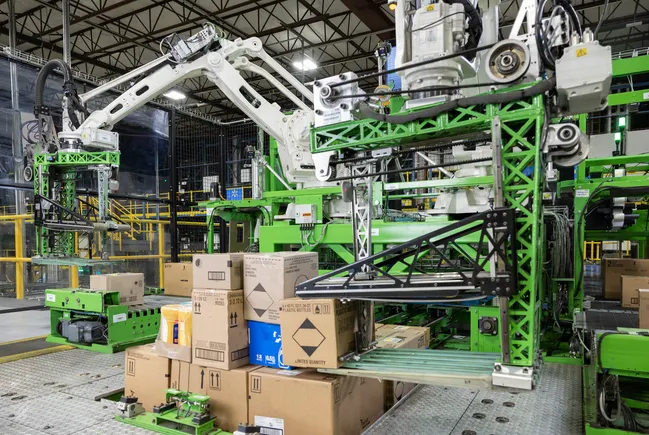
Symbotic automated warehouse system for high-density inventory storage and order fulfillment.
Symbotic is an American warehouse automation company headquartered in Wilmington, Massachusetts, specializing in autonomous robotics and intelligent material handling systems. Its integrated warehouse automation platform is designed for large distribution centers, retailers, wholesalers, and logistics operations that handle substantial volumes of packaged goods. The system combines autonomous mobile robots called SymBots, high-density storage structures, robotic depalletizing and palletizing equipment, and proprietary software that coordinates inventory movement throughout the facility.
Unlike conventional automated storage and retrieval systems that primarily move entire pallets or standardized totes, Symbotic's distribution system handles individual cases in their original packaging. Incoming pallets are broken down into individual cartons, which are identified, scanned, and transferred into a dense automated storage structure. Autonomous robots transport these cases to designated storage positions and retrieve them when required for order fulfillment. This approach allows warehouses to organize inventory at the case level, improving flexibility when assembling outbound orders containing multiple products.
Traditional distribution centers often store products on pallets within selective racking, requiring forklift operators or automated lifting equipment to retrieve inventory from designated storage locations. Although this arrangement supports large inventory volumes, it can involve significant travel distances and repeated pallet handling. Conventional automated storage systems improve efficiency through mechanized retrieval, but many still rely on pallets, trays, or containers as their primary storage units.
Symbotic approaches storage differently by separating incoming pallet loads into individual cases and allowing autonomous robots to organize them dynamically within a high-density structure. Products are stored directly in their original cartons without requiring standardized storage totes for full-case operations. The system can accommodate cases of different dimensions, materials, and packaging characteristics within the same automated environment. This flexibility allows inventory to be positioned and repositioned according to operational demand, reducing unnecessary handling while supporting rapid retrieval for outbound distribution.

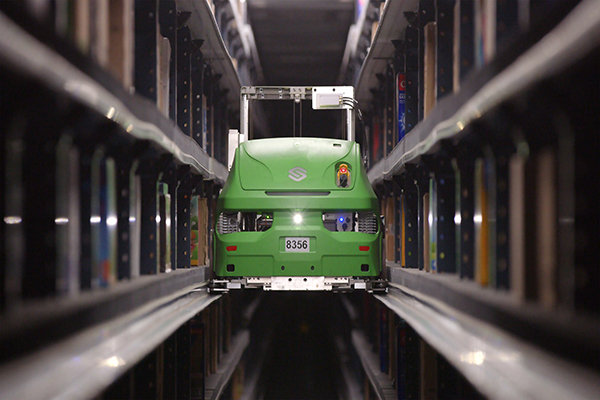
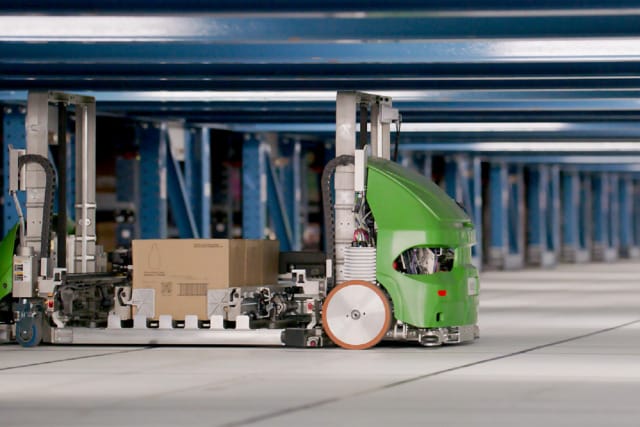
At the center of Symbotic's automated storage system are its SymBots, autonomous mobile robots designed to transport individual cases through a multi-level storage structure. Each SymBot can handle loads weighing up to 60 pounds, with supported payload dimensions of up to 24 by 24 by 16.2 inches. The robots navigate through the storage environment, collecting cases from transfer points and placing them into designated storage positions. When inventory is requested, they retrieve the appropriate cases and deliver them to outbound processing equipment. Symbotic reports that its robots can travel at speeds exceeding 20 miles per hour within the system.
The storage structure is designed to accommodate closely packed inventory while providing access routes for the autonomous robots. Symbotic reports that its automated storage technology can provide approximately 30–60% greater storage density than traditional storage arrangements, depending on the application. In August 2025, the company introduced a next-generation storage structure designed to further increase capacity, reduce equipment travel distances, and simplify installation. This architecture combines compact storage locations with robotic mobility, allowing the system to maintain high inventory density while continuously processing incoming and outgoing cases.
Symbotic's warehouse automation platform is controlled by proprietary AI-powered software that coordinates the movement of hundreds of autonomous robots and other material handling machines. The software manages inventory locations, robot routing, storage assignments, and order fulfillment sequences. Rather than treating each robot as an independent machine, the system coordinates their movements through a centralized control architecture. This allows robots to share the storage environment while continuously responding to changing inventory requirements and outbound order priorities.
During receiving, incoming pallets are delivered to robotic processing cells, where individual cases are separated, oriented, and scanned before entering automated storage. The software identifies each case and assigns it a storage location based on inventory and operational requirements. When orders are received, the system determines which cases must be retrieved and coordinates robot movements to deliver them in the appropriate sequence. Outbound robotic palletizing cells then assemble mixed-product pallets according to shipment requirements. This integration connects receiving, storage, retrieval, and pallet preparation through a continuous automated workflow.

Symbotic's automation technology is particularly suited to large retail distribution centers, grocery operations, wholesale facilities, and other environments that manage extensive product inventories. These facilities frequently receive full pallets of merchandise but must distribute smaller quantities of different products to individual stores or customers. By converting incoming pallet loads into independently managed cases, the system allows inventory to be stored and retrieved according to specific order requirements rather than the original arrangement of incoming shipments.
The technology is deployed in major distribution operations, including facilities serving Walmart and other large retailers. Symbotic's automated storage structure provides a central inventory buffer that connects receiving operations with outbound order fulfillment. Cases can be stored in dense configurations and retrieved in sequences that support efficient pallet building and store replenishment. The company's BreakPack technology also extends its capabilities to smaller quantities of merchandise, allowing facilities to manage mixed goods and less-than-full-case orders alongside conventional case distribution.
Symbotic's automated storage and retrieval technology is designed to improve warehouse efficiency by increasing storage density, reducing repetitive material handling, and accelerating inventory retrieval. The combination of compact storage structures and high-speed autonomous robots allows facilities to process large volumes of cases without requiring conventional forklift aisles throughout the automated storage area. The company reports that its integrated distribution solution can reduce storage footprint requirements by up to 60% in suitable installations, although actual results depend on warehouse configuration, inventory characteristics, and system design.
Beyond storage capacity, Symbotic connects automated retrieval directly to intelligent outbound pallet building. Its software organizes cases according to product characteristics, shipment requirements, and store replenishment needs, allowing robotic palletizing equipment to construct mixed-product pallets in a planned sequence. This can improve trailer utilization, reduce product handling during store deliveries, and simplify inventory replenishment. By integrating autonomous case transportation, high-density storage, inventory management, and robotic order preparation, Symbotic provides a comprehensive warehouse automation platform that extends beyond traditional automated storage and retrieval equipment.

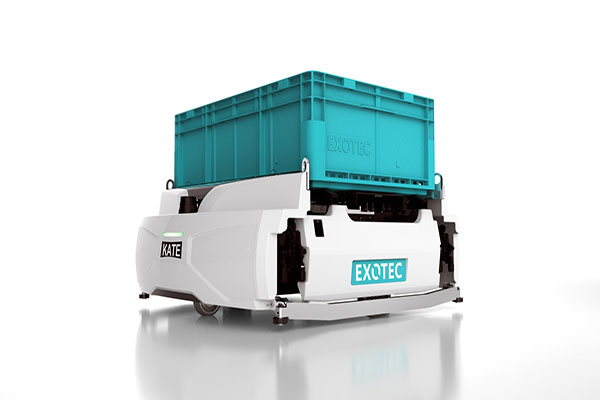
Explore how Exotec combines autonomous mobile robots, high-density storage racks, and intelligent warehouse software to automate inventory storage, retrieval, and order fulfillment.

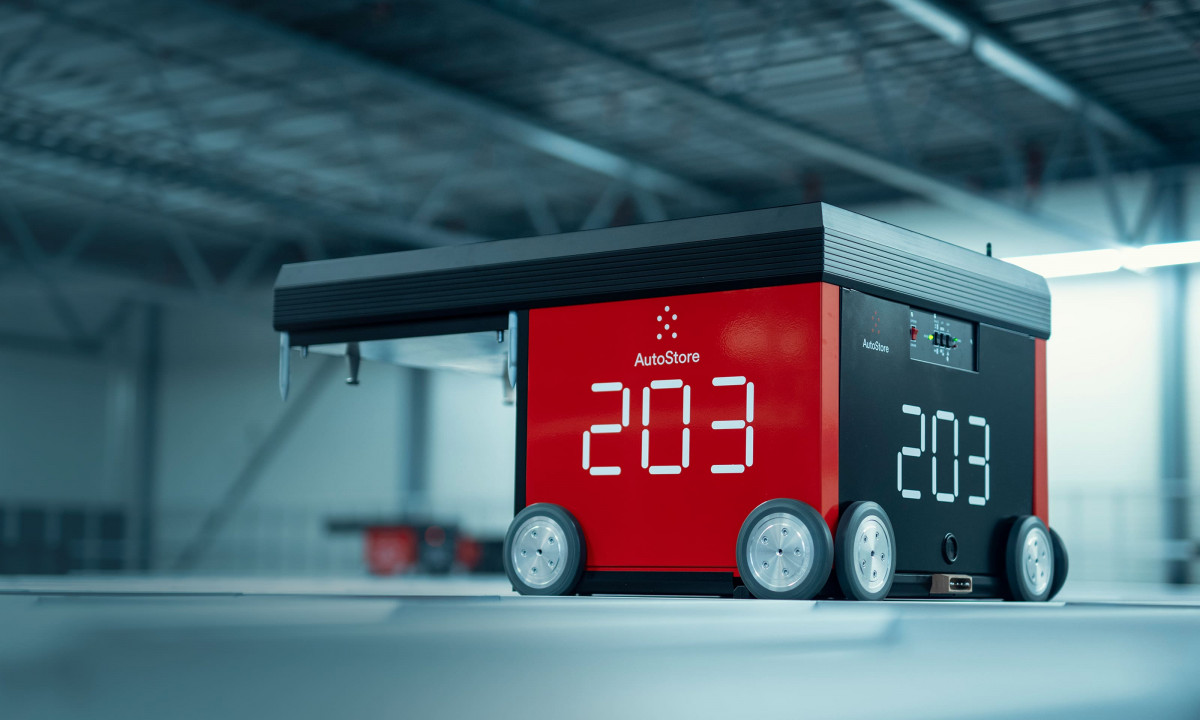
Explore how AutoStore combines high-density cube storage, autonomous robots, and intelligent warehouse software to automate inventory storage, retrieval, and order fulfillment.

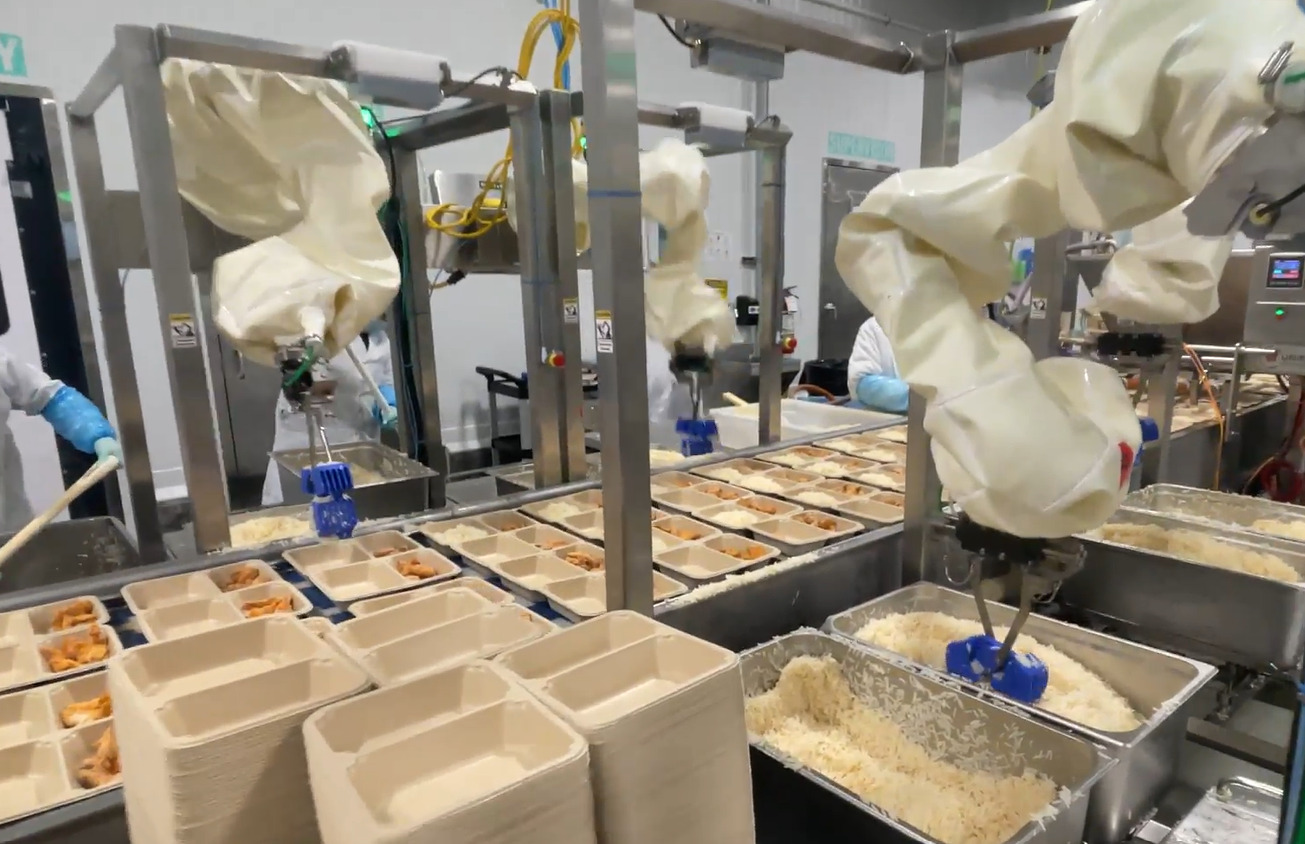
Chef Robotics uses AI-powered robotic systems to automate food portioning and assembly, helping food manufacturers increase production, reduce labor costs, and improve consistency across high-volume operations.

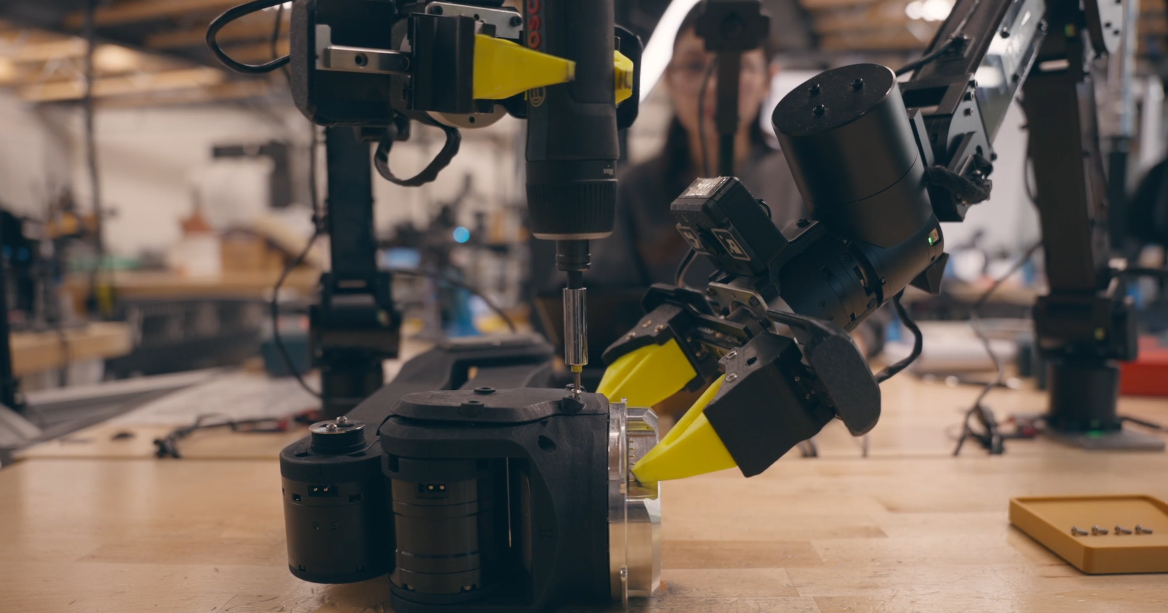
New reinforcement learning research from Physical Intelligence shows how robots can improve precise manipulation skills using minutes or hours of real-world experience.

An exciting head-to-head competition where humanoid robots tackle real-world challenges, showcasing the latest advances in robotics, artificial intelligence, and autonomous technology.

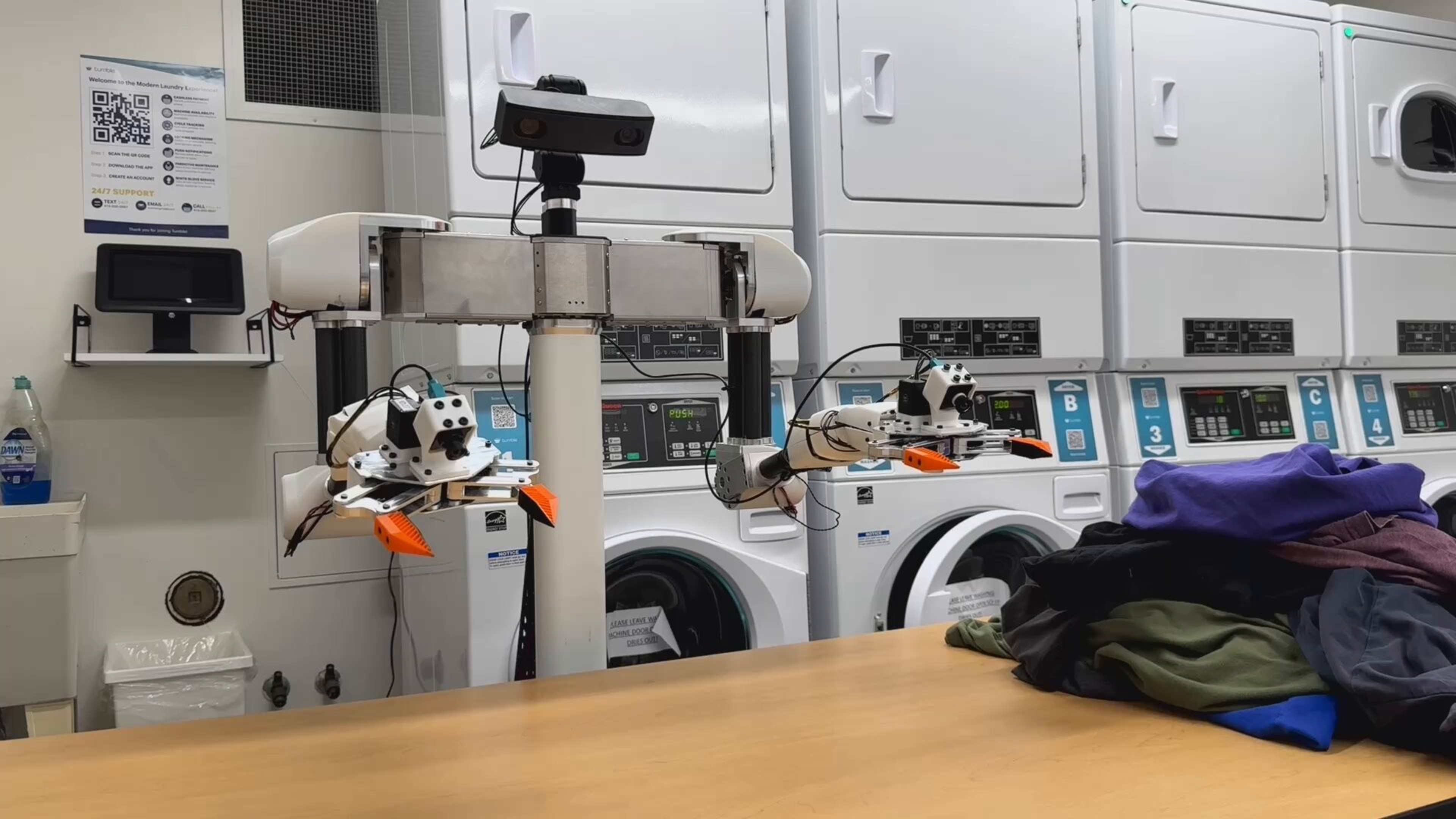
Creating real-world deployment opportunities where robots can perform practical tasks and generate valuable training data for physical AI.