Dream Cloud
ProductRoboticsMobile

Brightpick: Intelligent Warehouse Automation Systems

Explore how Brightpick combines autonomous mobile robots, robotic picking, and intelligent storage systems to automate warehouse operations and order fulfillment.

Brightpick: Intelligent Warehouse Automation Systems

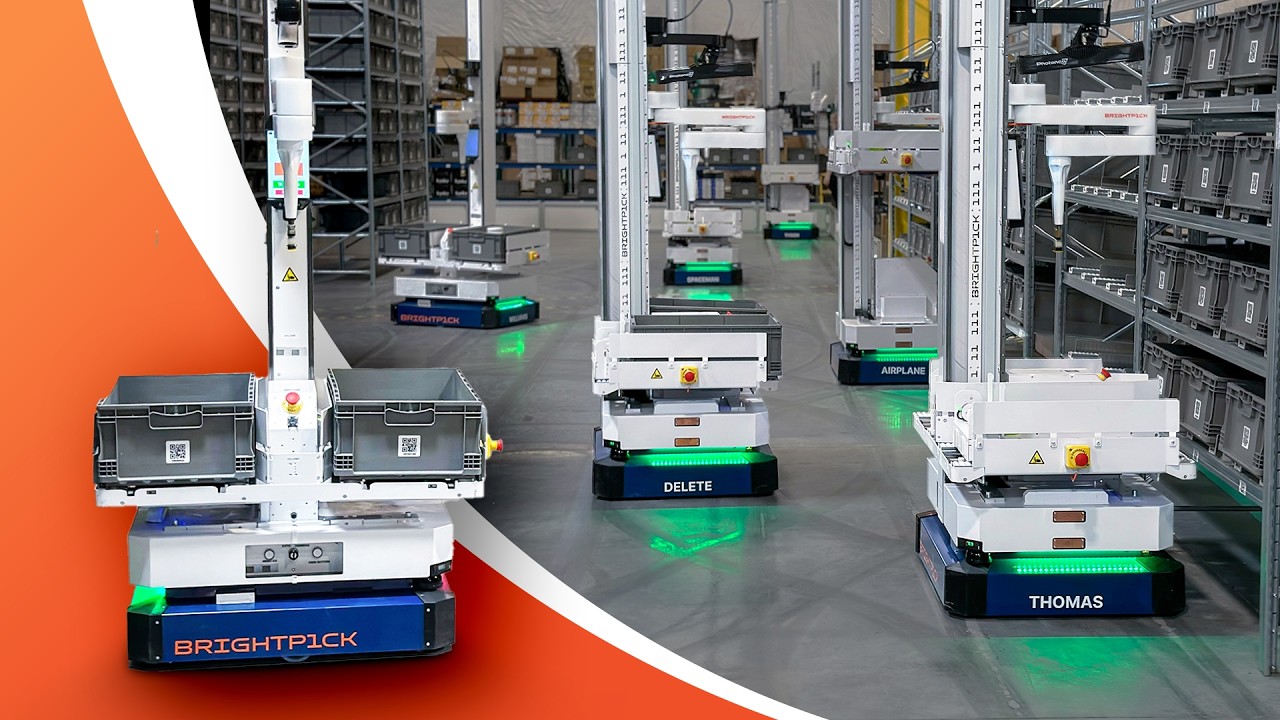
Brightpick autopickers are transforming warehouse automation.

DDream CloudOct 13, 2026United States, North America

Introducing Brightpick

Brightpick is a warehouse automation company developing intelligent robotic systems for order fulfillment and inventory handling. Headquartered in Austin, Texas, with European operations, the company focuses on reducing manual warehouse labor through autonomous mobile robots, robotic picking, and software-driven inventory management. Its technology is designed for e-commerce businesses, third-party logistics providers, retailers, and distributors looking to improve fulfillment efficiency without relying entirely on conventional warehouse automation infrastructure.

Unlike traditional systems that transport inventory to human picking stations, Brightpick incorporates robotic item picking directly into its fulfillment solutions. Its product portfolio includes Autopicker, a mobile robot capable of retrieving and picking products; Giraffe, a complementary robot designed to access higher storage levels; and Gridpicker, a grid-based automated fulfillment system. These technologies offer different approaches to balancing storage capacity, picking performance, deployment requirements, and investment costs.

A New Approach to Automated Fulfillment

Traditional warehouse automation often relies on fixed conveyors, shuttle systems, or automated storage and retrieval systems that transport inventory between storage locations and picking stations. These solutions can deliver high throughput, but depending on their architecture, they may require significant facility modifications, upfront investment, and installation planning. Brightpick takes a different approach by integrating robotic picking with automated inventory movement, reducing the need for separate manual picking processes and offering alternatives to conventional goods-to-person systems.

Brightpick's Autopicker and Gridpicker systems address different operational requirements. Autopicker uses mobile robots that travel through warehouse aisles, making it particularly interesting for existing facilities seeking flexible automation and phased expansion. Gridpicker uses a more structured, high-density storage architecture designed for greater fulfillment throughput. Choosing between them depends on order volume, available floor space, inventory characteristics, budget, and implementation timelines. For warehouse operators, the goal is not simply to maximize automation, but to select a system that delivers measurable improvements without creating unnecessary costs or operational disruption.

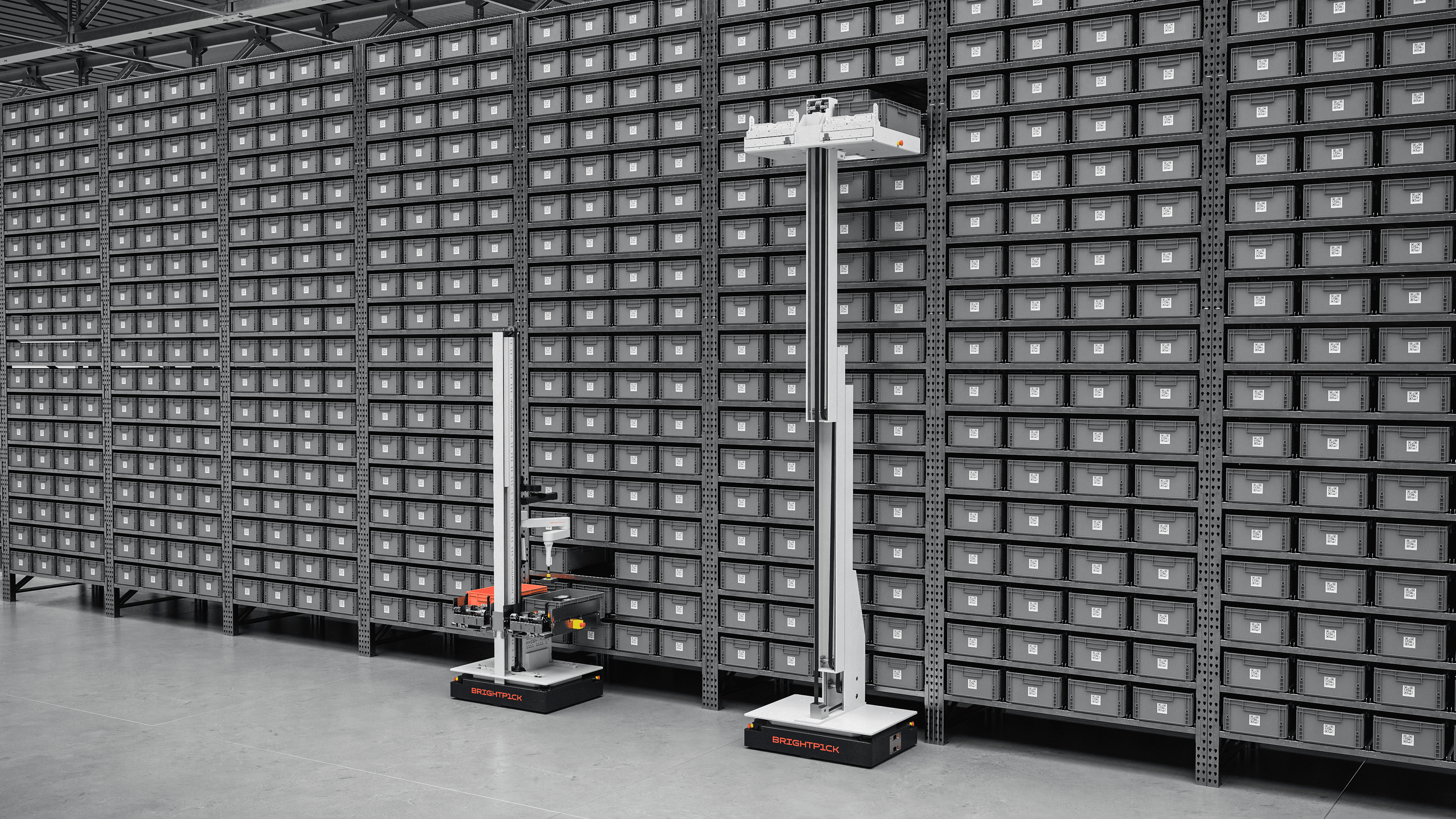
Autopicker performing a pick while Giraffe assists with higher storage levels.

Autopicker — Autonomous Mobile Picking

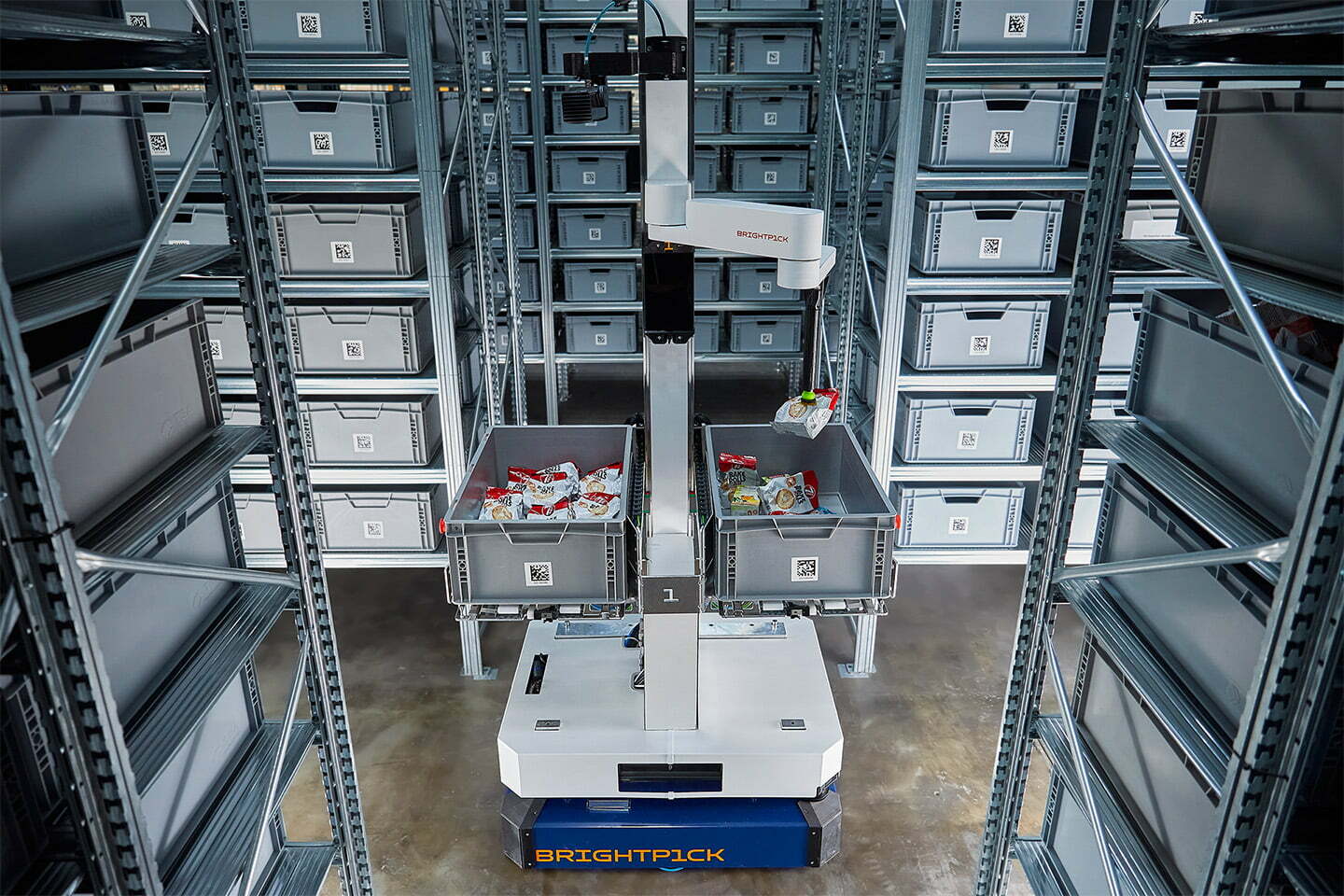
Brightpick's Autopicker combines autonomous navigation, inventory retrieval, and robotic item picking into a single mobile platform. Instead of transporting entire shelving units or inventory totes to a separate picking station, Autopicker travels through warehouse aisles, retrieves the required inventory, and uses its integrated robotic arm to transfer individual products into an order tote. This approach allows picking operations to take place directly within the storage area, reducing unnecessary inventory movement and the amount of manual handling required to fulfill customer orders.

One of Autopicker's primary advantages is its adaptability to existing warehouse environments. Compared with fixed conveyor networks or shuttle-based storage systems, mobile robots can offer greater flexibility when introducing automation into an operating facility. Warehouses can potentially begin with a smaller robotic fleet and expand capacity as order volumes increase, rather than installing an entire high-capacity system immediately. Autopicker is particularly interesting for fulfillment operations with changing inventory, variable order volumes, or limited tolerance for major facility modifications. However, its suitability depends on product pickability, order-line throughput, storage configuration, and the number of robots required to meet peak demand.

Giraffe — Expanding Vertical Storage

Brightpick's Giraffe is a complementary robotic system designed to extend the storage capabilities of Autopicker installations. While Autopicker handles mobile retrieval and individual item picking, Giraffe accesses inventory totes stored at higher levels of the warehouse's shelving infrastructure. It retrieves these totes and makes them available within the automated fulfillment workflow, allowing the system to use vertical storage space more effectively without requiring every picking robot to reach the full height of the racks. Together, the two technologies combine higher-density inventory storage with flexible mobile picking.

This combination can be especially valuable for existing warehouses where floor space is limited but additional vertical capacity is available. Instead of expanding the building or committing to a fully integrated high-density grid system, operators may be able to increase storage capacity while retaining the flexibility of an aisle-based robotic fleet. Compared with Gridpicker, Autopicker and Giraffe may offer a more practical starting point for businesses prioritizing phased deployment, operational flexibility, and reduced infrastructure changes. The tradeoff is that aisle-based storage generally requires more circulation space than dense grid architectures, and higher-volume operations may benefit from the throughput and storage efficiency of a more purpose-built system.

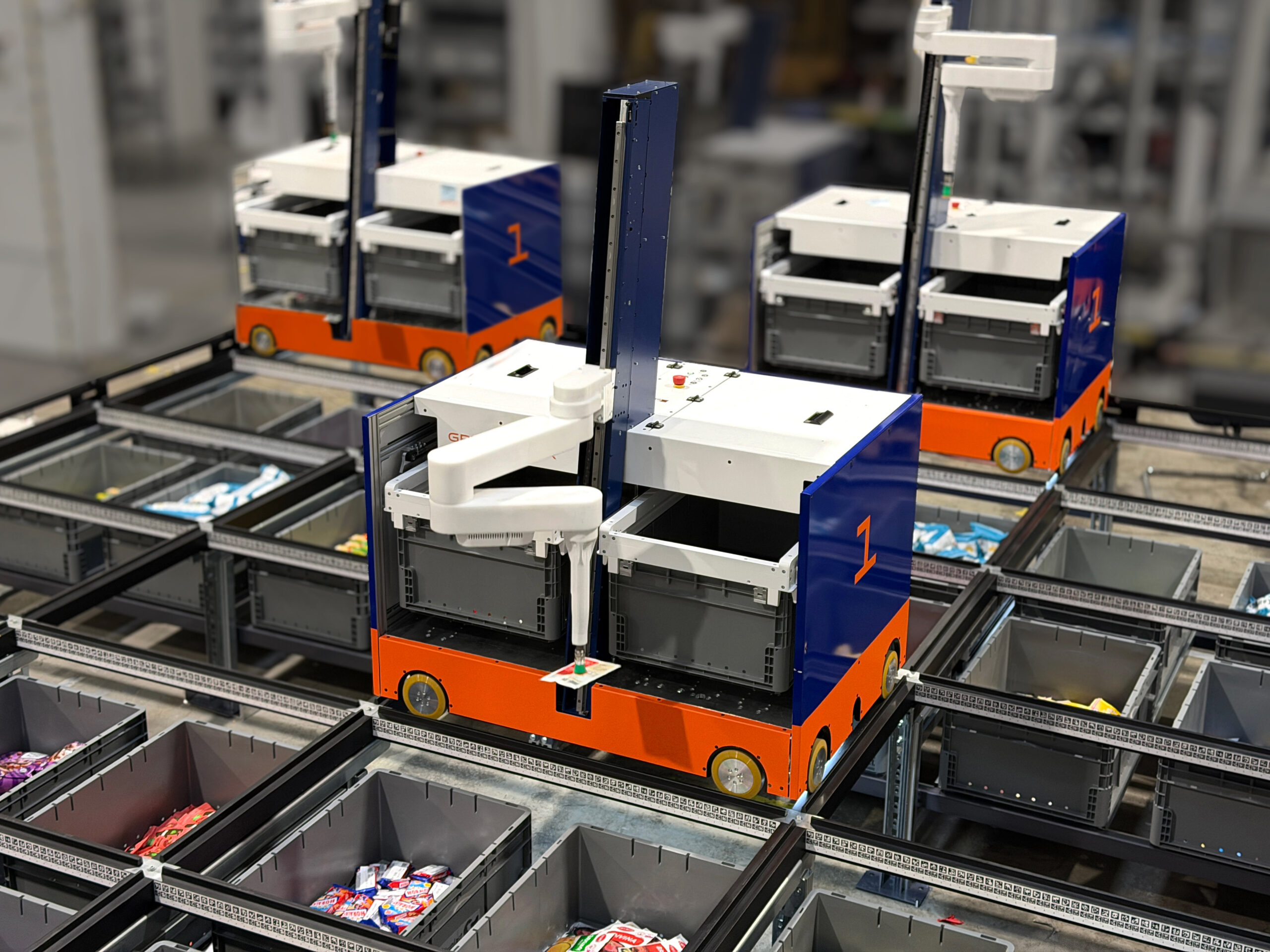
Brightpick Gridpicker retrieving and picking items directly from totes within its automated storage grid.

Gridpicker — High-Throughput Robotic Fulfillment

Brightpick's Gridpicker is an automated warehouse fulfillment system designed to combine high-density inventory storage with robotic order picking. Unlike Autopicker, which travels through warehouse aisles to retrieve and pick products, Gridpicker uses a structured storage grid where robots access inventory totes and perform picking operations within the automated system. This approach reduces the need for conventional picking aisles and brings inventory retrieval and item handling together in a compact fulfillment environment. By integrating robotic picking directly into the storage architecture, Gridpicker aims to reduce the additional handling steps commonly associated with traditional goods-to-person automation.

Gridpicker is particularly suited to operations with substantial order volumes, demanding fulfillment schedules, and a need to maximize available storage capacity. Its more centralized architecture can support coordinated inventory movement and picking activity without requiring individual mobile picking robots to travel between widely distributed storage locations. Compared with Autopicker, Gridpicker may offer advantages when throughput and storage density outweigh the need for flexible warehouse layouts. However, these benefits come with greater dependence on dedicated grid infrastructure, making facility design, installation requirements, and long-term capacity planning especially important.

System Performance & Warehouse Integration

The performance of a Gridpicker installation depends on several interconnected factors, including the number of robots, inventory distribution, order characteristics, storage capacity, and the configuration of the picking system. Warehouses processing large quantities of small, individually picked products may benefit from the system's ability to coordinate storage retrieval and robotic picking within the same automated environment. Compared with traditional shuttle systems or cube storage solutions that deliver inventory to separate picking stations, Gridpicker's integrated picking approach may reduce reliance on manual labor while maintaining high fulfillment throughput. Actual performance must be evaluated against the facility's specific inventory and order profiles rather than theoretical maximum capacities.

Implementing Gridpicker requires careful consideration of the existing building, available floor space, storage dimensions, electrical infrastructure, and warehouse management software. Because the grid forms a central part of the storage and fulfillment operation, deployment generally involves more substantial facility planning than introducing a smaller fleet of aisle-based mobile robots. This makes Gridpicker especially relevant for businesses planning major warehouse upgrades, new fulfillment facilities, or long-term capacity expansion. Although the initial investment and implementation effort may be greater, the system's potential advantages in storage efficiency, labor reduction, and sustained throughput can make it an attractive alternative for operations where those improvements justify the additional infrastructure.

Brightpick Autopicker using its robotic arm to transfer an item from an inventory tote into an order tote.

Choosing the Right Brightpick Solution

Selecting between Brightpick's Autopicker and Gridpicker systems depends on a warehouse's existing infrastructure, order volume, inventory characteristics, available budget, and long-term growth plans. Autopicker, supported by Giraffe for higher-density vertical storage, may be particularly attractive to businesses looking to automate an existing facility without undertaking extensive reconstruction. Its mobile architecture allows operators to introduce robotic picking in phases, expand the fleet as demand increases, and adapt to changing fulfillment requirements. Gridpicker, by comparison, is designed for operations that prioritize high throughput and dense inventory storage. Its integrated grid architecture may justify a larger initial investment when order volumes are sufficient to support the additional infrastructure and implementation requirements.

Beyond equipment performance, businesses should consider how quickly an automation system can become operational and begin generating measurable savings. Large, fixed warehouse automation projects can involve extensive engineering, construction, software integration, and commissioning, while modular systems may offer a faster path to initial deployment. However, installation timelines vary considerably based on facility readiness and project complexity. The best solution is not necessarily the system with the highest theoretical throughput, but the one that delivers the appropriate capacity, reliability, flexibility, and financial return for the operation. Comparing total project costs, implementation schedules, ongoing maintenance, and future expansion requirements is essential before committing to a particular architecture.

Implementation, Financing & the Future of Fulfillment

Brightpick also offers a Robots-as-a-Service (RaaS) model that allows businesses to access robotic automation through recurring payments rather than purchasing the entire robotic fleet upfront. This approach can make automation more accessible to operators that want to preserve capital, evaluate performance before expanding, or align automation spending more closely with operational growth. RaaS does not necessarily eliminate initial project expenses, however, as storage infrastructure, installation, software integration, and other implementation costs may still apply. Businesses should compare subscription commitments, maintenance coverage, contract terms, and total long-term costs against a traditional equipment purchase to determine which financing structure offers the better return.

Brightpick demonstrates how warehouse automation is evolving toward systems that combine autonomous mobility, intelligent storage, and robotic item picking into more integrated fulfillment operations. Autopicker and Giraffe provide an adaptable approach for businesses prioritizing flexibility and phased expansion, while Gridpicker addresses the demands of higher-volume operations seeking greater storage density and throughput. Both approaches illustrate the importance of designing automation around the facility and its actual operating requirements rather than selecting equipment based on technology alone. As robotics becomes more accessible, successful warehouse automation will increasingly depend on choosing solutions that can be implemented efficiently, deliver measurable operational improvements, and scale alongside the businesses they serve.

Comments

Log in to leave a comment
No comments yet. Be the first to comment!
Hello!