Exotec Skypod: Robotic Automated Storage and Retrieval System
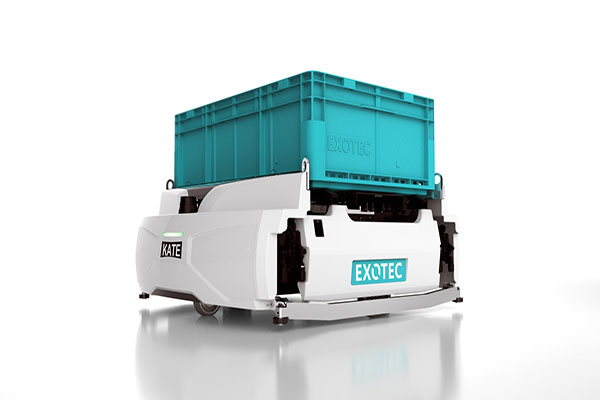
Explore how Exotec combines autonomous mobile robots, high-density storage racks, and intelligent warehouse software to automate inventory storage, retrieval, and order fulfillment.
Explore how Boston Dynamics Stretch combines advanced computer vision, robotic manipulation, and autonomous mobility to unload shipping containers and trailers while improving warehouse receiving operations.

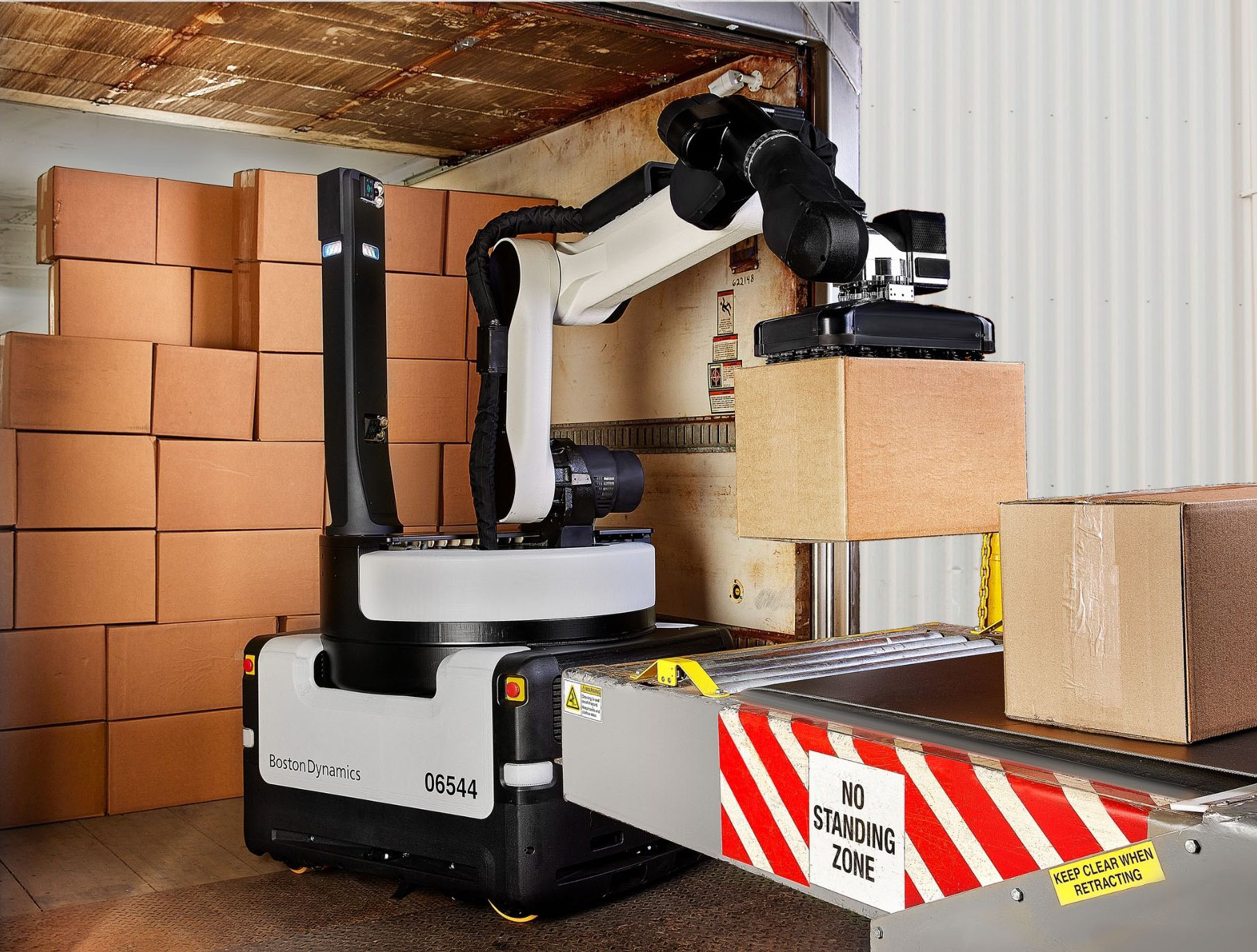
Boston Dynamics Stretch automates truck unloading.
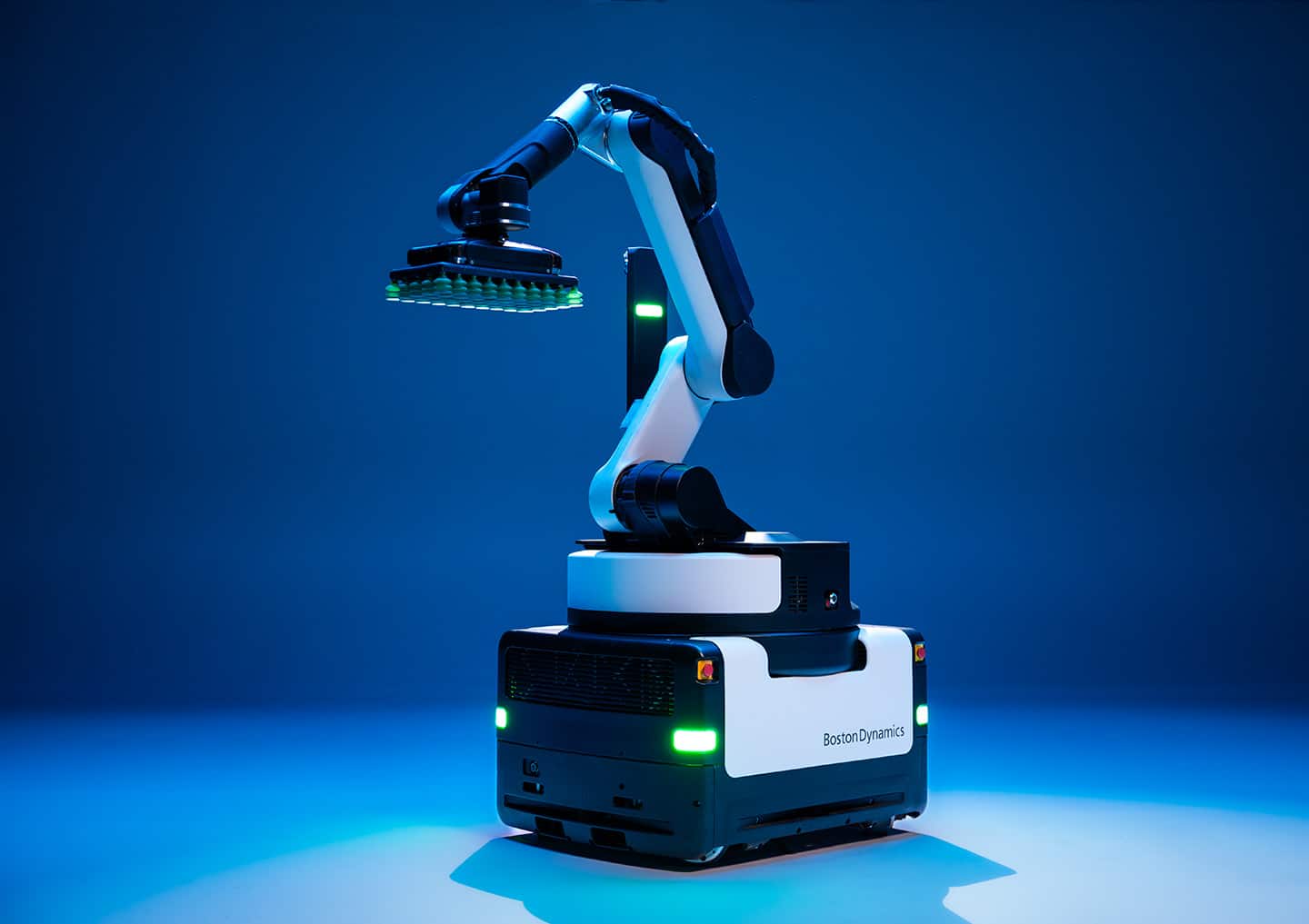
Stretch is an autonomous mobile warehouse robot developed by Boston Dynamics, a robotics company specializing in advanced mobility, perception, and robotic manipulation. Designed specifically for commercial warehouse environments, Stretch automates the physically demanding process of unloading floor-loaded shipping containers and trailers. The robot combines a compact mobile base, a long-reach robotic arm, and an intelligent vision system to identify, retrieve, and transfer cartons onto conveyor systems. Its design allows logistics facilities to automate inbound material handling without relying on large, permanently installed robotic structures.
Unlike conventional industrial robots that operate from fixed positions, Stretch can move between loading docks and operate inside different trailers throughout a warehouse. Its battery-powered platform provides omnidirectional mobility, allowing operators to position the robot in confined spaces before initiating autonomous unloading. Stretch handles cartons weighing up to 50 pounds and can reach approximately 10.5 feet vertically, enabling it to retrieve packages stacked near trailer ceilings. The system is designed for distribution centers, third-party logistics providers, retailers, and fulfillment operations seeking to improve receiving efficiency and reduce repetitive manual labor.
Traditional trailer unloading often requires warehouse employees to enter shipping containers and manually transfer individual cartons onto conveyor belts. Floor-loaded shipments present particular challenges because packages are stacked directly on the trailer floor rather than organized on pallets. These shipments can contain hundreds or thousands of cartons with varying dimensions, weights, and stacking arrangements. Unloading them manually requires repetitive lifting, bending, and reaching, often under uncomfortable temperature conditions. Fixed robotic unloading systems can automate portions of this process, but their installation requirements may limit flexibility across multiple receiving docks.
Stretch addresses these challenges through a self-contained robotic platform that can be deployed within existing warehouse infrastructure. Its mobile base occupies approximately the footprint of a standard pallet, allowing the robot to move between work areas without requiring permanent installation at every dock. Once positioned inside a trailer, Stretch autonomously identifies and removes cartons, transferring them onto a telescopic conveyor for transportation into the facility. This approach allows warehouse operators to introduce robotic unloading while retaining the flexibility to move equipment between receiving locations as operational requirements change.

Stretch uses a computer vision system supported by machine learning to recognize cartons, evaluate stacking arrangements, and determine appropriate picking movements. Cameras and sensors continuously analyze the trailer environment, allowing the robot to identify package surfaces, surrounding walls, and available operating space. Its robotic arm uses a vacuum gripper equipped with independently controlled suction cups to secure cartons of different dimensions and surface conditions. The system can handle standard cardboard boxes, printed packaging, and certain damaged or irregularly shaped cartons without requiring operators to preprogram individual package configurations.
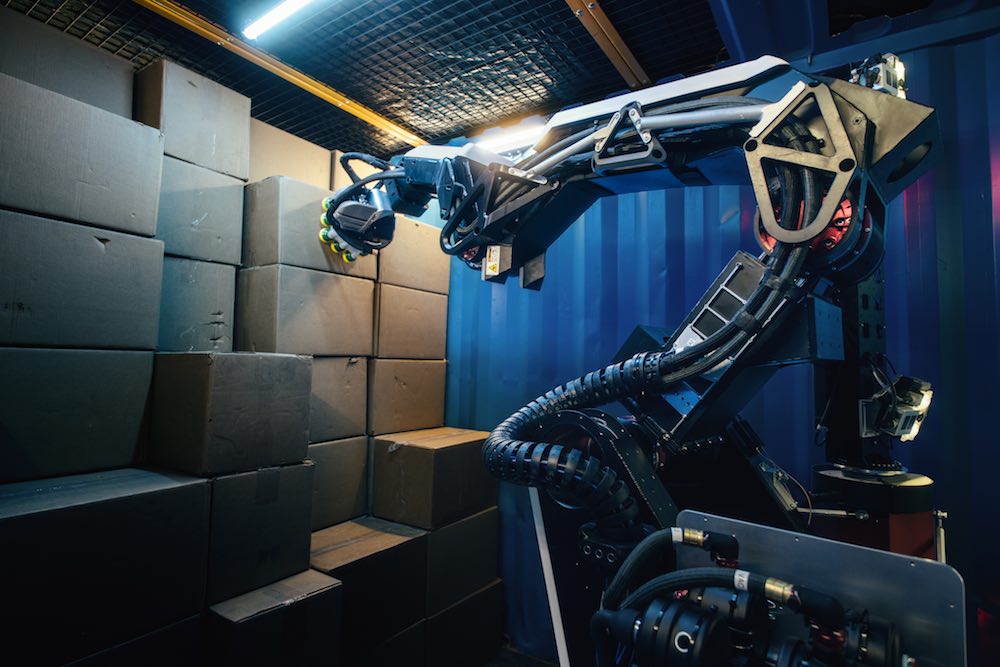
The robot's seven-axis arm provides the flexibility needed to reach cartons positioned at different heights and angles inside a trailer. Once a carton is identified, Stretch positions its gripper, establishes suction, lifts the package, and transfers it onto a conveyor. Its multipick capability allows the robot to grasp multiple smaller cartons during a single arm movement, increasing unloading efficiency when package arrangements permit. Stretch also includes automatic recovery behaviors that detect fallen cartons and retrieve them without requiring an employee to enter the trailer. These capabilities help maintain continuous operation despite the unpredictable conditions associated with floor-loaded freight.
Stretch operates on a battery-powered mobile platform equipped with omnidirectional wheels, allowing it to move forward, backward, sideways, and rotate within confined warehouse spaces. Operators initially position the robot inside a trailer using a handheld controller before activating autonomous unloading through a touchscreen interface. Once operating, Stretch makes real-time decisions about carton selection, robotic arm movements, and package placement. Its integrated battery system supports up to 16 hours of operation, allowing the robot to work across two warehouse shifts before requiring recharging.
For material handling integration, Stretch works with telescopic conveyor systems that extend into trailers as unloading progresses. The robot communicates with compatible conveyors to coordinate their positioning and maintain an appropriate transfer distance as packages are removed. Cartons are placed onto the conveyor and transported into the warehouse for scanning, sorting, storage, or subsequent fulfillment operations. Because Stretch does not require external power cables or compressed air connections during operation, facilities can deploy it with relatively limited infrastructure modifications. Boston Dynamics reports that initial installation can be completed within days, depending on site readiness and integration requirements.

Stretch is designed for high-volume warehouse receiving operations where incoming trailers contain large quantities of individually stacked cartons. Its applications include retail distribution centers, e-commerce fulfillment facilities, parcel logistics operations, and third-party logistics warehouses. These environments often experience fluctuations in inbound freight volumes, making consistent unloading capacity important for maintaining downstream processing schedules. By automating carton removal, Stretch helps establish a predictable flow of incoming goods while allowing warehouse employees to concentrate on equipment supervision, exception handling, and other operational responsibilities.
Boston Dynamics has deployed Stretch with major logistics and retail organizations, including DHL Supply Chain, Gap Inc., and Arvato. At DHL, the robot has been used to automate trailer unloading while improving consistency and reducing physically demanding manual handling. Gap has incorporated Stretch into its distribution operations to support inbound freight processing, while Arvato has used the system to unload loose-loaded cartons and connect receiving operations with automated sorting infrastructure. These implementations demonstrate how mobile robotic unloading can complement existing warehouse automation systems rather than requiring an entirely new facility architecture.
One of Stretch's primary operational advantages is its ability to maintain consistent unloading performance across extended shifts. Boston Dynamics describes the robot as capable of moving hundreds of cartons per hour, with actual throughput depending on package characteristics, trailer configurations, and downstream conveyor capacity. Its multipick functionality can improve performance when unloading smaller cartons, while automated recovery reduces interruptions caused by packages falling during handling. For warehouse operators, consistent unloading rates can improve labor planning, reduce receiving bottlenecks, and help coordinate inbound shipments with downstream sorting and storage operations.
Stretch also addresses workplace safety concerns associated with repetitive manual unloading. Removing employees from physically demanding trailer environments can reduce exposure to heavy lifting, awkward postures, and extreme temperatures. Its mobile design provides additional operational flexibility, allowing facilities to reposition automation equipment according to changing receiving demands. As warehouse robotics continues to expand beyond fixed automation systems, Stretch demonstrates how autonomous mobile manipulation can improve material handling operations while making advanced robotic technology accessible to existing distribution facilities.

Explore how Exotec combines autonomous mobile robots, high-density storage racks, and intelligent warehouse software to automate inventory storage, retrieval, and order fulfillment.

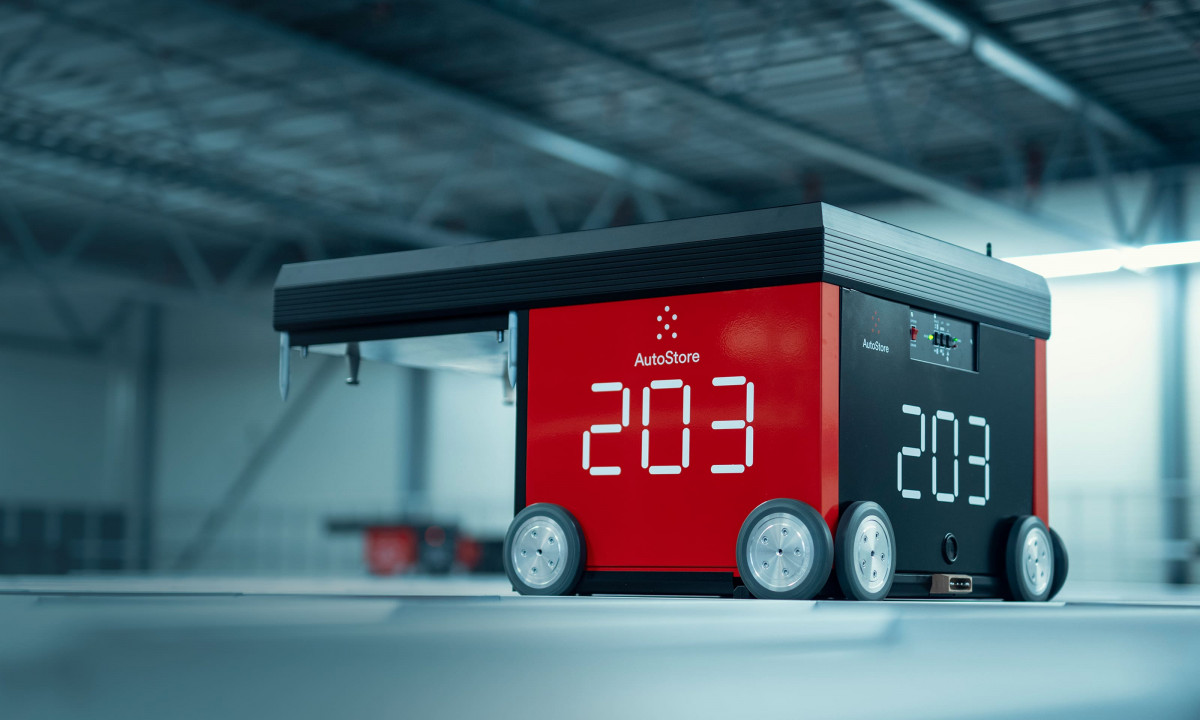
Explore how AutoStore combines high-density cube storage, autonomous robots, and intelligent warehouse software to automate inventory storage, retrieval, and order fulfillment.

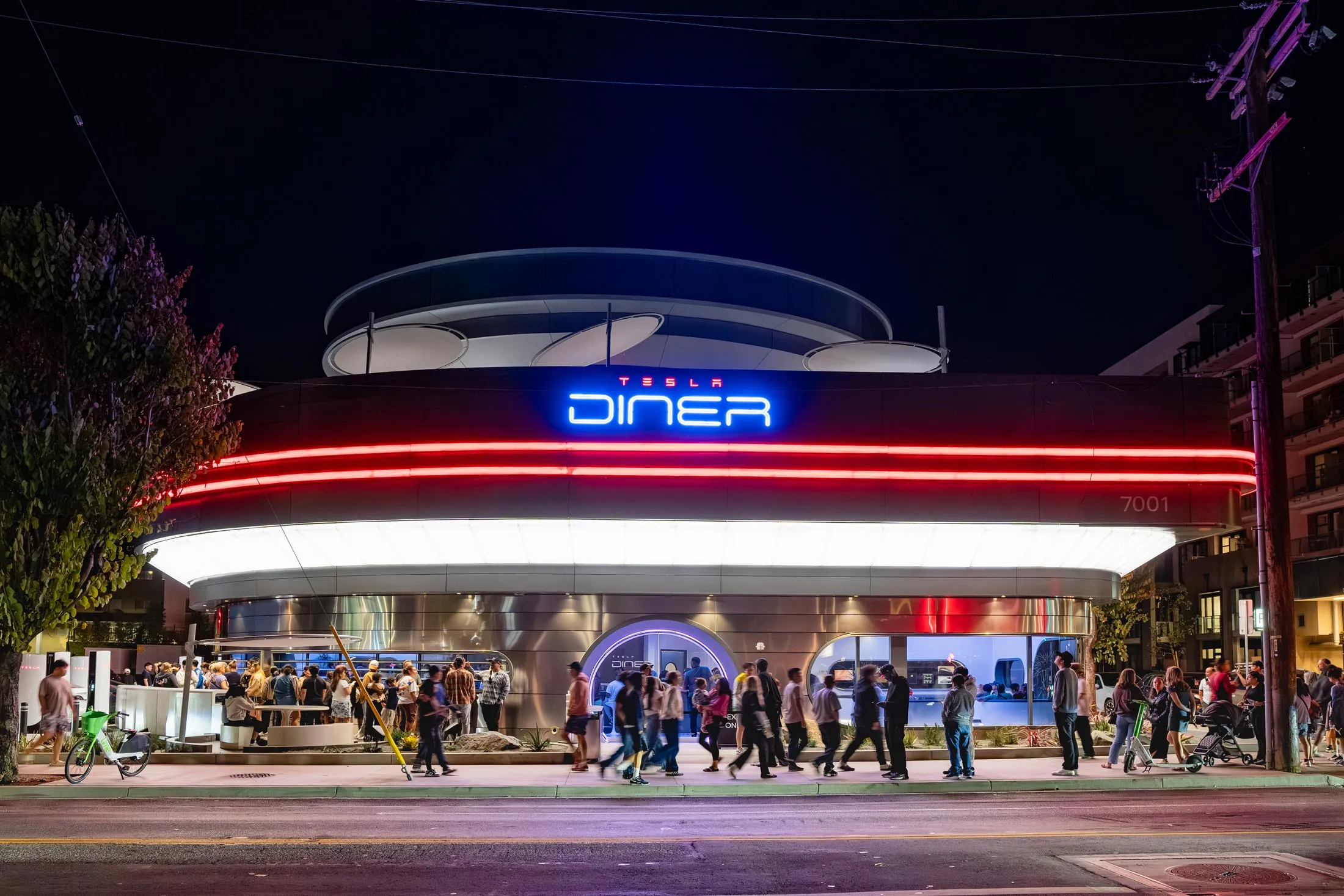
Tesla could combine existing automated food-production systems with Optimus to create a real-world environment where humanoid robots learn the physical tasks that connect an autonomous restaurant.

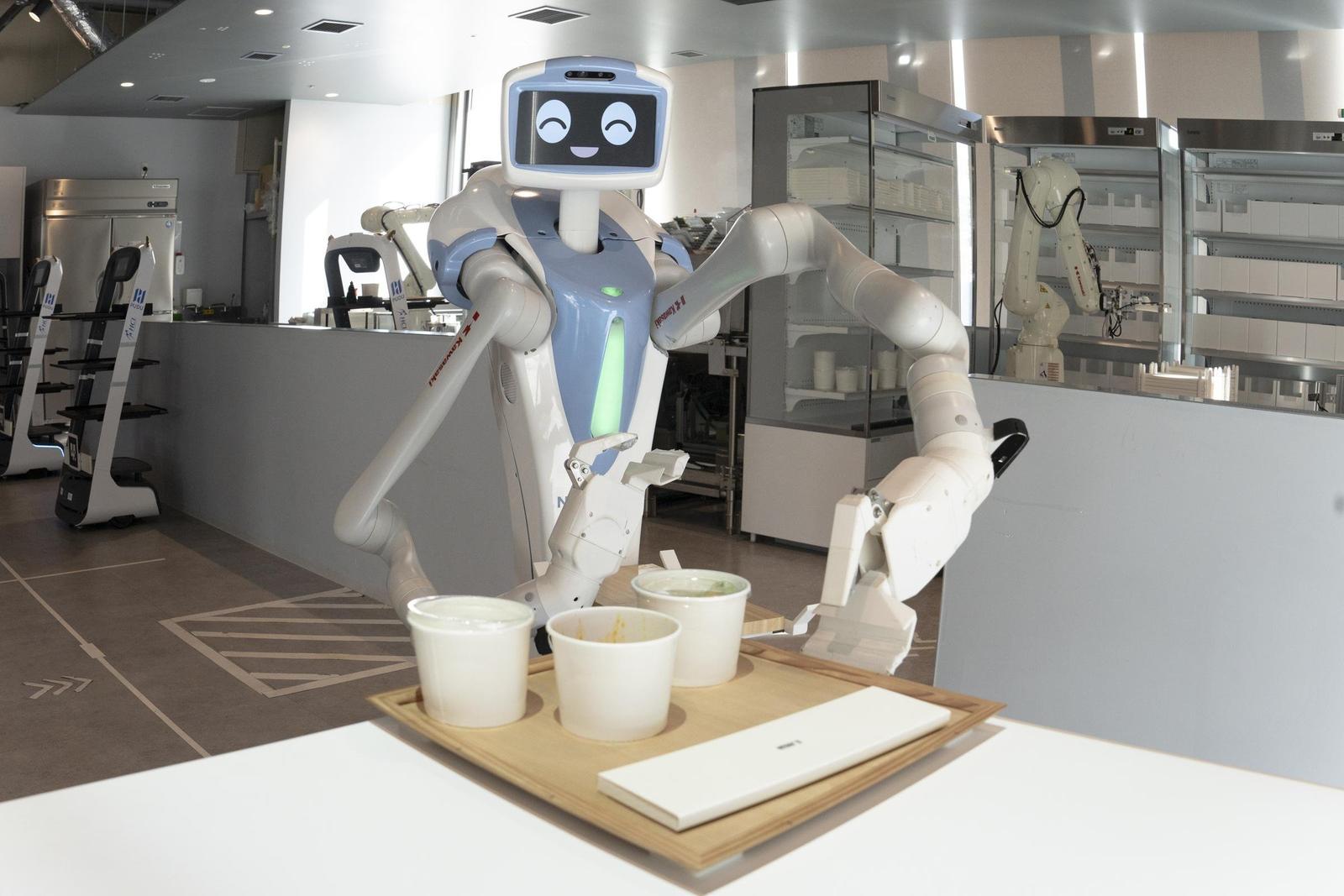
Building the integration layer that connects specialized food-service robotics into one modular, autonomous operating system.

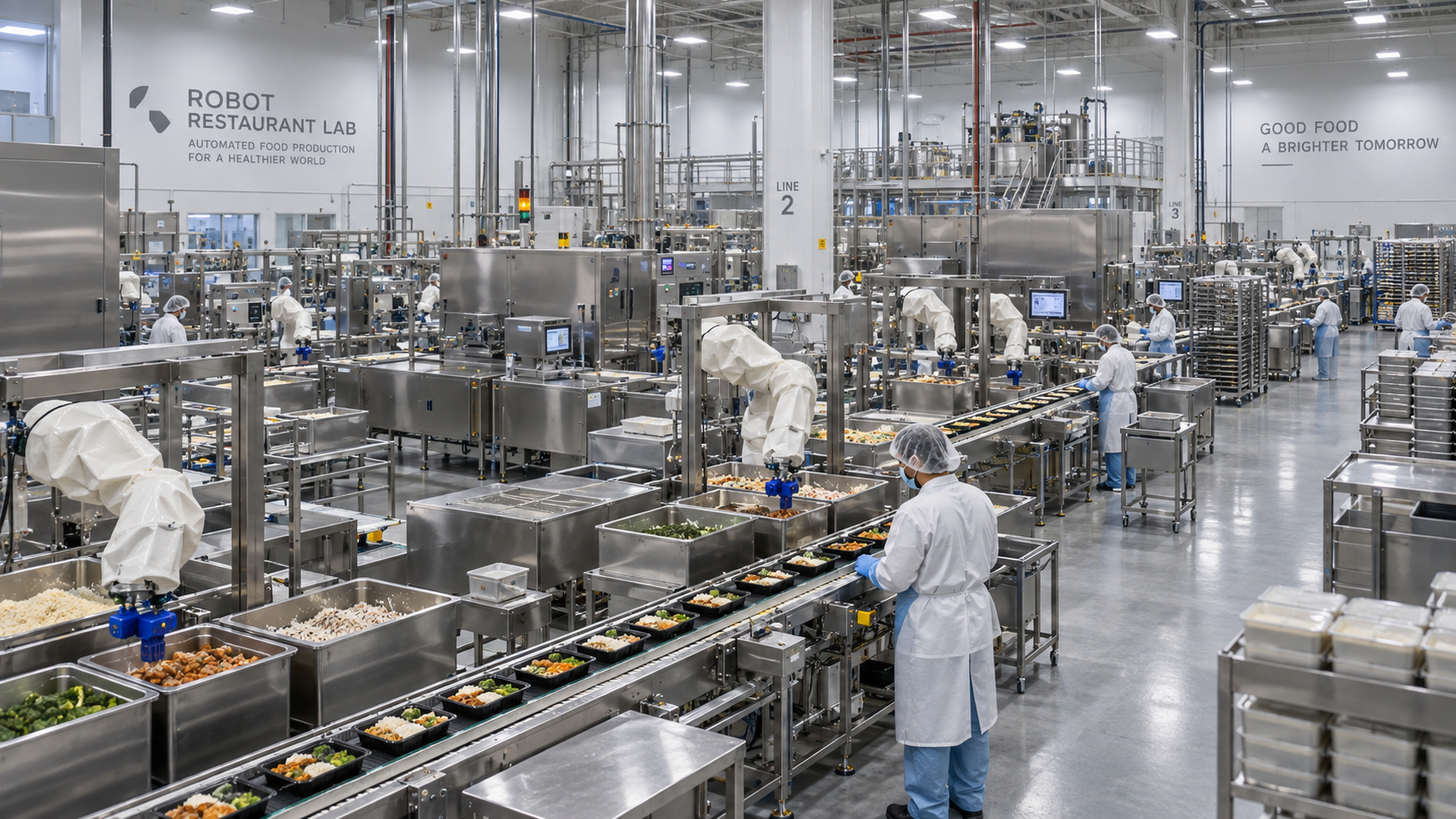
Developing highly automated food production facilities that combine robotics, industry expertise, and regional partnerships to reduce costs and supply prepared food at commercial scale.

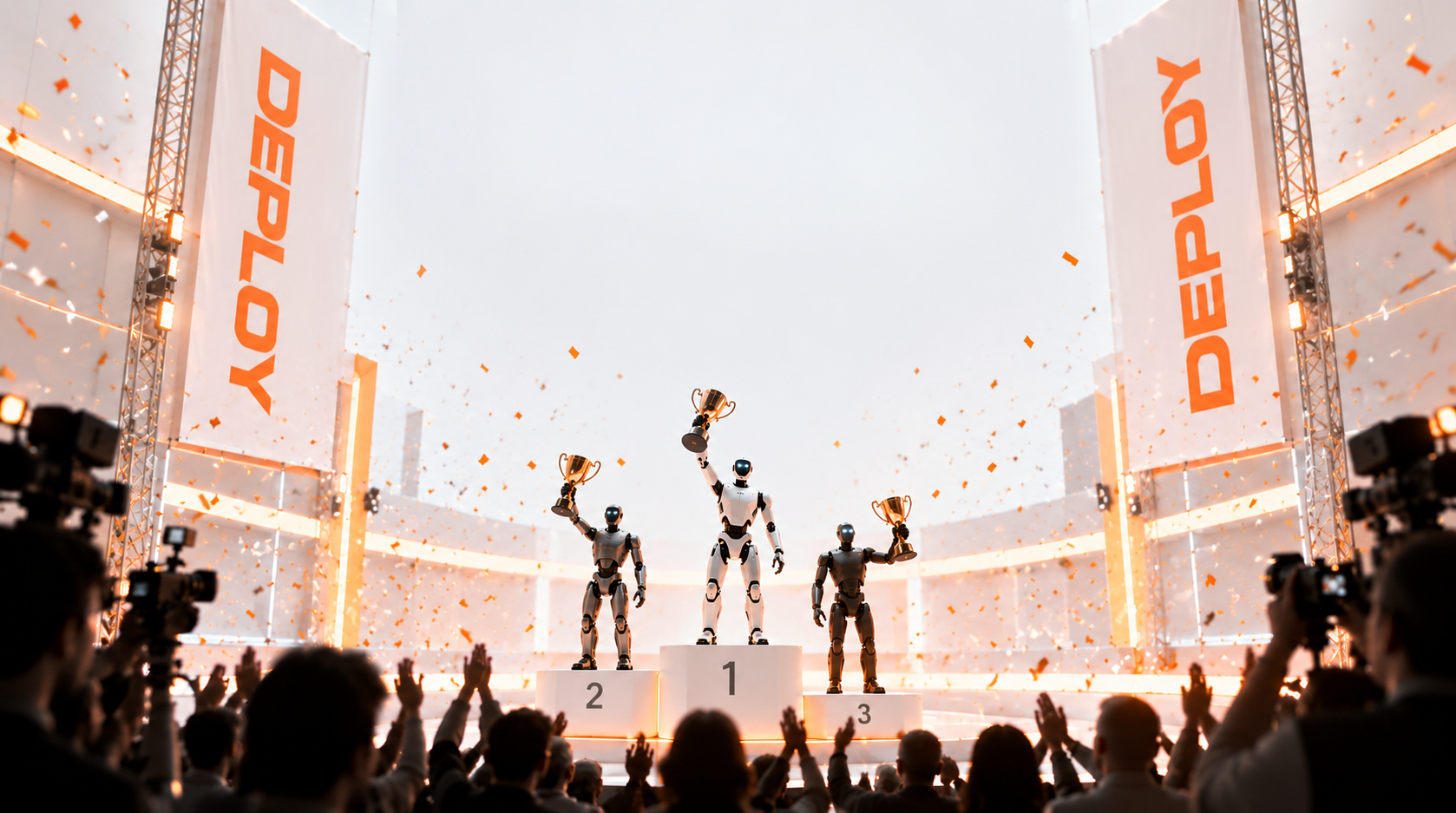
An exciting head-to-head competition where humanoid robots tackle real-world challenges, showcasing the latest advances in robotics, artificial intelligence, and autonomous technology.