Dream Cloud
ProductRoboticsMobile

Third Wave Automation: Intelligent Autonomous Forklifts for Warehouse Storage

Explore how Third Wave Automation combines AI-powered navigation, autonomous pallet handling, and remote operator assistance to automate warehouse transportation, high-reach storage, and inventory movement.

Third Wave Automation: Intelligent Autonomous Forklifts for Warehouse Storage
DDream CloudOct 22, 2026Third Wave Automation's intelligent autonomous forklift technology for modern warehouses.

Introducing Third Wave Automation

Third Wave Automation is a robotics company based in Union City, California, specializing in autonomous forklifts and intelligent warehouse material handling systems. Founded in 2018, the company develops robotic technology designed to automate pallet transportation, storage, and retrieval operations within existing distribution facilities. Its autonomous forklift lineup includes the TWA Reach and TWA Extended Reach, two high-reach robotic forklifts capable of transporting palletized inventory and placing loads into elevated warehouse storage racks. These systems combine industrial forklift hardware, advanced perception technology, and artificial intelligence to perform warehouse tasks without requiring continuous manual operation.

Third Wave Automation's distinguishing technology is its Shared Autonomy Platform, which allows forklifts to operate autonomously while retaining the ability for human operators to intervene remotely. Unlike conventional automated guided vehicles that depend on rigid operating procedures, Third Wave's forklifts can switch between fully autonomous operation, remote assistance, remote driving, and conventional manual control. This flexibility enables the robots to handle routine pallet movements independently while allowing operators to resolve unusual situations without physically traveling to the vehicle. The approach is designed for warehouses seeking to automate existing operations without completely replacing their forklift fleets or rebuilding storage infrastructure.

Automating Pallet Transportation and High-Reach Storage

Warehouse pallet handling involves transporting incoming merchandise from receiving docks to storage locations, retrieving inventory for order fulfillment, and moving completed shipments toward outbound staging areas. These operations frequently require skilled forklift operators to navigate narrow aisles, lift heavy loads, and position pallets accurately within elevated storage racks. Although conventional forklifts are versatile, repetitive transportation and storage tasks can consume significant labor resources, particularly in large distribution centers with continuous inventory movement.

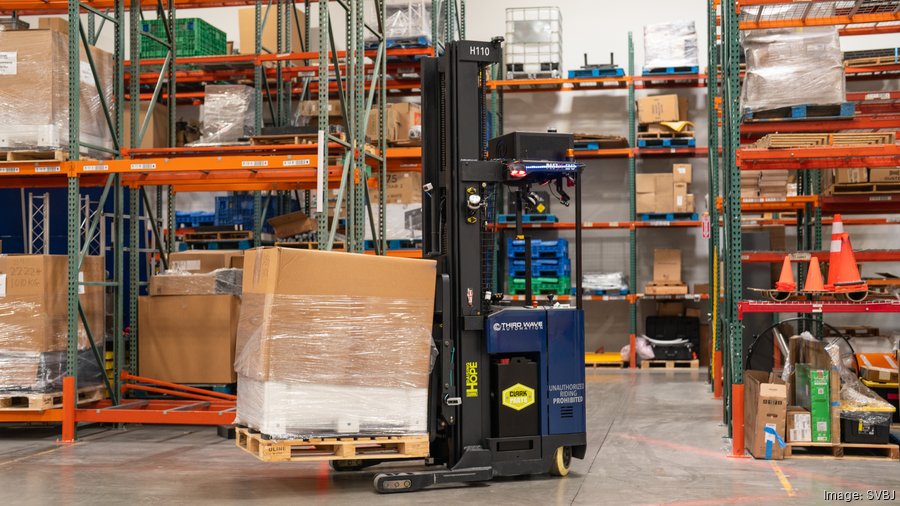
Third Wave Automation addresses these challenges by combining autonomous transportation with high-reach pallet handling. The TWA Reach is designed for single-deep racking configurations, operating in aisles approximately 10 feet wide or greater and reaching storage heights of up to 366 inches in its base configuration. The TWA Extended Reach expands these capabilities to double-deep racking arrangements, with supported lifting heights reaching approximately 406 inches. These configurations allow warehouse operators to automate pallet movement from staging areas directly into storage racks, reducing the need for separate transportation equipment or manual handoffs.

Third Wave autonomous forklifts using intelligent navigation for warehouse pallet handling.

AI-Powered Navigation and Pallet Handling

Third Wave Automation's forklifts use advanced sensor technology and machine learning to navigate warehouse environments and perform pallet handling tasks. The system incorporates 3D LiDAR sensors and cameras that provide a comprehensive view of surrounding equipment, personnel, obstacles, and inventory. Its perception software interprets this information to determine vehicle positioning, identify pallet locations, and plan movements through warehouse aisles. Unlike guidance systems that depend on permanently installed floor markers, the platform uses its environmental perception capabilities to operate within existing warehouse layouts.

The robotic forklifts coordinate navigation with automated lifting and pallet placement. After receiving a transportation assignment, a vehicle travels to the designated pickup location, aligns its forks with the pallet, and lifts the load. It then navigates to the assigned destination, where it positions the pallet within a staging area or elevated storage rack. The system continuously monitors its surroundings during these movements and can request operator assistance when unusual pallet configurations, obstructed aisles, or other exceptions prevent normal autonomous operation.

Shared Autonomy and Remote Fleet Management

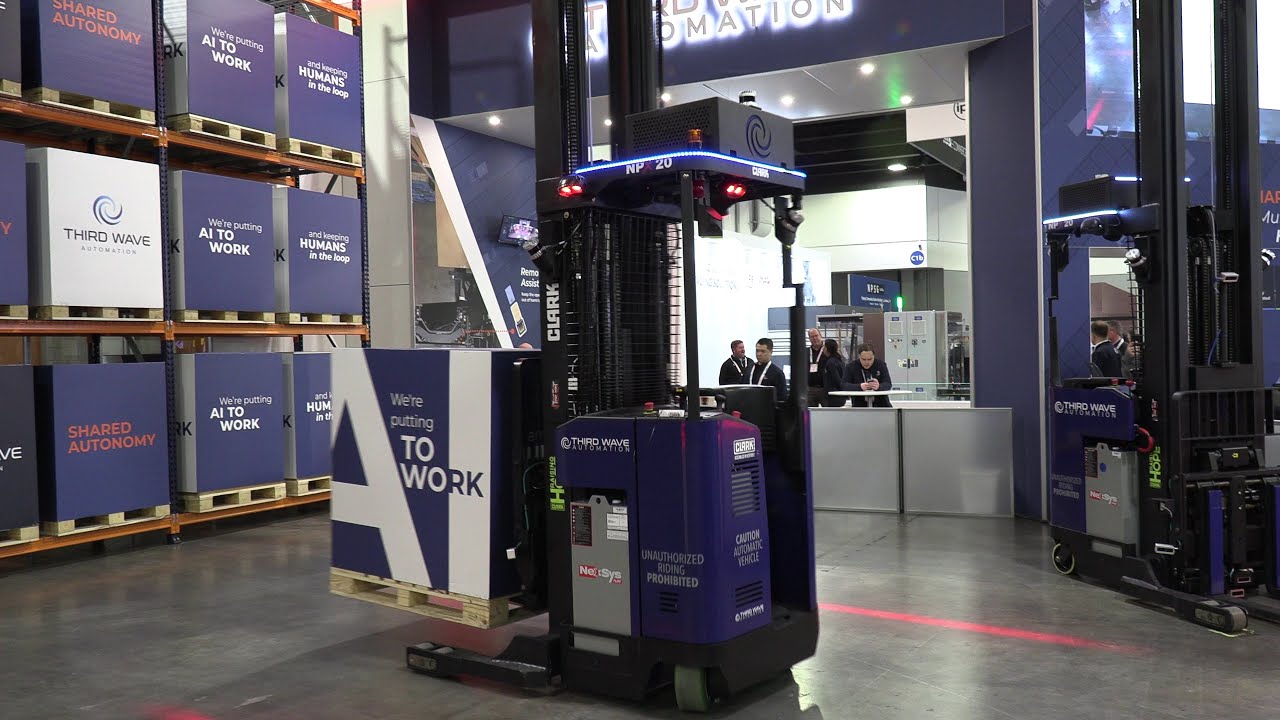
Third Wave Automation's Shared Autonomy Platform provides four operating modes: fully autonomous, remote assist, remote operation, and manual driving. During autonomous operation, the forklift independently performs assigned transportation and storage tasks. If the system encounters a situation requiring additional judgment, a remote operator can review sensor information and provide assistance. More complex situations can be handled through direct remote control, while manual operation remains available when necessary. This architecture allows warehouse facilities to introduce automation while retaining human oversight for tasks that are difficult to automate reliably.

The company's Armada Fleet Management System coordinates autonomous forklifts and provides centralized visibility into warehouse operations. Operators can monitor vehicle locations, assign tasks, review performance information, and manage exceptions through a common interface. Armada also supports traffic management, task prioritization, and temporary restrictions within warehouse operating zones. Third Wave Automation describes a potential supervision ratio of up to ten forklifts per remote operator in suitable environments, although actual requirements depend on facility complexity and the frequency of human intervention. By combining autonomous operation with remote supervision, the platform allows a relatively small number of employees to coordinate multiple robotic vehicles.

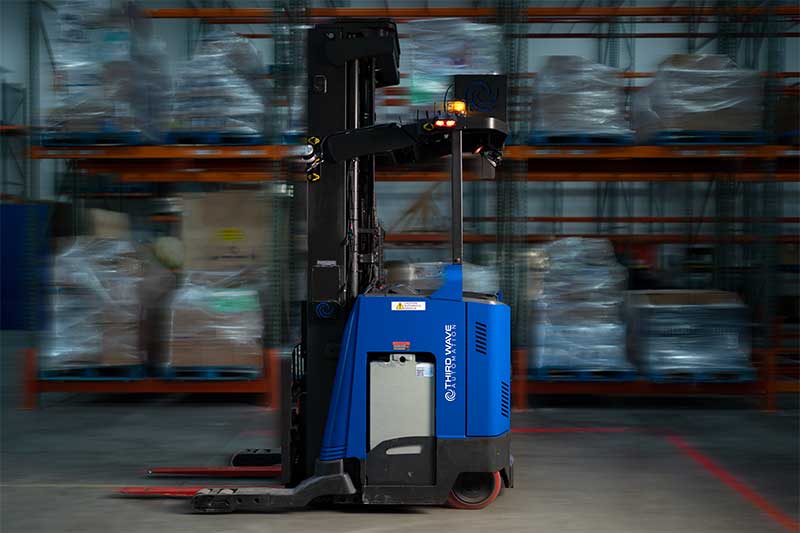
TWA Reach autonomous forklift with advanced navigation and robotic lifting capabilities.

Warehouse Receiving, Putaway, and Inventory Retrieval

Third Wave Automation's forklifts are designed for distribution centers, third-party logistics providers, retail warehouses, and manufacturing facilities that handle large quantities of palletized inventory. One of their primary applications is warehouse putaway, where incoming pallets are transported from receiving or staging areas to designated storage locations. The autonomous forklifts can retrieve pallets, navigate warehouse aisles, and position loads within elevated racking systems. Their high-reach capabilities make them particularly useful in facilities where storage density depends on vertical pallet arrangements rather than floor-level storage alone.

The technology also supports inventory retrieval and replenishment operations. When inventory is needed for order picking or outbound distribution, autonomous forklifts can retrieve pallets from storage racks and deliver them to designated processing areas. Third Wave Automation has deployed its technology with logistics organizations including C.H. Robinson, Holman Logistics, and Armada Supply Chain Solutions. At Armada's Romeoville, Illinois, distribution center, four autonomous reach trucks completed more than 25,000 pallet movements during a deployment evaluated through January 2026. The project demonstrated autonomous putaway within an existing warehouse using push-back racking and integration with the facility's warehouse management system.

Operational Efficiency and Workplace Safety

Third Wave Automation's primary operational advantage is its ability to automate repetitive forklift movements while retaining flexibility through remote human assistance. At the Armada deployment, the company reported an average of 10.7 qualifying pallet movements per forklift per hour, with 68% of operating time spent in full autonomy. The project also achieved 99.94% inventory accuracy and a supervision ratio of four forklifts per operator. These results illustrate the potential for autonomous forklifts to improve pallet handling consistency, although performance depends on warehouse layout, storage configurations, travel distances, and operating requirements.

Safety and operational flexibility are also central to Third Wave Automation's approach. Its perception system continuously monitors surrounding conditions, helping forklifts detect obstacles and operate around warehouse personnel and equipment. Remote assistance reduces the need for employees to enter operating areas to resolve certain exceptions, while centralized fleet management provides visibility into vehicle activity and inventory movement. In June 2026, Third Wave Automation also announced a technology partnership with The Raymond Corporation to expand its AI-powered automation capabilities across selected Raymond lift trucks. The collaboration represents a broader effort to integrate autonomous operation into established material handling equipment, making intelligent forklift technology more accessible to warehouses seeking to modernize their receiving, storage, and distribution operations.

Comments

Log in to leave a comment
No comments yet. Be the first to comment!
Hello!