Dream Cloud

Developism: Building a Democratic Technological Future

Exploring how democratic governance, cooperative ownership, and public participation can shape the development of emerging technologies and ensure their benefits are shared across society.

Developism: Building a Democratic Technological Future

Developism is a blueprint for sustainable cities built around human, urban, and technological development.

DDream CloudOct 31, 2026United States, North America

Technology as a Foundation of Modern Society

Technology has become one of the defining forces shaping modern civilization, influencing how societies produce goods, distribute resources, communicate, and organize economic activity. From artificial intelligence and automated manufacturing to digital platforms and critical infrastructure, technological systems increasingly determine how people work, access essential services, and participate in the global economy.

As these systems become more sophisticated and interconnected, their influence extends beyond individual businesses and industries into the foundations of society itself. Decisions about technological development now carry significant economic, political, and social consequences, raising important questions about who determines their direction and how their benefits should be distributed.

Who Controls Technological Development?

The development of advanced technologies increasingly depends on access to financial capital, computing infrastructure, proprietary information, and specialized technical expertise. These resources are often concentrated within large corporations and powerful institutions, giving a relatively small number of organizations considerable influence over the technologies that shape modern life.

While concentrated investment can accelerate innovation and support ambitious technological projects, it can also limit broader participation in decisions affecting society. A more democratic approach to technological development would create opportunities for workers, communities, and the public to influence how these systems are designed, governed, and deployed, ensuring that technological progress reflects a wider range of human interests and priorities.

Citizens participate in decisions about technology, infrastructure, and community development.

The Principles of Democratic Technology

Techno-Democracy proposes that technological systems should be developed, governed, and managed through institutions that encourage democratic participation, transparency, and accountability. Rather than allowing technological decisions to be determined exclusively by corporate leadership, investors, or centralized authorities, this approach seeks to give workers, users, and affected communities a meaningful voice in shaping the technologies they depend upon.

Democratic technology does not require every technical decision to be made through public voting or eliminate the importance of specialized expertise. Instead, it establishes governance structures that balance professional responsibility with democratic oversight, ensuring that technological institutions remain accountable to the people they serve while maintaining the efficiency and innovation necessary for continued development.

Democracy Beyond Government

Democracy is traditionally understood as a system of political governance, but its underlying principles can also be applied to economic institutions, workplaces, and technological organizations. As private companies and digital platforms gain increasing influence over employment, communication, information, and public infrastructure, the question of democratic participation extends beyond government into the institutions that shape everyday life.

Cooperative enterprises, member-governed platforms, and representative organizational structures demonstrate how democratic decision-making can operate within productive economic systems. Expanding these models into emerging technological industries could create new forms of economic participation, allowing individuals to contribute not only as employees or consumers, but as members with a meaningful role in determining institutional priorities and long-term development.

Modern cities integrate green spaces, sustainable architecture, and advanced transportation.

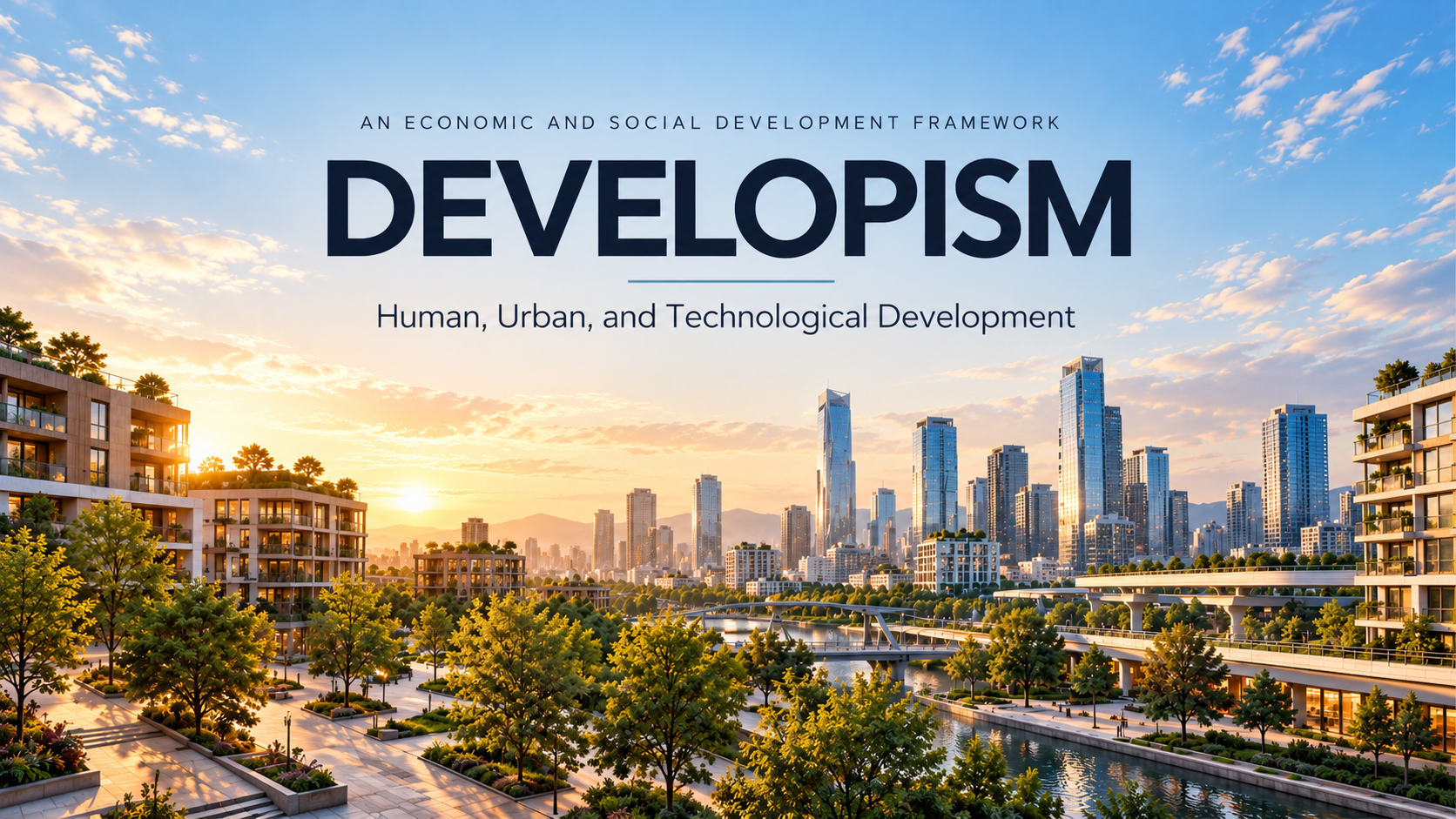
Human, Urban, and Technological Development

Developism is an emerging economic and social philosophy that places human, urban, and technological development at the center of societal progress. Rather than defining economic success primarily through financial growth or capital accumulation, it emphasizes the expansion of human capabilities, the improvement of physical environments, and the advancement of scientific and technological systems that support modern civilization.

Human Development focuses on education, healthcare, employment, and individual opportunity, while Urban Development addresses housing, transportation, public infrastructure, and the communities in which people live. Technological Development advances scientific research, industrial productivity, automation, and innovation, creating an interconnected framework in which progress across all three areas contributes to a more capable, prosperous, and sustainable society.

From Capital Accumulation to Collective Progress

Traditional economic systems often measure success through indicators such as gross domestic product, investment returns, and the accumulation of financial assets. While these measures provide valuable information about economic activity, they do not necessarily reflect improvements in living standards, access to opportunity, or the long-term productive capabilities of society.

Developism proposes that capital should serve as a means of advancing development rather than becoming the primary objective of economic organization. By directing investment toward education, infrastructure, technological innovation, and productive capacity, societies can create lasting improvements in human prosperity while ensuring that economic growth contributes to broader social progress.

Engineers and developers collaborate on robotics, artificial intelligence, and emerging technologies.

Technology Cooperatives and Shared Ownership

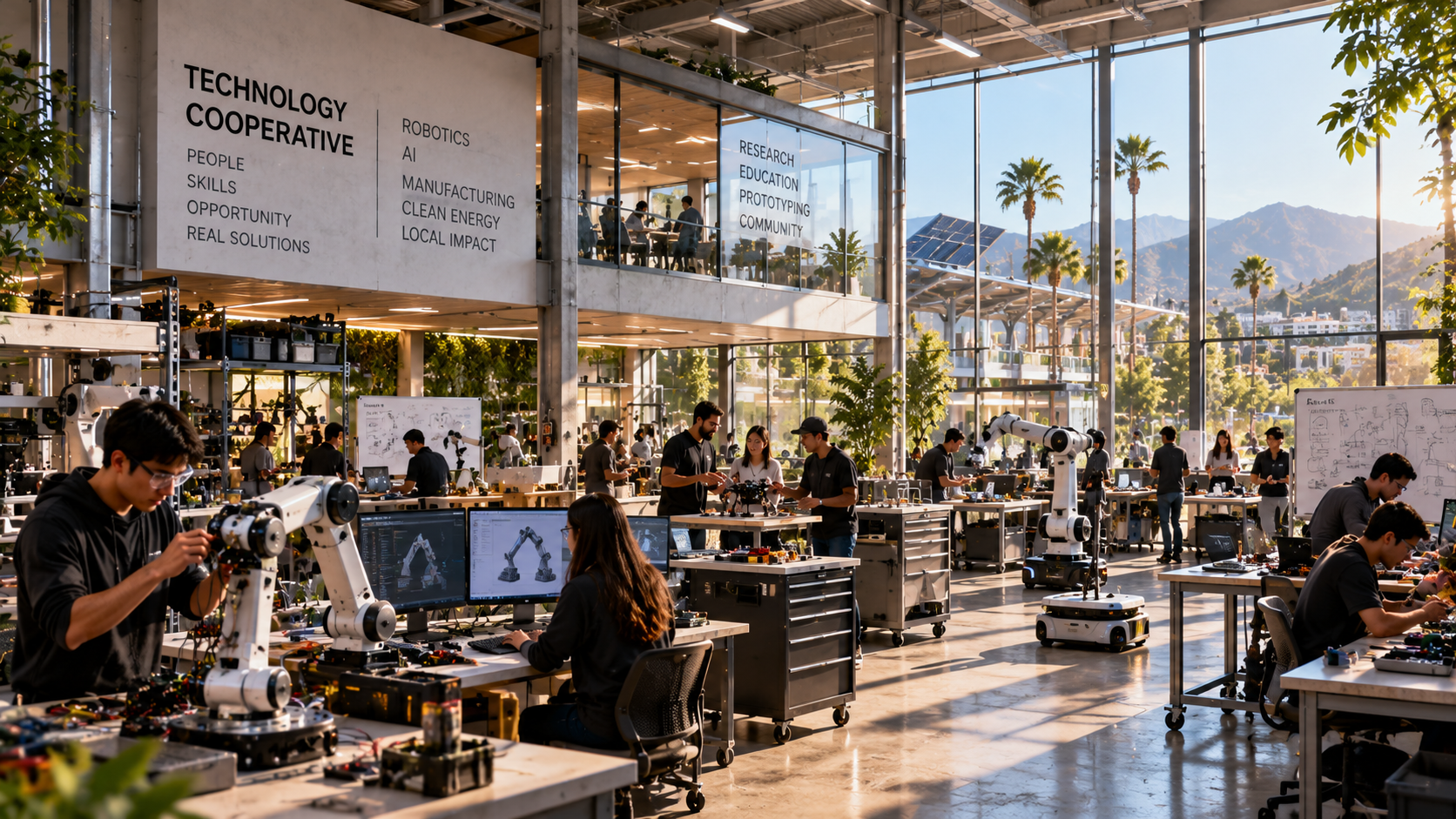
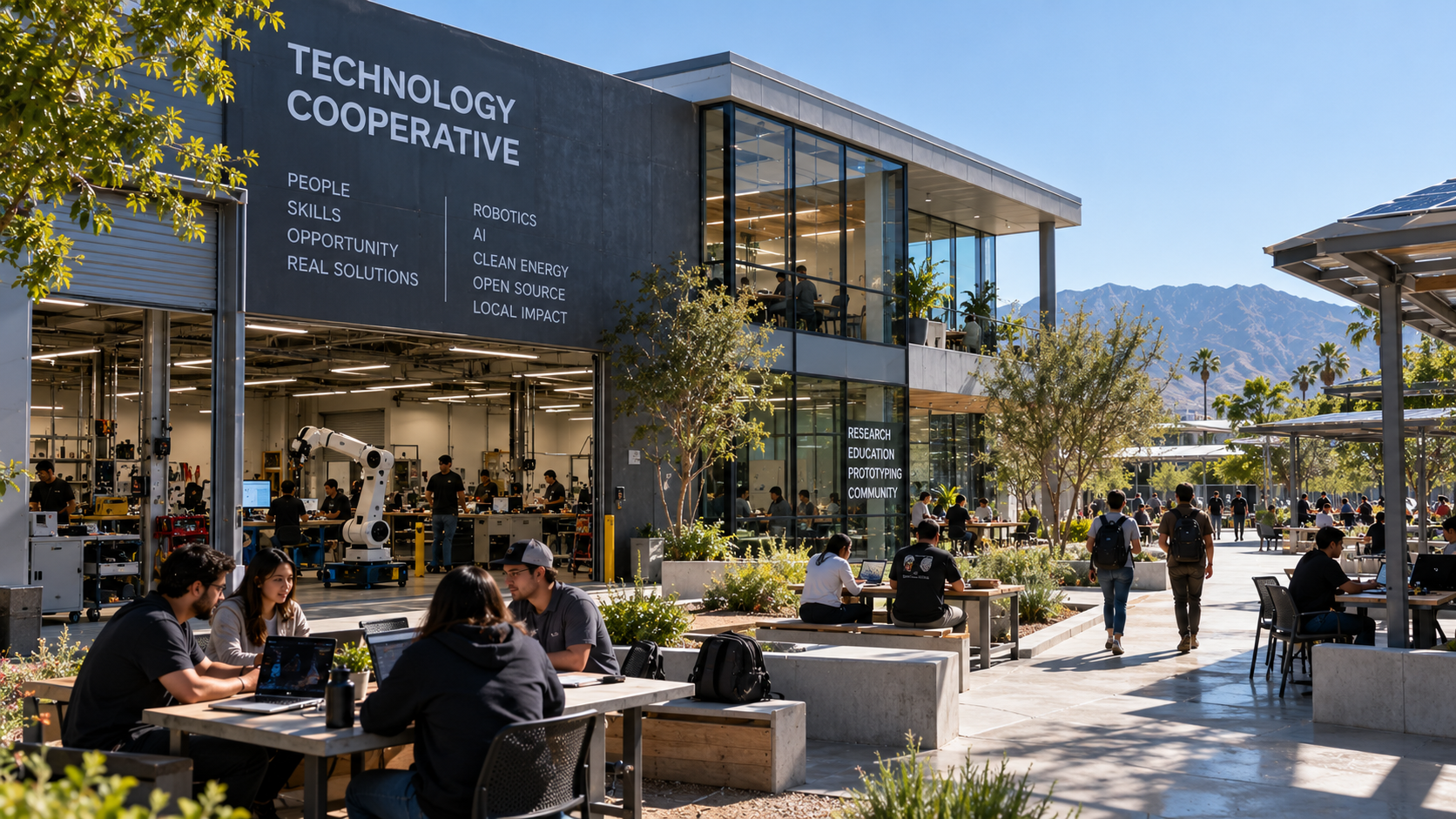
Technology cooperatives offer a practical model for applying democratic principles to the development and ownership of emerging technologies. By giving members a direct role in organizational governance and economic participation, cooperative enterprises can align technological innovation with the interests of the workers and communities contributing to their success.

Unlike traditional corporate structures in which decision-making authority is often determined by capital ownership, cooperatives generally operate through democratic member control and shared economic participation. These principles can be applied to software development, artificial intelligence, robotics, digital infrastructure, and technical services, creating opportunities for technology workers to participate directly in the institutions shaping their industries.

Building Networks of Democratic Enterprises

Individual cooperatives can provide democratic governance within their organizations, but interconnected networks of cooperative enterprises offer opportunities to coordinate development on a much larger scale. By sharing technical expertise, research, infrastructure, and commercial opportunities, these organizations can collaborate on complex projects while preserving their independence and democratic structures.

Federated cooperative networks could support the development of shared software platforms, artificial intelligence systems, robotics technologies, and industrial infrastructure. Through coordinated investment, common technical standards, and representative governance, these networks could establish competitive technological institutions that distribute economic opportunity and decision-making power across a broader community of participants.

Digital platforms enable democratic participation, transparent governance, and public oversight.

Artificial Intelligence and Public Accountability

Artificial intelligence is becoming an increasingly influential component of modern society, supporting decisions in business, education, healthcare, finance, and public administration. As these systems gain greater autonomy and responsibility, questions surrounding transparency, reliability, data ownership, and institutional accountability become essential to ensuring their development serves the broader public interest.

Techno-Democracy proposes that AI governance should extend beyond the organizations developing these systems to include meaningful participation from workers, users, independent researchers, and affected communities. Through transparent evaluation, democratic oversight, and accountable institutional structures, societies can establish safeguards that protect individual rights while encouraging continued innovation and responsible technological advancement.

Robotics, Automation, and Economic Participation

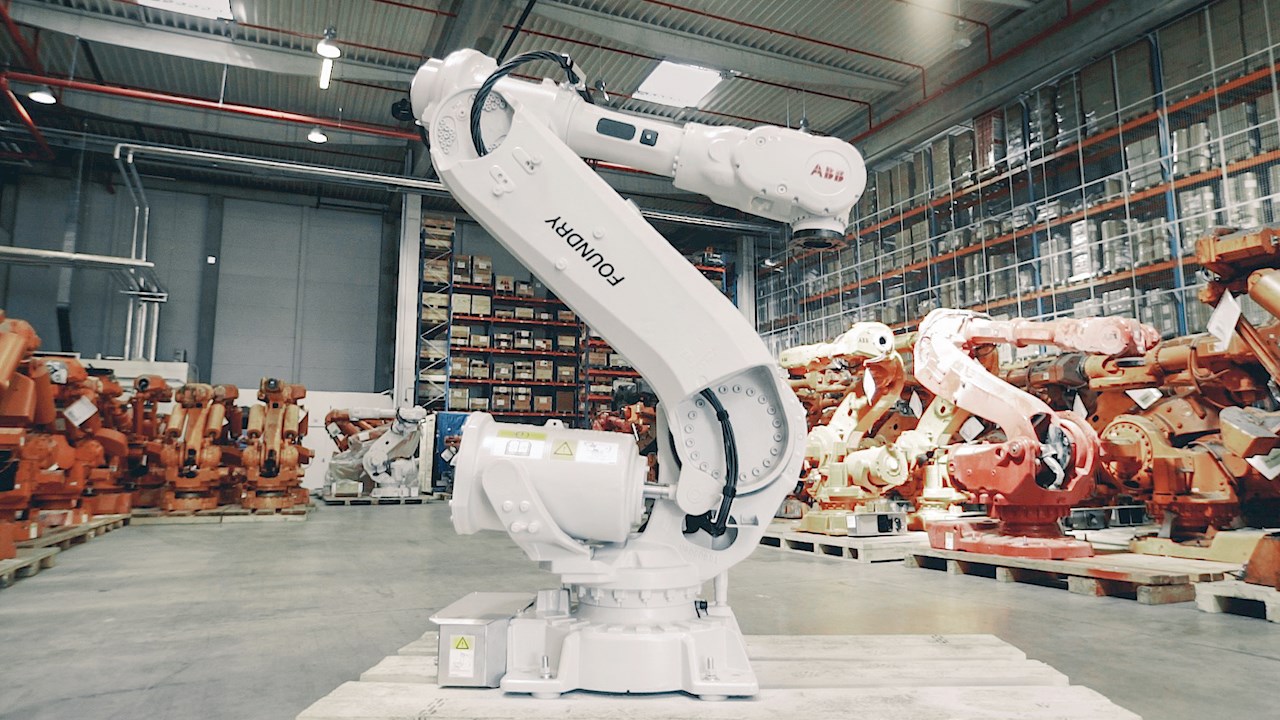
Robotics and automation are transforming the relationship between human labor and economic production by enabling machines to perform increasingly complex physical and cognitive tasks. These developments offer opportunities to improve productivity, reduce dangerous or repetitive work, and expand industrial capabilities, but they also raise important questions about employment, ownership, and the distribution of economic benefits.

A democratic approach to automation would encourage workers and communities to participate in decisions about how these technologies are introduced and how the resulting productivity gains are shared. Cooperative ownership, workforce development programs, employee representation, and broader economic participation could help ensure that automation strengthens human prosperity rather than concentrating its benefits within a limited number of institutions.

Shared technology platforms connect people and communities through collaboration and innovation.

Digital Platforms as Shared Infrastructure

Digital platforms have become essential infrastructure for communication, commerce, education, employment, and access to information. As societies grow increasingly dependent on these systems, their ownership and governance influence not only commercial activity but also how individuals connect, collaborate, and participate in economic and social life.

Developism encourages the creation of digital infrastructure that prioritizes accessibility, interoperability, and democratic participation alongside technological innovation. Cooperative platforms, open-source technologies, and community-governed networks offer alternative models in which users and contributors can participate in shaping the systems they depend upon, helping establish digital environments that serve broader public interests.

Public, Private, and Cooperative Collaboration

Building advanced technological infrastructure requires substantial investment, specialized expertise, and coordination across multiple sectors of the economy. Governments, private enterprises, research institutions, and cooperative organizations each possess resources and capabilities that can contribute to technological development, making collaboration an important component of a comprehensive development strategy.

A democratic technological economy does not require replacing private enterprise or concentrating technological development entirely within public institutions. Instead, Developism supports a diverse economic environment where public investment, private innovation, and cooperative ownership can work together under transparent and accountable frameworks to expand technological capabilities, strengthen infrastructure, and create opportunities for broader economic participation.

Modern urban development creates accessible public spaces that improve quality of life.

Connecting Technology to Human Prosperity

The ultimate measure of technological progress should be its ability to improve human lives, expand economic opportunity, and strengthen the communities in which people live. Advances in artificial intelligence, robotics, and industrial automation can increase productive capacity, reduce the cost of essential goods and services, and create new possibilities for education, healthcare, housing, and infrastructure development.

Developism seeks to connect these technological capabilities directly to measurable improvements in human prosperity. By coordinating investment in scientific research, workforce development, urban infrastructure, and productive industries, societies can transform technological innovation into practical benefits that extend beyond individual businesses and contribute to long-term social and economic development.

Democratic Participation in Economic Development

Economic development decisions influence where resources are invested, which industries receive support, and how communities prepare for technological and social change. Traditionally, these decisions have been shaped primarily by governments, financial institutions, and corporate leadership, often leaving workers and local communities with limited opportunities to participate in determining development priorities.

Techno-Democracy introduces the possibility of broader participation through cooperative institutions, representative development organizations, and transparent decision-making processes. By connecting democratic governance with economic planning and technological expertise, communities can help identify shared priorities, coordinate resources, and participate in development initiatives that reflect their long-term needs and aspirations.

Developism integrates sustainable infrastructure, renewable energy, and connected communities.

From Democratic Principles to Practical Systems

Establishing a democratic technological economy requires translating philosophical principles into functioning institutions, productive enterprises, and accessible opportunities for participation. Cooperative technology organizations, educational networks, research initiatives, and development programs can provide the foundation for systems that combine democratic governance with the technical expertise and economic resources necessary to deliver meaningful results.

These institutions can begin with practical initiatives such as collaborative software development, workforce training, shared digital infrastructure, and cooperative business formation. As their capabilities expand, they can support more ambitious projects in robotics, artificial intelligence, advanced manufacturing, and urban development, demonstrating how democratic organization can contribute directly to technological and economic progress.

The Future of Developism and Techno-Democracy

Developism presents a vision of progress in which human prosperity, urban development, and technological advancement become the central objectives of economic organization. Techno-Democracy complements this philosophy by establishing democratic participation, shared ownership, and institutional accountability as important principles guiding the development and governance of increasingly powerful technological systems.

Together, these ideas offer a framework for building a future in which technological progress strengthens democratic institutions rather than diminishing their influence. By organizing workers, developing cooperative enterprises, and connecting innovation with long-term social development, society can begin creating institutions that ensure the technological revolution becomes an opportunity for shared prosperity, greater participation, and continued human advancement.

Comments

Log in to leave a comment
No comments yet. Be the first to comment!
Hello!