

Operationsproduct
Bubble AI — Agentic Business Automation
A unified AI platform that connects intelligent agents, business communications, shared memory, and automated workflows to streamline operations across your organization.
80
Explore how Applied Manufacturing Technologies combines FANUC collaborative and industrial robots with intelligent palletizing software to automate carton stacking, mixed-case handling, and warehouse material handling operations.
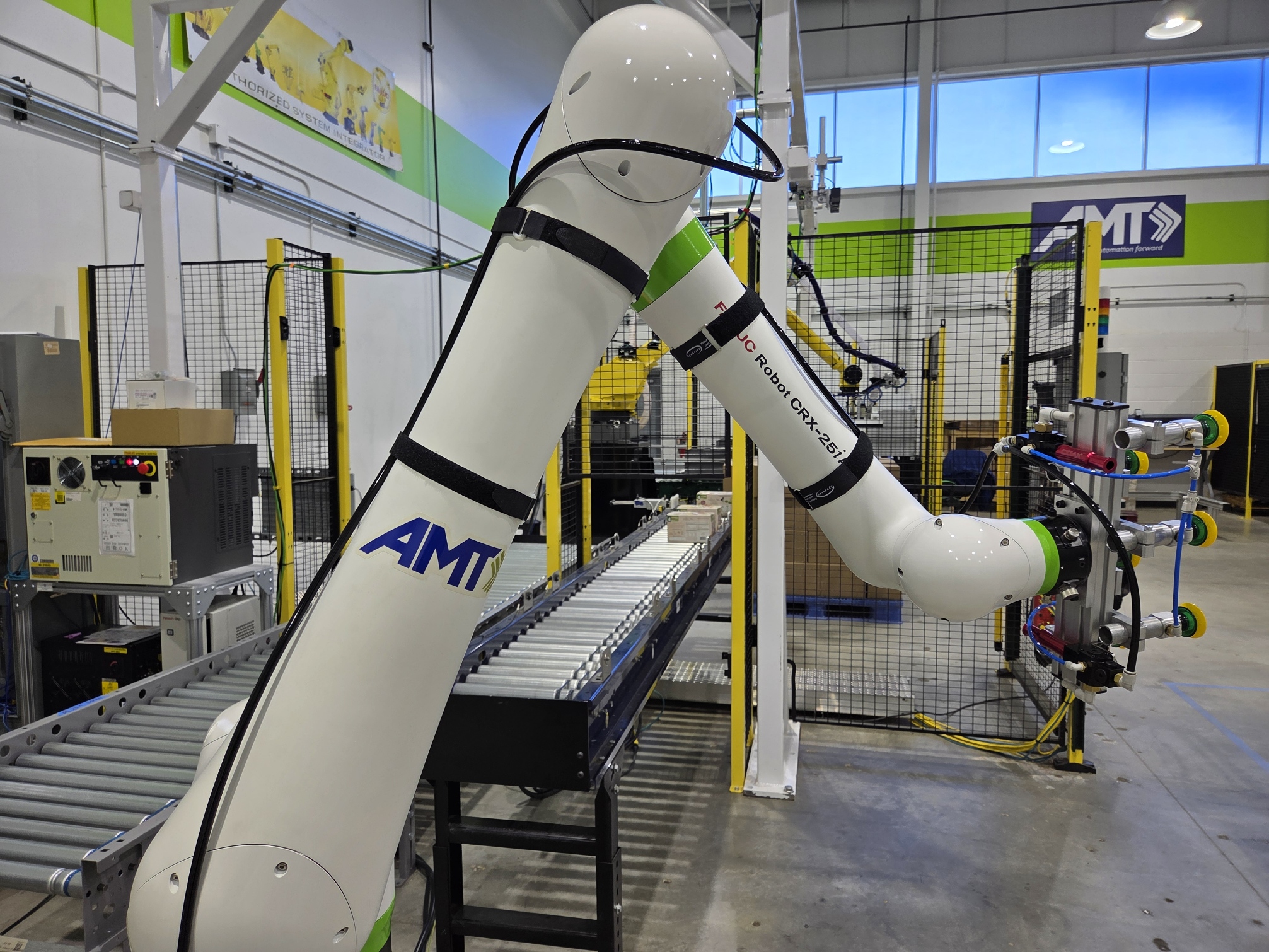
Applied Manufacturing Technologies (AMT) robotic automation solutions for industrial material handling.
Applied Manufacturing Technologies (AMT) is an industrial automation and robotics integration company headquartered in Orion Township, Michigan. The company develops robotic solutions for manufacturing, packaging, logistics, and material handling operations. Its palletizing portfolio includes Maverick, a compact collaborative robotic palletizing system, and R-Palletize, a configurable industrial robotic palletizing station. Both solutions integrate FANUC robotic technology with specialized gripping equipment, control software, and material handling components to automate repetitive carton stacking and pallet preparation tasks.
The two systems address different operational requirements. Maverick uses the FANUC CRX-30iA collaborative robot and emphasizes flexible deployment, intuitive programming, and a compact footprint. R-Palletize uses the FANUC M-710iC/50H industrial robot and is designed for configurable palletizing operations involving different product sizes and stacking patterns. AMT also offers a Maverick depalletizing configuration equipped with AI-powered vision for identifying and removing mixed cases from incoming pallets. Together, these technologies provide options for automating both inbound pallet handling and outbound pallet preparation.
Warehouse palletizing requirements vary depending on the products being handled, production volumes, available floor space, and operational schedules. Some facilities process relatively small quantities of mixed merchandise and need equipment that can accommodate frequent product changes. Others operate continuous packaging or distribution lines where cartons arrive at predictable intervals and must be stacked quickly and consistently. Conventional fixed automation can be effective in high-volume environments, but smaller or more variable operations may benefit from compact systems that are easier to reconfigure.
AMT addresses these differences through two distinct palletizing architectures. Maverick is designed for facilities seeking collaborative automation with simplified programming and a relatively small installation footprint. R-Palletize provides a more traditional industrial robotic cell with configurable hardware, gripping equipment, and pallet patterns. Both systems can be incorporated into existing production and warehouse workflows, allowing operators to automate repetitive lifting and stacking without necessarily replacing their entire material handling infrastructure. The appropriate system depends on product characteristics, required throughput, available space, and the level of automation needed.
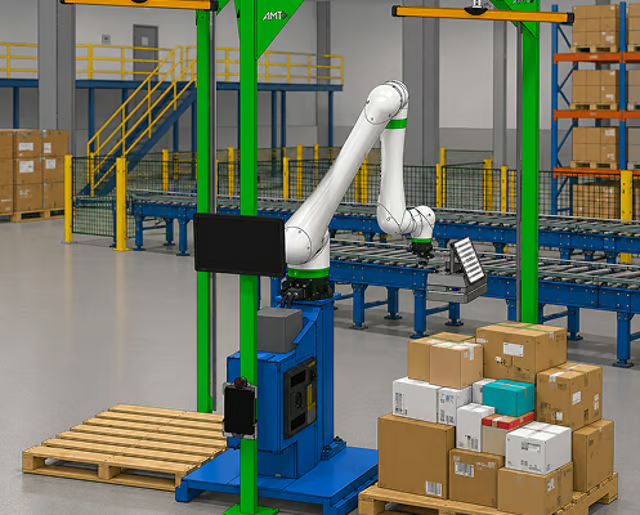
Maverick is built around the FANUC CRX-30iA collaborative robot, a six-axis robotic arm designed for flexible industrial automation. AMT's published Maverick configuration specifies a 25-kilogram handling payload and a reach of approximately 1,889 millimeters. The system combines robotic manipulation with intuitive controls that allow operators to configure pallet patterns and adapt to changes in carton dimensions. Its compact design makes it suitable for production lines and warehouse workstations where space is limited. The collaborative robot also incorporates force-limiting and other safety-related features, although the complete installation must still undergo an application-specific safety assessment.
AMT also offers the Maverick Depal system for automated mixed-case depalletizing. This configuration combines the FANUC CRX-30iA with integrated 3D vision and AI-based perception to identify cartons arranged in different positions and orientations. Instead of requiring pallets containing identical cartons in predetermined patterns, the system can analyze mixed-SKU loads and select visible cases for removal. The robotic arm retrieves cartons and transfers them to a designated output location for subsequent processing. This capability is particularly relevant to receiving operations where incoming pallets contain different products that must be separated before storage or distribution.
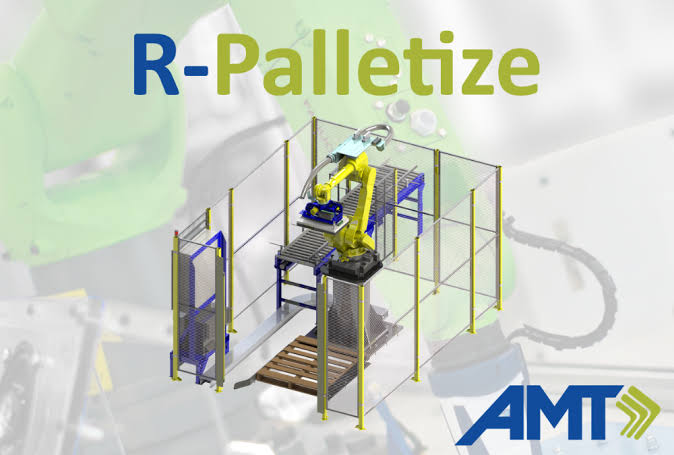
R-Palletize is AMT's configurable industrial palletizing station, introduced in June 2021 for manufacturers handling different products and pallet patterns. The system uses the FANUC M-710iC/50H, a five-axis industrial robot with a maximum wrist payload of 50 kilograms and a reach of approximately 2,003 millimeters. AMT specifies case-handling capabilities of up to 40 pounds for its standard R-Palletize configurations, accounting for the complete application and gripping equipment. The robot's high-speed mechanical design is optimized for repetitive handling tasks, making it suitable for packaging lines where cartons must be collected and stacked continuously.
R-Palletize is offered in four hardware configurations and incorporates a Rockwell Automation control system with optional end-of-arm tooling selected for the application. Operators can configure the station to accommodate different carton sizes, pallet dimensions, and stacking arrangements. Products are delivered to the robot through a designated infeed location, where the arm retrieves them and places them onto pallets according to programmed patterns. The system can be integrated with conveyors, pallet handling equipment, and other production automation components to coordinate material movement. Its configurable architecture allows manufacturers to adapt a single robotic station to multiple product requirements rather than installing separate palletizers for every packaging format.
AMT's palletizing systems are suitable for manufacturing facilities, distribution centers, food and beverage operations, pharmaceutical packaging, and other environments where products must be organized onto pallets. Maverick is particularly relevant to facilities handling moderate production volumes or frequently changing product configurations. Its collaborative design allows operators to reconfigure palletizing tasks while maintaining a relatively compact workstation. The Maverick depalletizing configuration also supports warehouse receiving by removing mixed cartons from incoming pallets and transferring them for sorting, inspection, or subsequent storage.
R-Palletize is designed for industrial environments that require consistent pallet construction across multiple product types. Its programmable stacking patterns make it suitable for end-of-line packaging operations, where finished cartons arrive from production equipment and must be prepared for warehouse storage or outbound transportation. The system can support different pallet arrangements within a single robotic cell, allowing facilities to accommodate changes in product dimensions or packaging requirements. Together, Maverick and R-Palletize cover a range of applications, from collaborative palletizing and mixed-case depalletizing to automated industrial pallet building.
Maverick and R-Palletize offer different approaches to improving material handling productivity. Maverick emphasizes deployment flexibility, simplified operation, and the ability to accommodate changing palletizing requirements. Its collaborative robotic architecture can make automation practical for facilities that do not require a large industrial palletizing cell. R-Palletize emphasizes configurable industrial automation and consistent handling of cartons in repetitive packaging workflows. Both systems can reduce manual stacking requirements, improve pallet pattern consistency, and help coordinate product movement between production lines, warehouse storage, and shipping operations. Actual throughput and return on investment depend on carton characteristics, operating schedules, equipment configuration, and integration requirements.
Workplace safety is another important consideration for both systems. Manual palletizing involves repetitive lifting, bending, and reaching, particularly when employees handle cartons throughout extended production shifts. Robotic palletizing reduces direct exposure to these activities while allowing workers to concentrate on equipment supervision, quality control, and material flow management. Maverick's collaborative technology provides safety-related capabilities for appropriately designed workspaces, while R-Palletize is generally implemented as an industrial robotic cell with suitable guarding and protective equipment. By integrating FANUC robotics with application-specific controls and material handling technology, AMT provides two complementary solutions for modernizing warehouse and manufacturing palletizing operations.
A unified AI platform that connects intelligent agents, business communications, shared memory, and automated workflows to streamline operations across your organization.
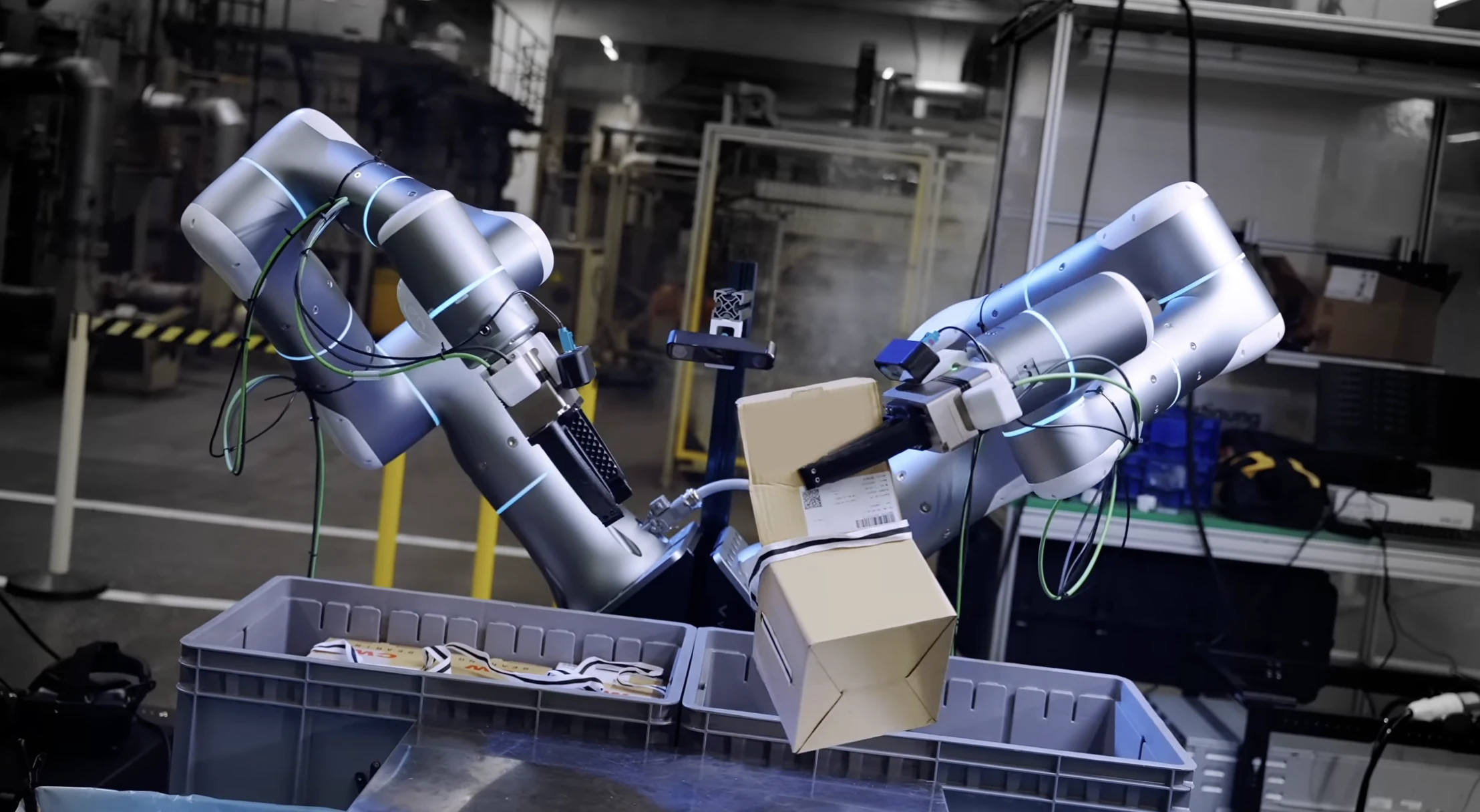
Rhoda AI is developing robotic foundation models that combine visual understanding, physical intelligence, and tactile sensing to help robots perform complex tasks across manufacturing and industrial environments.
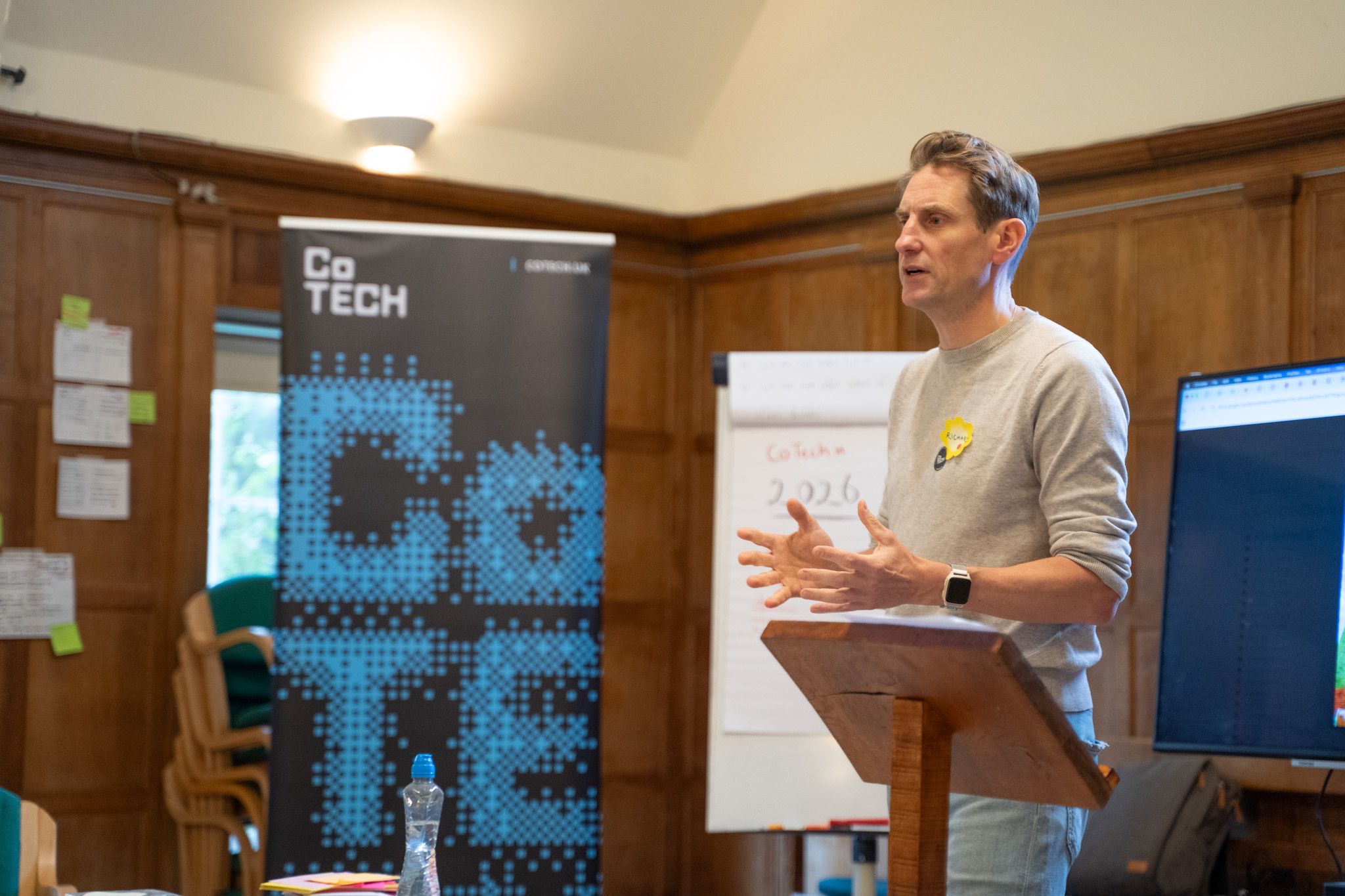
An examination of how the UK's Cooperative Technologists network connects worker-owned technology businesses, shares resources, and uses democratic governance to build an alternative model for the digital economy.
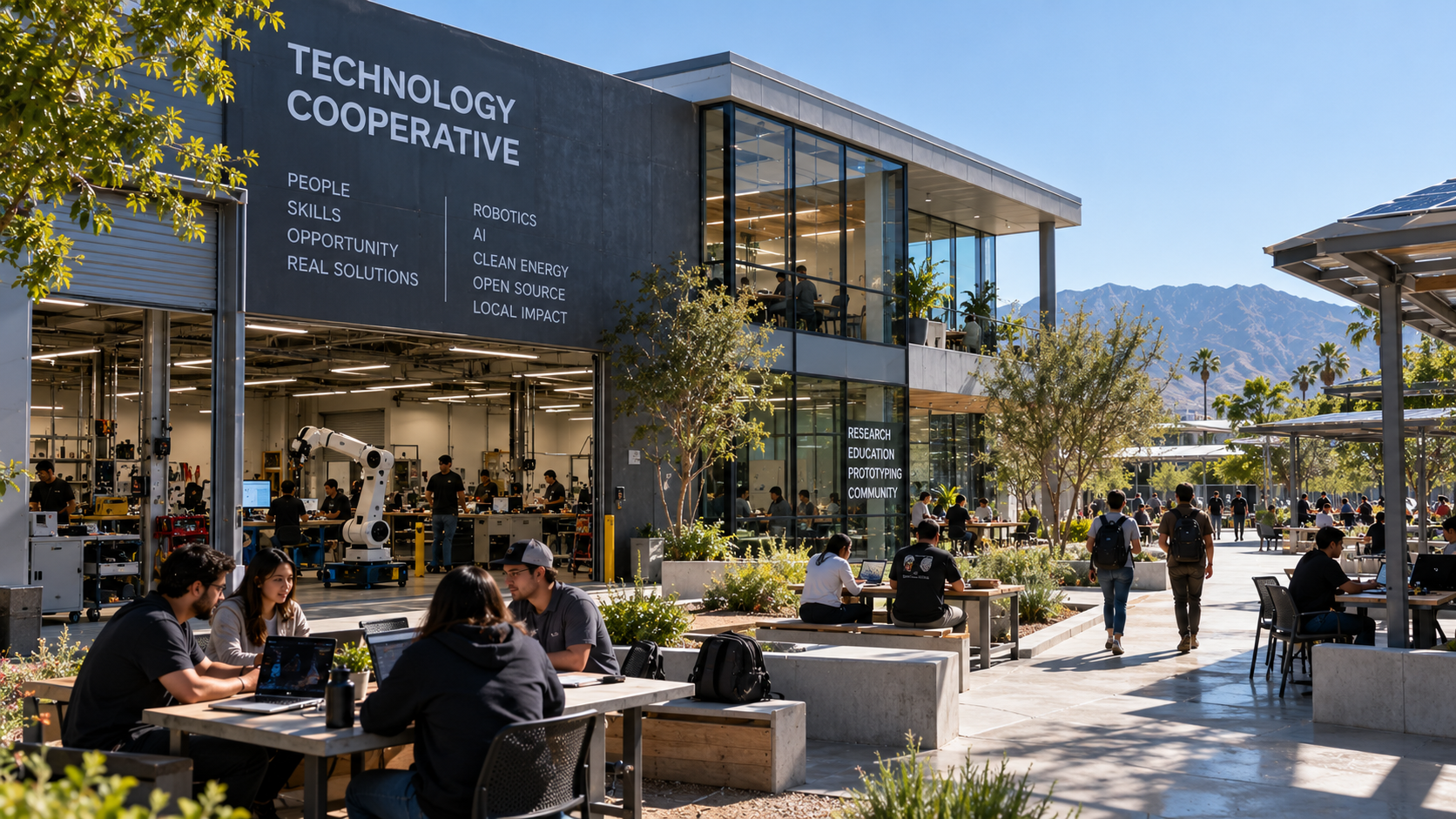
Exploring new models of democratic participation through sortition, rotating leadership, collective investment, and technology-enabled cooperative governance.
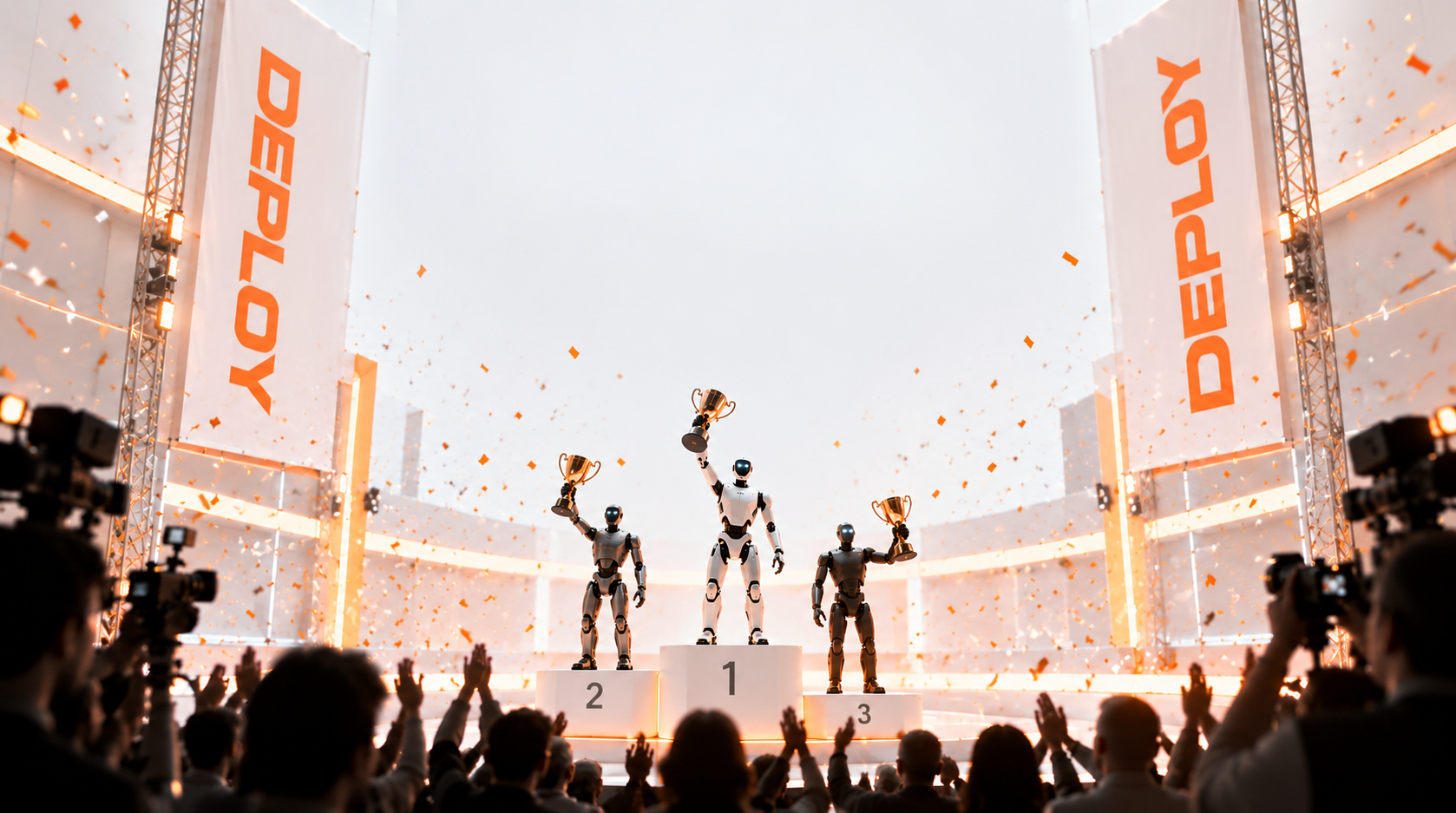
An exciting head-to-head competition where humanoid robots tackle real-world challenges, showcasing the latest advances in robotics, artificial intelligence, and autonomous technology.
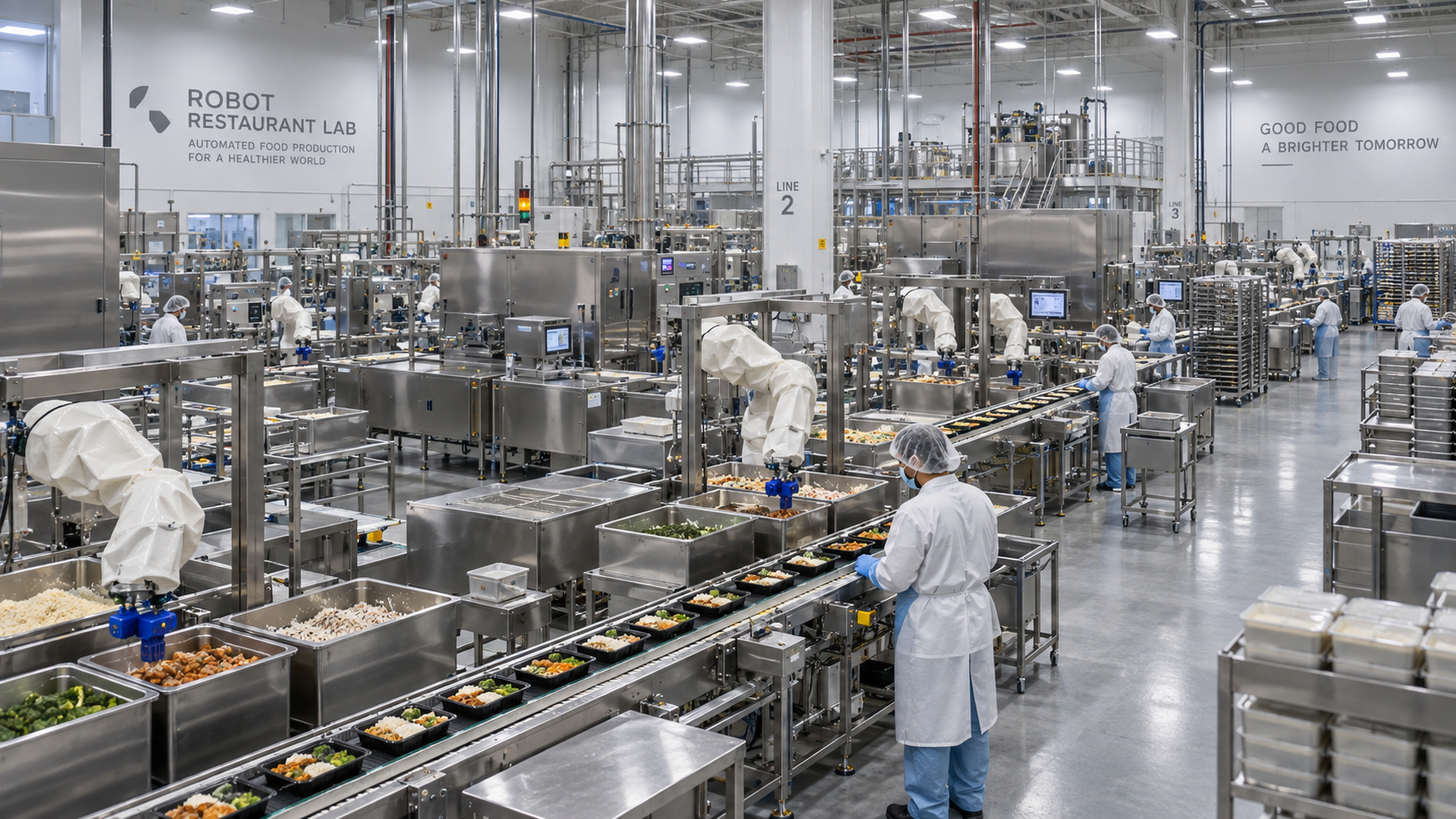
Developing highly automated food production facilities that combine robotics, industry expertise, and regional partnerships to reduce costs and supply prepared food at commercial scale.