

Operationsproduct
Bubble AI — Agentic Business Automation
A unified AI platform that connects intelligent agents, business communications, shared memory, and automated workflows to streamline operations across your organization.
80
Explore how Dematic combines industrial robotics, intelligent pallet-building software, and automated material handling systems to organize cartons, build stable pallets, and streamline warehouse receiving and distribution.
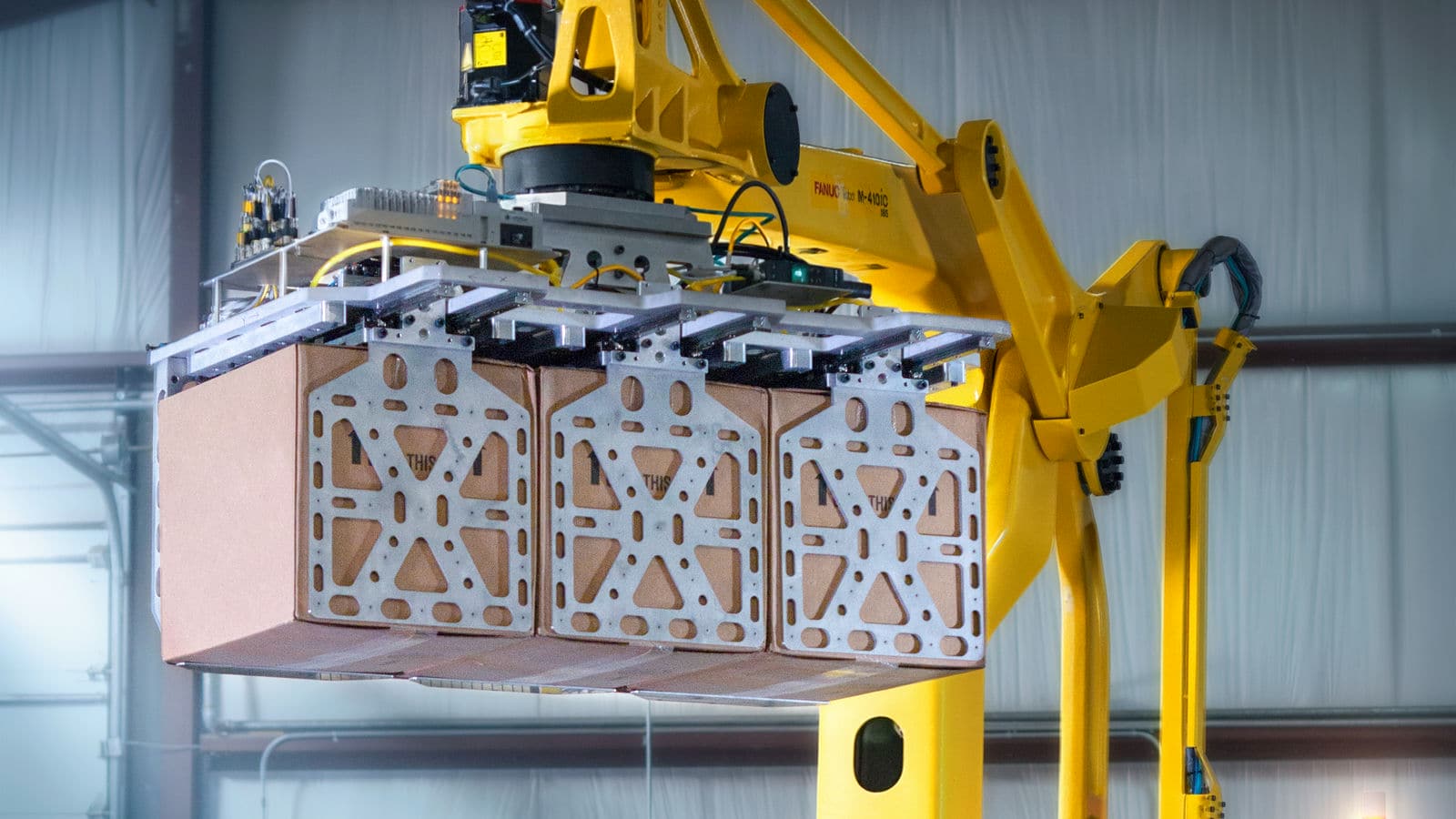
Dematic robotic palletizer equipped with automated box handling technology.
Dematic is a global warehouse automation company headquartered in Atlanta, Georgia, and part of the KION Group. The company develops integrated material handling solutions for distribution centers, manufacturing facilities, and logistics operations. Its automation portfolio includes robotic picking systems, conveyors, automated storage and retrieval systems, and palletizing technology. Dematic's robotic palletizing solutions are designed to automate the stacking and organization of packaged products onto pallets, reducing the need for repetitive manual handling while improving consistency throughout warehouse operations.
Dematic offers several palletizing technologies designed for different inventory characteristics and operational requirements. Its portfolio includes case palletizing robots for building pallets containing a single product type, layer-picking robots for handling complete layers of merchandise, and mixed-case palletizing systems for assembling pallets containing multiple product types. These solutions use industrial robotic arms, specialized gripping equipment, and intelligent control software to handle cartons and other packaged goods. Their modular configurations allow warehouse operators to select the appropriate level of automation for their facilities, ranging from individual robotic palletizing cells to fully integrated distribution systems.
Palletizing plays an important role in warehouse receiving, inventory storage, and outbound distribution. Products arriving from manufacturing lines or picking operations must often be organized into stable pallet loads before transportation or storage. Traditionally, workers perform these tasks by manually lifting cartons and arranging them into layers. The process becomes increasingly complicated when pallets contain products of different sizes, weights, and packaging characteristics. Heavy cartons must generally be positioned beneath lighter products, while fragile merchandise requires additional consideration to prevent damage during handling and transportation.
Dematic addresses these challenges through automated pallet-building systems that coordinate product sequencing, robotic handling, and load stabilization. Its software determines how cartons should be arranged according to their dimensions, weights, and operational requirements. Robotic equipment then places products onto pallets in the required sequence, creating organized loads suitable for storage or shipment. For mixed-product orders, the system can arrange merchandise according to delivery routes or store replenishment requirements. This approach helps warehouse operators automate complex pallet-building processes while maintaining consistent product organization and reducing manual handling.
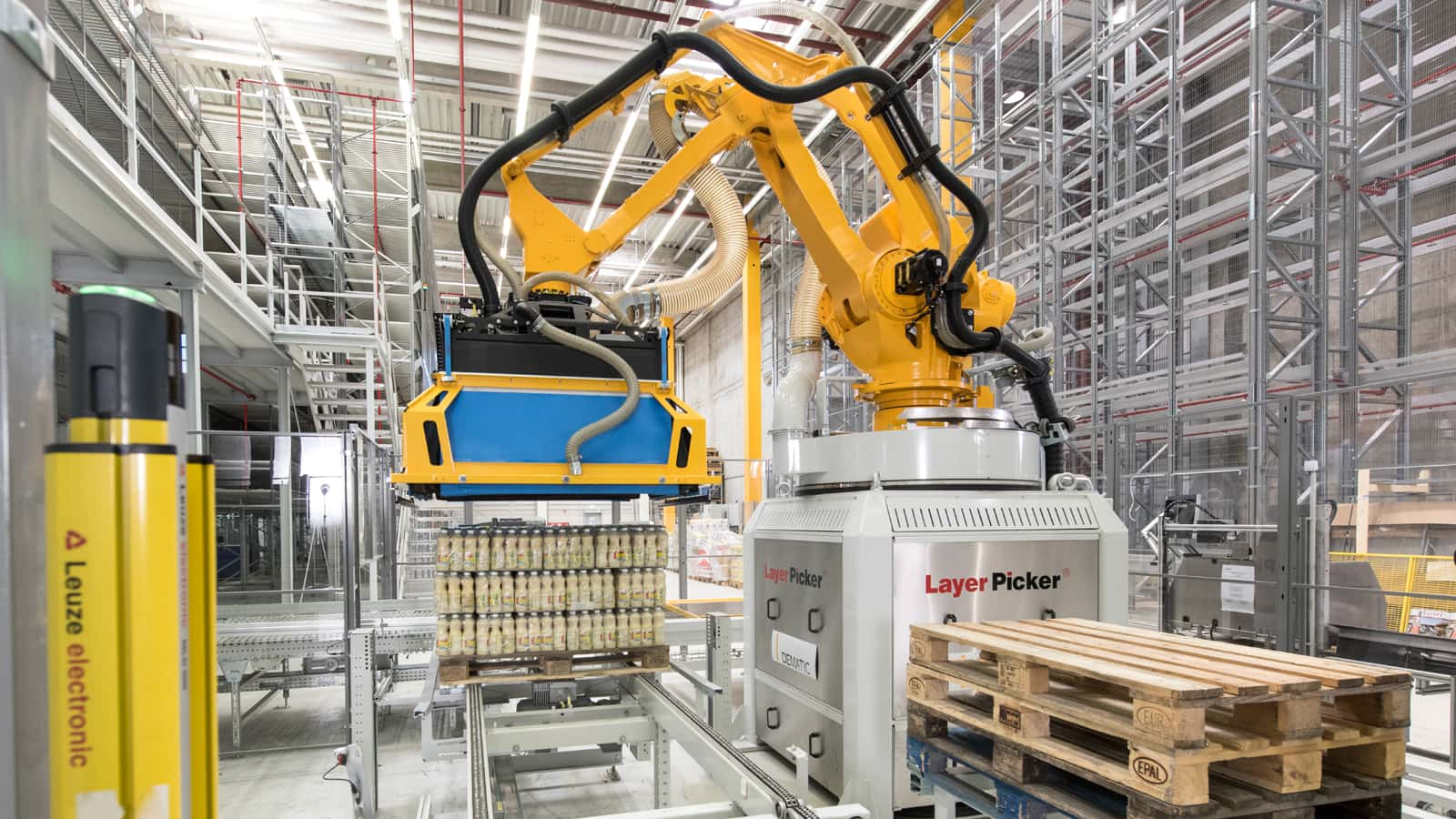
Dematic's palletizing systems use industrial robotic arms and specialized gripping equipment to handle cartons, cases, and complete product layers. Depending on the application, robots can be configured with vacuum grippers, mechanical clamps, or other end-of-arm tooling suited to particular packaging materials. Case palletizing systems retrieve individual cartons from conveyor lines and position them onto pallets, while layer-picking systems can transfer groups of products simultaneously. These configurations allow facilities to automate pallet building for different product volumes, dimensions, and packaging requirements without relying on a single standardized handling method.
One of Dematic's distinguishing capabilities is its software-driven approach to mixed-case palletizing. The system evaluates product characteristics and determines an appropriate stacking sequence to improve load stability and space utilization. Heavier and more durable cartons can be positioned near the bottom of a pallet, while lighter or more fragile products are placed above them. Dematic also supports pallet-building configurations that account for delivery routes and store layouts, allowing products to be arranged in an order that simplifies unloading at their destination. These capabilities connect robotic palletizing with broader inventory management and distribution requirements.
Dematic robotic palletizers are designed to operate within integrated warehouse automation systems rather than as isolated machines. Products can be transported from storage or picking areas through conveyor networks before arriving at robotic palletizing stations. Depending on the facility configuration, automated storage systems such as Dematic Multishuttle can retrieve and sequence cartons before transferring them to the palletizer. This coordinated process ensures that products arrive in the correct order for efficient pallet construction, reducing the need for additional sorting or manual rearrangement.
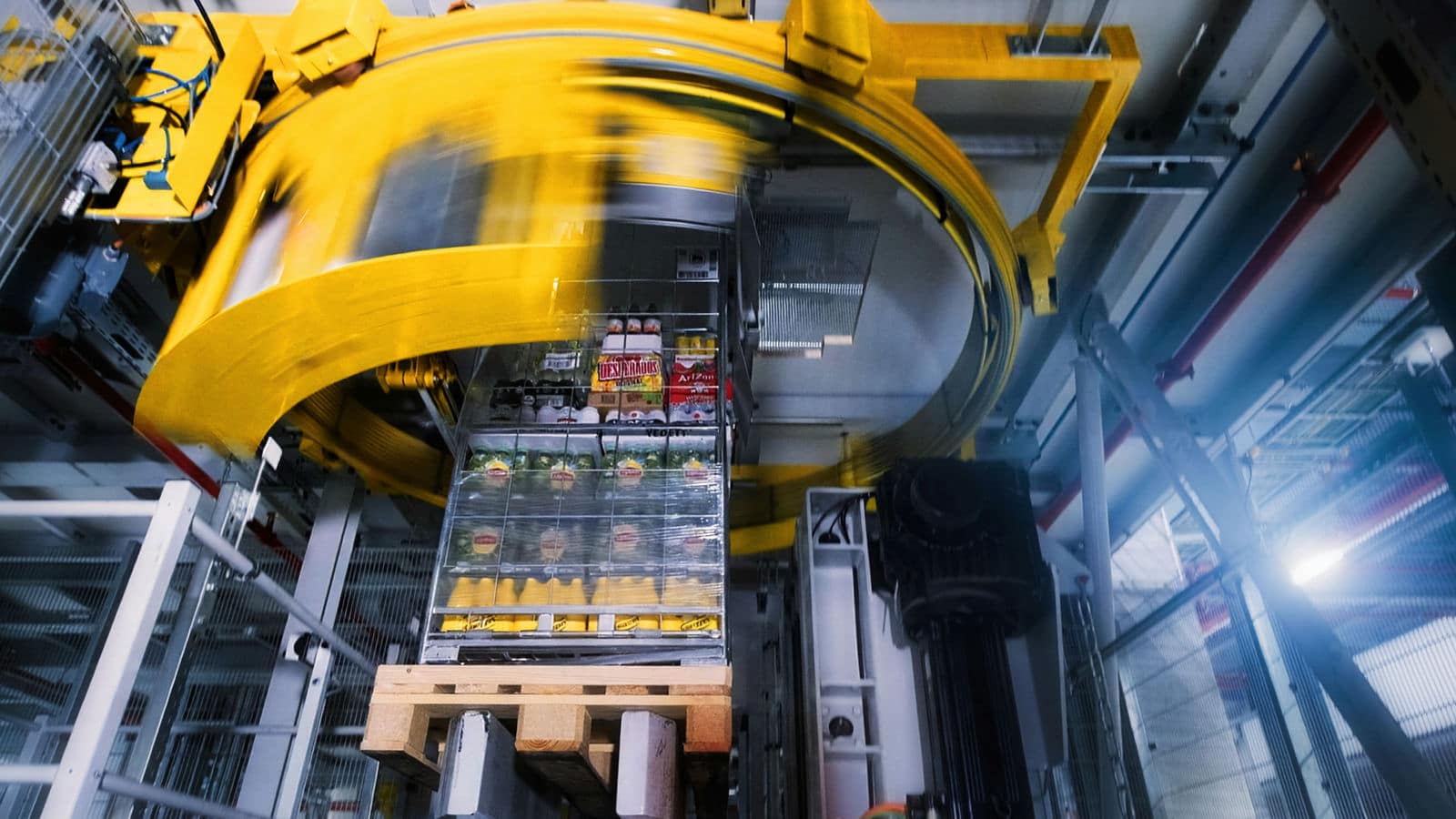
The company's software coordinates equipment movements, inventory sequencing, and pallet-building operations across the facility. Once a pallet is completed, automated conveyors can transport it to stretch-wrapping equipment, labeling stations, storage locations, or outbound shipping areas. Some Dematic systems incorporate wrapping during pallet construction to improve load stability as additional layers are added. The modular architecture also allows facilities to combine robotic palletizing with manual workstations or other automated equipment, supporting different levels of automation according to operational needs and investment requirements.
Dematic robotic palletizing systems are used in grocery distribution, retail logistics, food and beverage manufacturing, consumer goods operations, and third-party logistics facilities. These environments frequently process large quantities of packaged merchandise that must be organized for storage or transportation. In manufacturing operations, robotic palletizers can build uniform pallets containing a single product type as cartons leave production lines. In distribution centers, mixed-case systems assemble pallets containing different products selected for specific customer orders, retail stores, or delivery routes. Layer-picking systems provide an additional option for operations that handle merchandise in larger groups rather than individual cartons.
Mixed-case palletizing is particularly valuable in grocery and retail distribution, where individual stores often require shipments containing hundreds of different products. Dematic's automated fulfillment systems can retrieve inventory from storage, sequence cartons, and build pallets according to store replenishment requirements. Products can be organized to support efficient unloading and shelf stocking, reducing unnecessary handling at the destination. Dematic also offers solutions for ambient, chilled, and frozen environments, making robotic palletizing applicable to temperature-controlled distribution operations where repetitive manual handling can be especially demanding.
Dematic robotic palletizing systems are designed to improve warehouse productivity through consistent product handling, automated sequencing, and optimized pallet construction. By arranging cartons according to their physical characteristics and delivery requirements, the systems can create stable loads that use available pallet and trailer space efficiently. Dematic reports that its broader mixed-case fulfillment solutions can reduce manual labor requirements by up to 50–70% compared with traditional processes and potentially reduce transportation costs by up to 18%. These are manufacturer-reported estimates for integrated fulfillment solutions rather than guaranteed results from an individual palletizing robot. Actual performance depends on facility design, product characteristics, throughput requirements, and the level of automation implemented.
Workplace safety is another important benefit of automated palletizing. Repetitive lifting, bending, and stacking can place significant physical demands on warehouse employees, particularly when handling heavy cartons or working in refrigerated environments. Robotic palletizing reduces direct involvement in these activities while allowing personnel to focus on equipment supervision, quality control, maintenance, and inventory coordination. Dematic's modular approach also provides opportunities for facilities to expand automation as operational requirements change. By combining industrial robotics with intelligent sequencing and integrated material handling equipment, Dematic provides a comprehensive approach to automating pallet preparation and distribution operations.
A unified AI platform that connects intelligent agents, business communications, shared memory, and automated workflows to streamline operations across your organization.
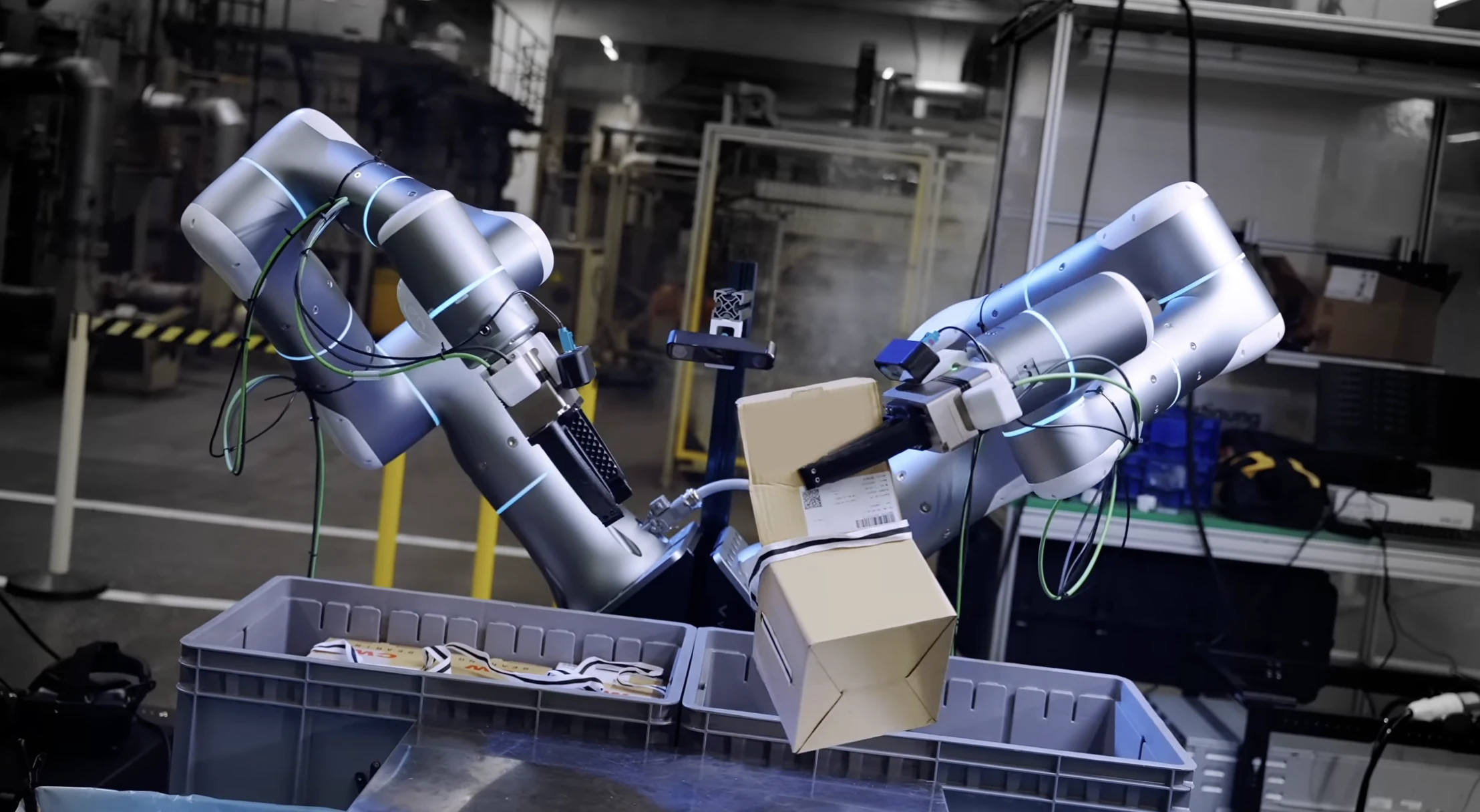
Rhoda AI is developing robotic foundation models that combine visual understanding, physical intelligence, and tactile sensing to help robots perform complex tasks across manufacturing and industrial environments.

An examination of how the UK's Cooperative Technologists network connects worker-owned technology businesses, shares resources, and uses democratic governance to build an alternative model for the digital economy.
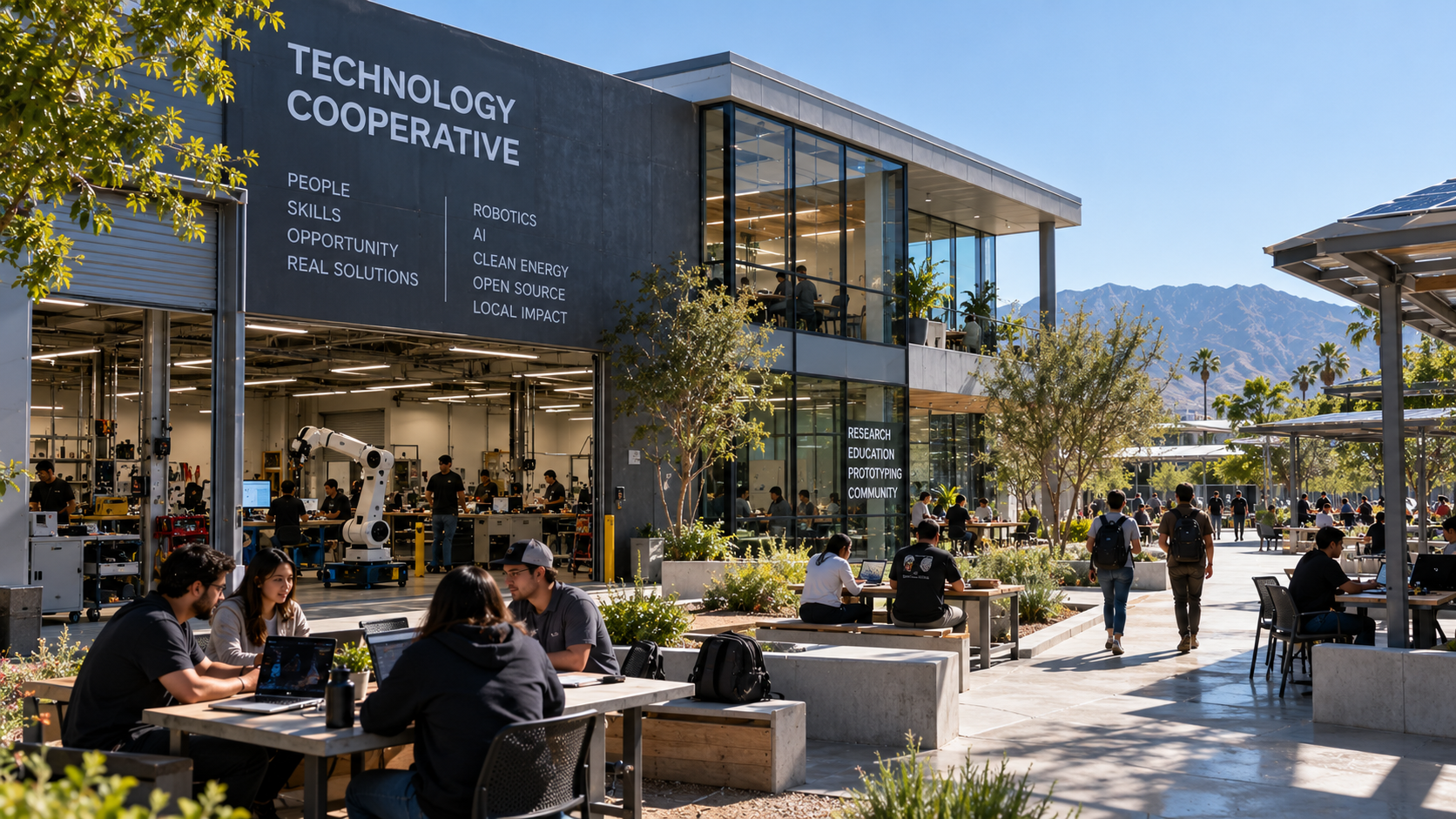
Exploring new models of democratic participation through sortition, rotating leadership, collective investment, and technology-enabled cooperative governance.

An exciting head-to-head competition where humanoid robots tackle real-world challenges, showcasing the latest advances in robotics, artificial intelligence, and autonomous technology.
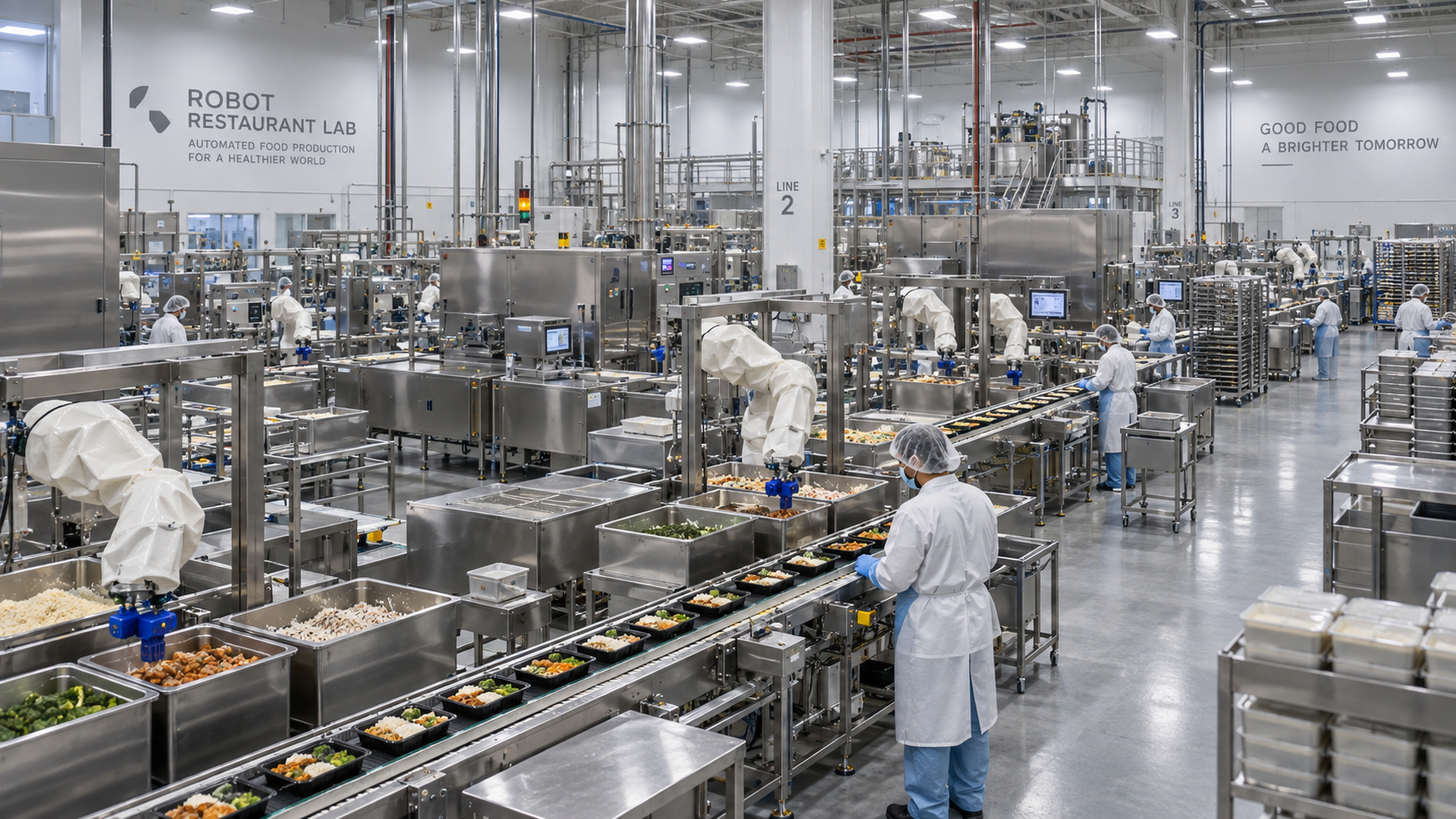
Developing highly automated food production facilities that combine robotics, industry expertise, and regional partnerships to reduce costs and supply prepared food at commercial scale.