

Operationsproduct
Bubble AI — Agentic Business Automation
A unified AI platform that connects intelligent agents, business communications, shared memory, and automated workflows to streamline operations across your organization.
80
Explore how FANUC combines industrial robotic arms, intelligent vision systems, and automated palletizing technology to stack cartons, organize products, and streamline warehouse receiving and shipping operations.
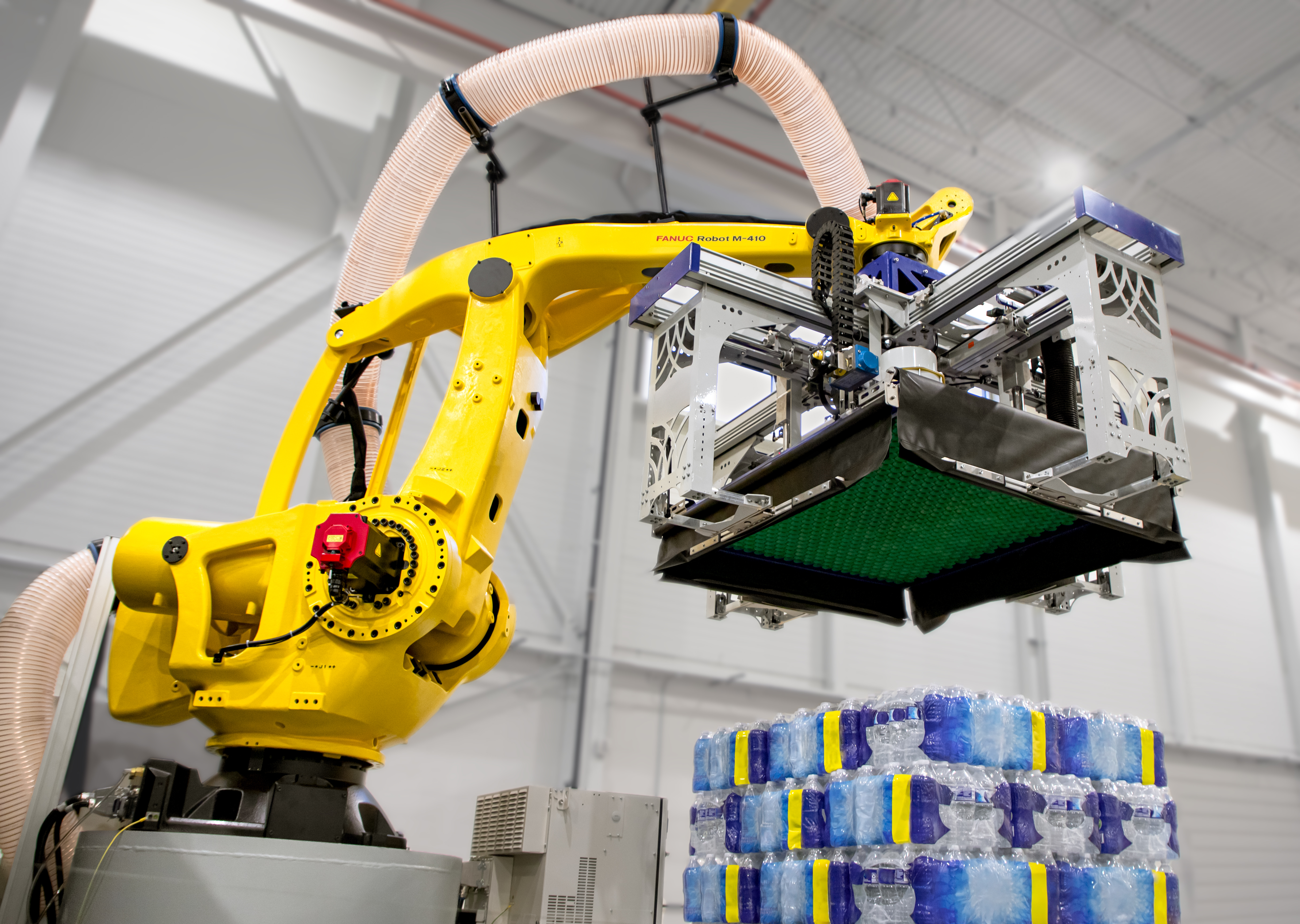
FANUC M-410 industrial robotic palletizer for automated warehouse material handling.
FANUC is a global industrial automation company headquartered in Japan, specializing in robotics, computer numerical control systems, and factory automation technology. Its industrial robot portfolio includes specialized palletizing robots designed to automate the stacking and handling of cartons, bags, cases, and other packaged products. These systems are widely applicable to manufacturing plants, distribution centers, food and beverage operations, and logistics facilities where products must be organized onto pallets for storage or transportation. By combining industrial robotic arms with automated gripping equipment and intelligent control software, FANUC provides solutions for repetitive, high-volume pallet handling tasks.
FANUC offers several robotic platforms for palletizing applications, including the M-410 series, which is specifically engineered for high-speed palletizing and material handling. Models within the series accommodate different payload capacities, reaches, and installation requirements, allowing facilities to select equipment appropriate for their products and throughput needs. These robots can be equipped with mechanical, vacuum, or specialized end-of-arm tooling to handle different packaging materials. Their programmable movements enable consistent product placement and pallet stacking, helping warehouse operators maintain organized loads while reducing reliance on manual lifting.
Palletizing is an essential warehouse process that connects production lines, receiving operations, storage systems, and outbound distribution. Traditionally, workers manually stack cartons or packaged products onto wooden or plastic pallets, arranging each layer to maintain stability during transportation. These tasks can become physically demanding when products are heavy, production volumes are high, or multiple pallet configurations are required. Manual palletizing can also create inconsistencies in stacking patterns, potentially affecting load stability and storage efficiency.
FANUC robotic palletizers automate these operations by retrieving products from conveyor lines or designated pickup stations and placing them onto pallets according to programmed stacking patterns. The robots can handle individual cartons or multiple products during a single cycle, depending on the gripping system and application requirements. Their control software coordinates lifting, rotation, and placement movements to build organized pallet loads with consistent positioning. This approach allows facilities to integrate automated palletizing into existing material handling operations while improving repeatability and reducing the physical demands of manual stacking.
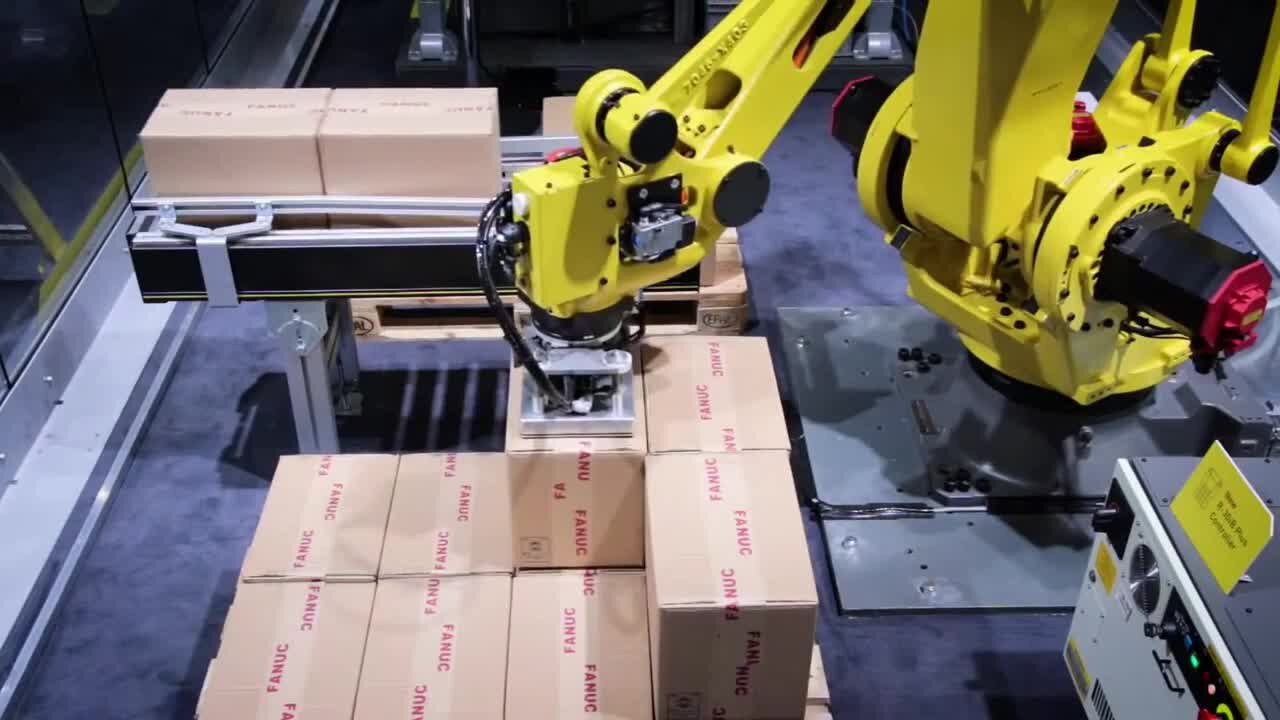
FANUC's palletizing systems use industrial robotic arms designed for high-speed movement, precise positioning, and repetitive material handling. The M-410 series employs a specialized four-axis mechanical configuration optimized for palletizing applications, allowing the robot to move products efficiently between pickup locations and pallet positions. Depending on the model, M-410 robots support payload capacities ranging from approximately 110 kilograms to 700 kilograms. Their extended working envelopes enable them to build tall pallet loads and service multiple pallet positions within a single robotic cell.
The robots can be equipped with a variety of end-of-arm gripping systems selected according to the products being handled. Vacuum grippers are commonly used for cardboard cartons and packaged consumer goods, while mechanical clamps and specialized tooling can accommodate bags, containers, and other materials. Some installations use FANUC's iRVision technology to identify product positions and support robotic picking when items are not presented in precisely fixed locations. The combination of robotic movement, product sensing, and application-specific gripping equipment allows FANUC palletizers to accommodate a broad range of industrial packaging requirements.
FANUC provides dedicated software tools for programming palletizing operations, including PalletPRO and PalletTool. PalletPRO allows system designers to create and simulate palletizing layouts before equipment is installed, while PalletTool supports the configuration and execution of palletizing patterns on compatible robotic controllers. These tools help operators define product dimensions, pallet layouts, stacking sequences, and placement positions. By simulating movements and organizing pallet patterns digitally, facilities can reduce programming complexity and evaluate different configurations before beginning production.
FANUC palletizing robots are typically integrated into automated workcells that include conveyors, pallet dispensers, safety equipment, and downstream material handling systems. Products arrive at a designated pickup location, where the robotic arm retrieves them and places them onto a pallet. Once a pallet is complete, it can be transferred to a wrapping station, forklift pickup location, or automated storage system. FANUC's robotic controllers can communicate with programmable logic controllers and other industrial automation equipment, allowing palletizing operations to coordinate with production lines, warehouse conveyors, and broader facility control systems.
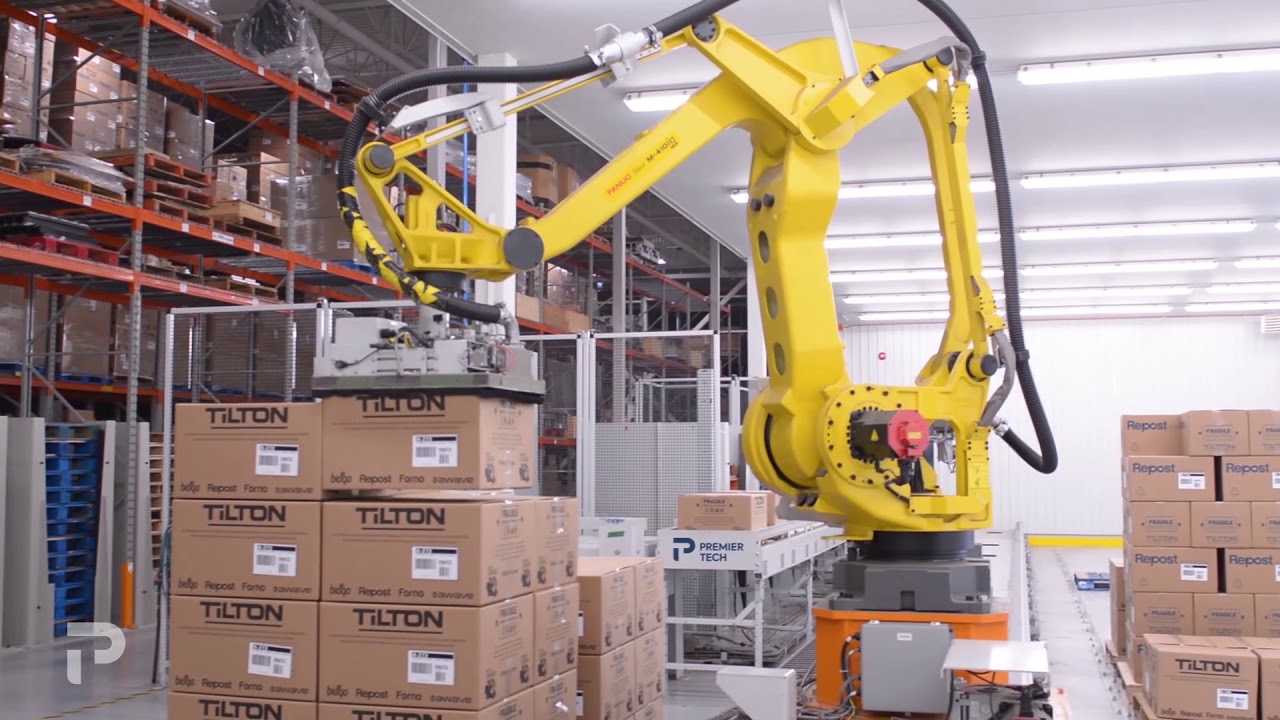
FANUC robotic palletizers are used in manufacturing facilities, distribution centers, and logistics operations that require consistent handling of packaged products. In receiving operations, these robots can depalletize incoming shipments, removing cartons or other goods from pallets and transferring them onto conveyor systems for sorting, inspection, or storage. In outbound operations, they perform the reverse process by collecting packaged products from conveyors and arranging them onto pallets for shipping. Their ability to support both palletizing and depalletizing makes them useful for facilities handling large volumes of incoming and outgoing merchandise.
The M-410 series is particularly suited to high-volume applications involving food and beverages, consumer packaged goods, building materials, and industrial products. FANUC offers models with payload capacities ranging from 110 to 800 kilograms, allowing operators to select robots for lighter packaged merchandise or heavier industrial loads. For example, the M-410iC/110 is optimized for high-speed handling of lighter products, while the M-410/800F-32C is designed for heavy-duty palletizing applications. These configurations enable warehouse operators to integrate robotic palletizing into different stages of receiving, storage preparation, and outbound distribution.
FANUC robotic palletizers are designed to improve material handling efficiency by maintaining consistent stacking patterns and reducing repetitive manual labor. The M-410iC/110, for example, is rated for up to 2,200 cycles per hour under specified conditions, demonstrating the high-speed capabilities of dedicated palletizing robots. Actual throughput depends on product dimensions, gripping equipment, stacking configurations, and conveyor performance. Automated palletizing can also improve load consistency by placing products according to programmed patterns, helping facilities prepare stable pallet loads for transportation and storage.
Beyond productivity, robotic palletizing reduces employee exposure to repetitive lifting, bending, and handling heavy packaged products. Industrial robotic cells typically incorporate protective guarding, safety sensors, and emergency stop systems to separate personnel from automated movements. Employees can instead focus on equipment supervision, quality control, maintenance, and coordinating material flow. By combining high-payload industrial robots with specialized palletizing software and warehouse conveyor integration, FANUC provides a flexible approach to automating one of the most common material handling processes in manufacturing and distribution facilities.
A unified AI platform that connects intelligent agents, business communications, shared memory, and automated workflows to streamline operations across your organization.
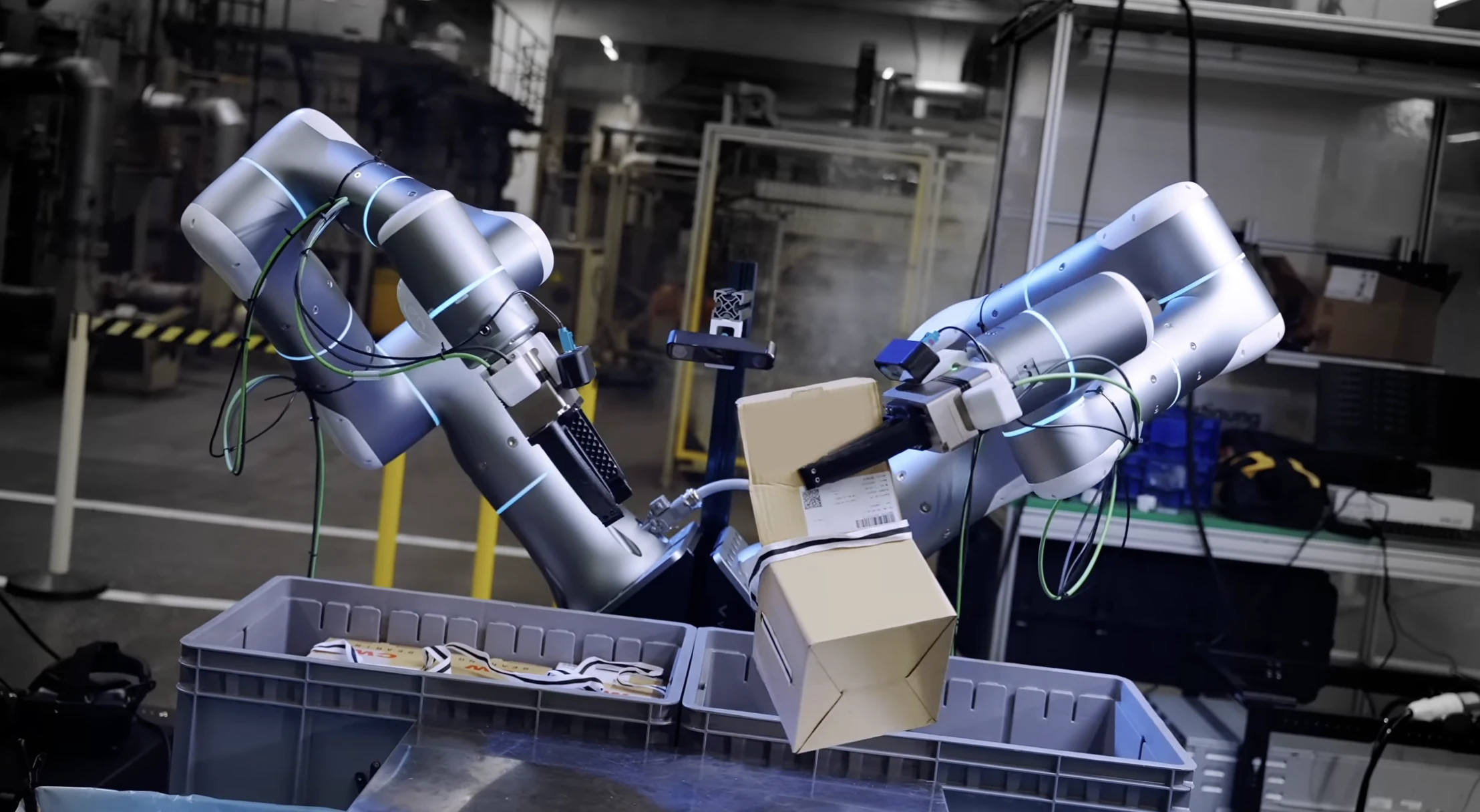
Rhoda AI is developing robotic foundation models that combine visual understanding, physical intelligence, and tactile sensing to help robots perform complex tasks across manufacturing and industrial environments.

An examination of how the UK's Cooperative Technologists network connects worker-owned technology businesses, shares resources, and uses democratic governance to build an alternative model for the digital economy.
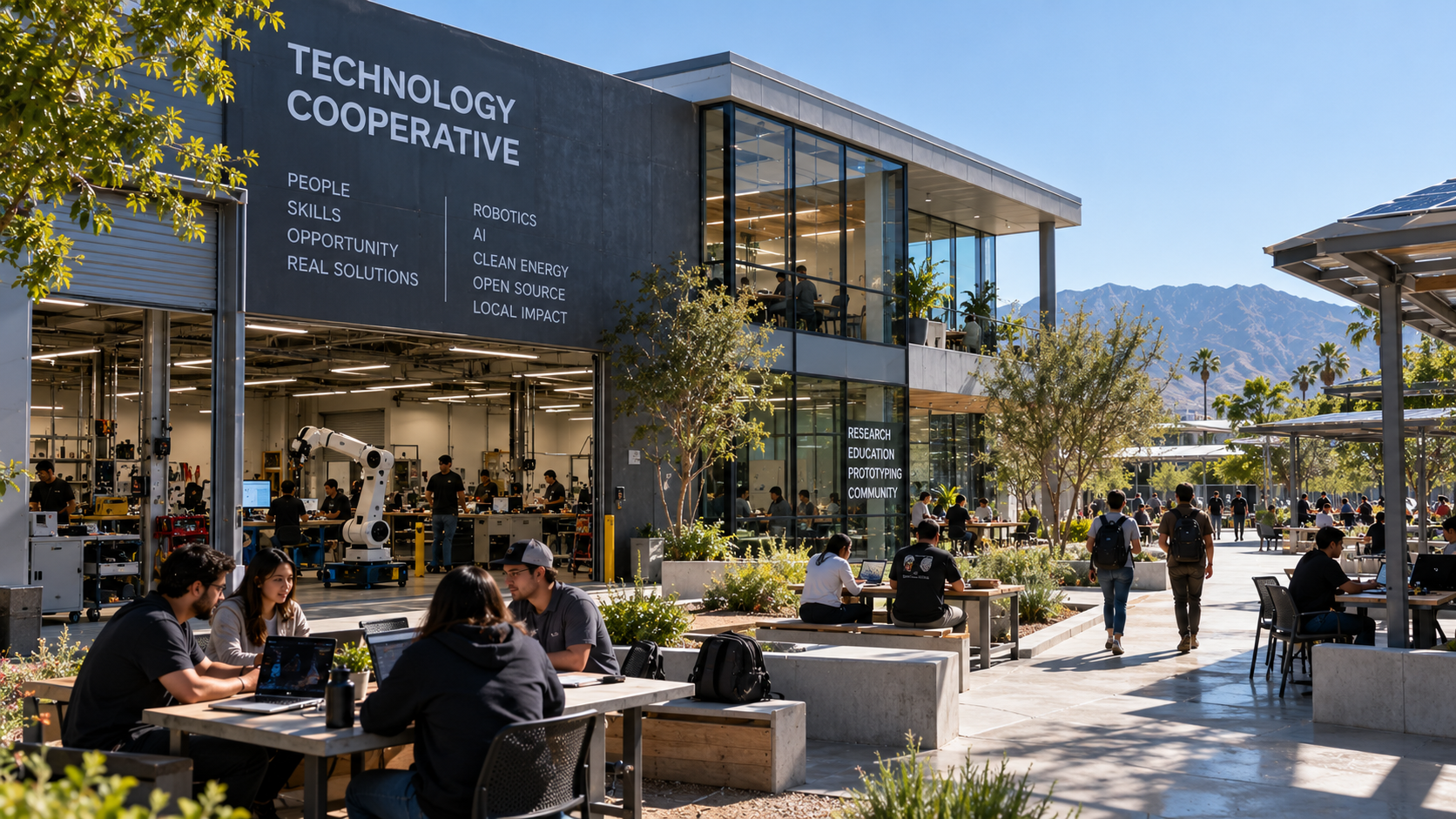
Exploring new models of democratic participation through sortition, rotating leadership, collective investment, and technology-enabled cooperative governance.

An exciting head-to-head competition where humanoid robots tackle real-world challenges, showcasing the latest advances in robotics, artificial intelligence, and autonomous technology.
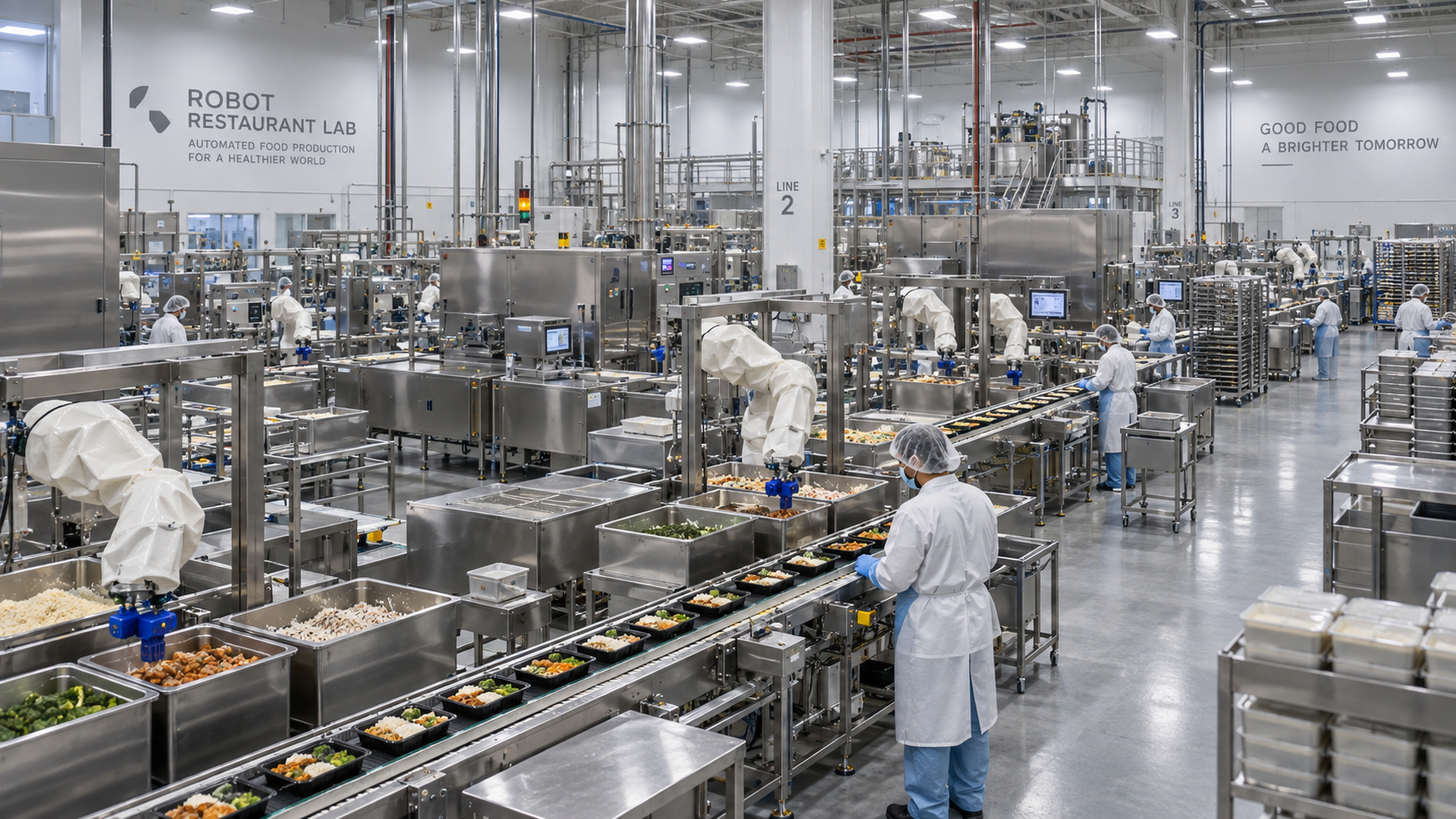
Developing highly automated food production facilities that combine robotics, industry expertise, and regional partnerships to reduce costs and supply prepared food at commercial scale.