

Operationsproduct
Bubble AI — Agentic Business Automation
A unified AI platform that connects intelligent agents, business communications, shared memory, and automated workflows to streamline operations across your organization.
80
Explore how Fox Robotics combines AI-powered vision, autonomous navigation, and intelligent pallet handling to automate trailer loading, unloading, and warehouse dock operations.
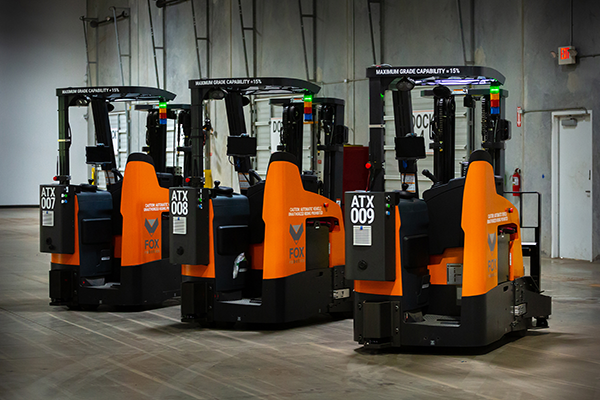
FoxBot ATL Mk3 third-generation autonomous forklift for modern logistics operations.
Fox Robotics is an American warehouse automation company headquartered in Austin, Texas, specializing in autonomous forklift technology for logistics and distribution operations. Founded in 2017, the company develops intelligent robotic systems designed to automate pallet movement at warehouse loading docks. Its flagship product, the FoxBot Autonomous Trailer Loader/Unloader (ATL), combines industrial forklift hardware with advanced artificial intelligence, computer vision, and autonomous navigation software. The system is designed to retrieve palletized merchandise from shipping trailers, transport it across receiving areas, and position it at designated warehouse locations without requiring a human forklift driver.
The FoxBot Mk3, introduced in March 2025, represents the third generation of the company's autonomous forklift platform. Built around an electric counterbalance forklift, the system incorporates cameras, LiDAR sensors, automated fork adjustment, and proprietary robotic control software. Unlike traditional automated guided vehicles that depend on fixed routes or infrastructure modifications, FoxBot uses real-time perception to navigate changing warehouse environments. The Mk3 expands the platform's capabilities beyond trailer unloading to include autonomous trailer loading, enabling facilities to automate both inbound receiving and outbound shipping operations.
Loading docks are among the busiest areas of a distribution center, where incoming and outgoing trailers must be processed while forklifts, workers, and other equipment share limited operating space. Traditionally, forklift operators enter trailers, retrieve pallets, and transport them to receiving or staging areas. Outbound operations reverse this process, requiring employees to collect staged pallets and load them into trailers according to shipping requirements. These repetitive movements can consume substantial labor resources, particularly at facilities handling large numbers of trailers each day.
FoxBot addresses these challenges by automating pallet pickup, transportation, and placement within designated dock operating areas. The robot can enter trailers, identify pallet arrangements, adjust its forks, and retrieve loads without continuous manual control. It can also collect pallets from designated warehouse staging locations and load them into outbound trailers. This combination allows logistics operators to automate both sides of the shipping and receiving process using the same robotic platform. The system is designed for deployment within existing facilities, with Fox Robotics reporting that installation can be completed in hours without requiring warehouse management system integration for its core unloading operations.
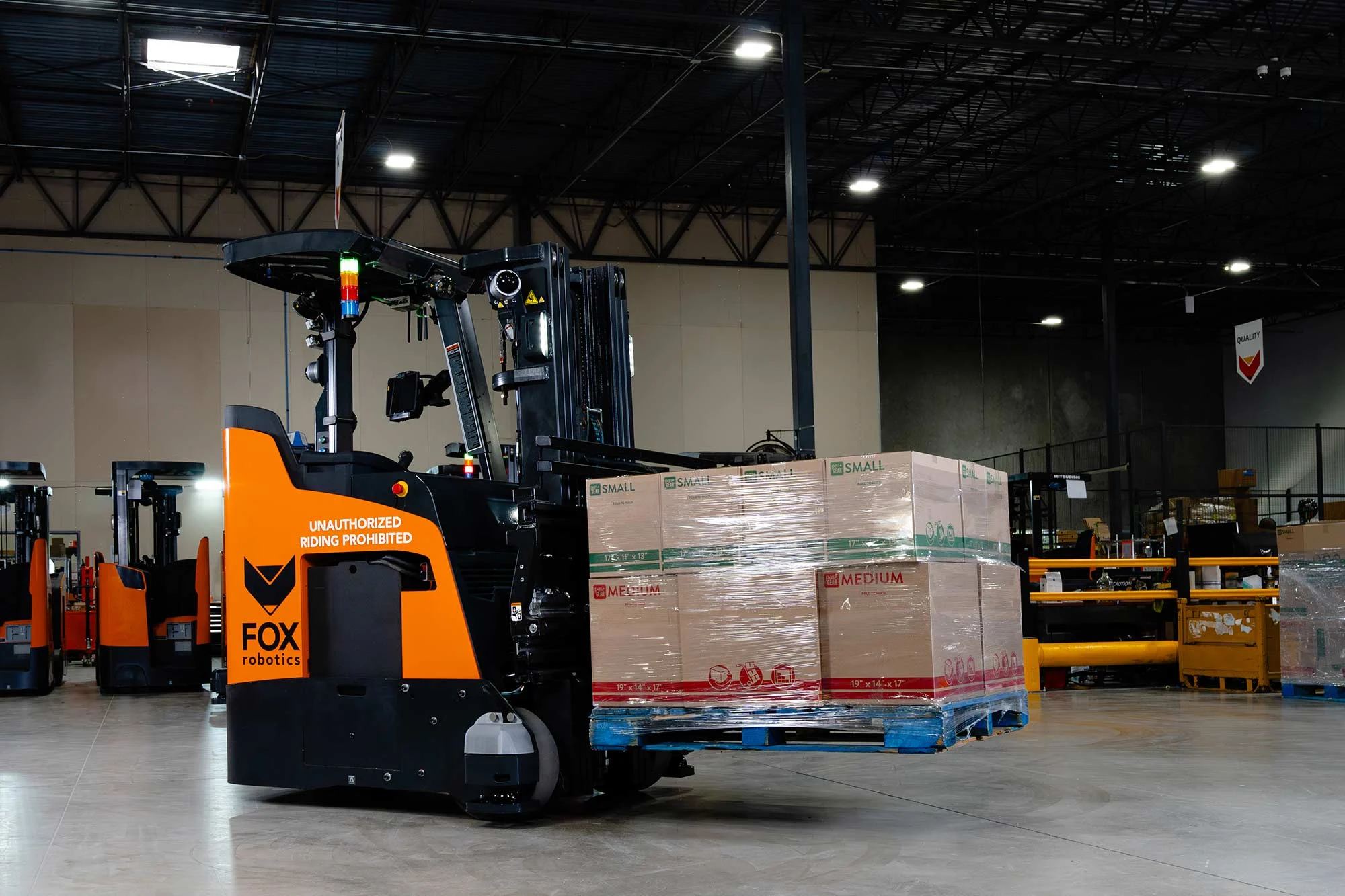
FoxBot uses artificial intelligence, machine learning, and computer vision to identify pallets and navigate warehouse loading docks. Its perception system combines onboard cameras with LiDAR sensors to analyze pallet positions, surrounding obstacles, and available travel paths. Trained visual recognition models allow the robot to identify different pallet orientations and loading patterns, including straight, turned, and pinwheel configurations. This capability is particularly important because trailers may contain pallets positioned differently from one shipment to another, requiring the forklift to adapt its approach without relying on predefined loading arrangements.
The Mk3 incorporates automatically adjustable fork tines that allow the robot to accommodate different pallet configurations. Cameras positioned near the forklift mast help identify pallet openings and determine the appropriate fork alignment before lifting. FoxBot supports common block and whitewood pallets, including single-stacked and double-stacked loads, and can accommodate certain damaged or plastic-wrapped pallet configurations. Its robotic control software coordinates positioning, fork adjustment, lifting, and transportation to complete pallet handling tasks while adapting to variations in freight arrangement.
FoxBot uses real-time mapping and localization technology to navigate warehouse receiving areas and shipping trailers. Its navigation software continuously evaluates the surrounding environment, allowing the forklift to adjust its movements around obstacles and changing warehouse conditions. Unlike automated vehicles that follow permanently installed guidance systems, FoxBot can operate in mapped environments while responding to changes in pallet placement and dock activity. Its autonomous navigation system coordinates movement between trailers and designated pallet staging locations, supporting repeated loading and unloading operations.
Safety is a central component of FoxBot's design because loading docks are shared environments containing workers, equipment, and moving freight. The system incorporates 360-degree obstacle monitoring using LiDAR sensors and cameras, along with programmable safety controllers and redundant braking systems. These technologies are designed to detect nearby obstacles and stop the forklift before potential collisions. FoxBot also follows warehouse driving procedures, including controlled travel speeds and audible warnings when entering or exiting trailers. Manual operation remains available when direct human control is required, allowing facilities to retain flexibility during unusual operating conditions.
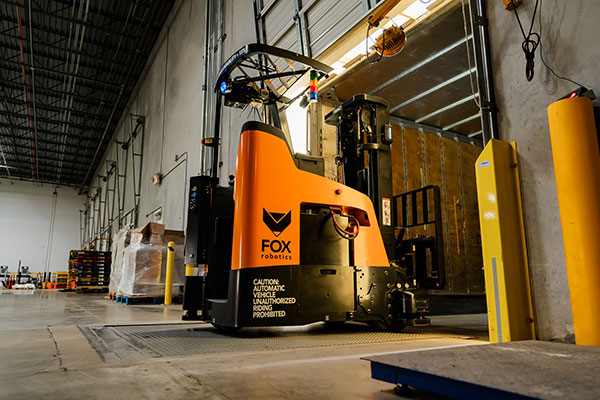
FoxBot is designed for distribution centers, retail logistics facilities, third-party logistics providers, and warehouses that regularly process palletized freight. During receiving operations, the forklift autonomously enters incoming trailers, retrieves pallets, and transports them to designated staging locations on the warehouse floor. Its perception system accommodates different pallet arrangements, allowing the robot to process shipments without requiring every trailer to be loaded identically. Once pallets reach the receiving area, they can be transferred to conventional forklifts, conveyors, or other warehouse automation systems for subsequent storage and distribution.
The FoxBot Mk3 also supports outbound trailer loading, allowing warehouses to automate pallet movement in both directions. The robot can retrieve staged pallets and transport them into shipping trailers, positioning loads according to supported loading configurations. Fox Robotics has deployed its technology with major logistics and retail organizations, including DHL, Walmart, and BJ's Wholesale Club. In March 2025, the company reported deployments at more than 50 customer locations across the United States and Canada, with its installed fleet completing more than six million pallet movements. These commercial implementations demonstrate the technology's application in high-volume logistics environments.
FoxBot is designed to improve dock productivity by automating repetitive pallet transportation tasks. Fox Robotics reports that the Mk3 can unload more than 25 single-stacked or 50 double-stacked standard 40-by-48-inch pallets in less than one hour, depending on operating conditions. The system also supports approximately 16 to 18 hours of operation on a single battery charge. Its autonomous operation allows employees to supervise multiple forklifts rather than individually driving each vehicle, with the company describing deployments where one operator can oversee five or six robots. Actual performance depends on trailer configurations, pallet conditions, dock layouts, and operational requirements.
Beyond throughput, FoxBot offers opportunities to improve workplace safety and reduce the physical demands associated with repetitive forklift operation. Its automated navigation, obstacle detection, and safety braking systems help manage vehicle movement in busy receiving environments. Removing drivers from routine trailer loading and unloading tasks can reduce exposure to confined trailer spaces and repetitive driving operations while allowing warehouse personnel to focus on supervision, inventory coordination, and exception handling. By combining autonomous pallet handling with rapid deployment and flexible navigation, FoxBot demonstrates how warehouse operators can modernize loading dock operations without completely redesigning their existing material handling infrastructure.
A unified AI platform that connects intelligent agents, business communications, shared memory, and automated workflows to streamline operations across your organization.
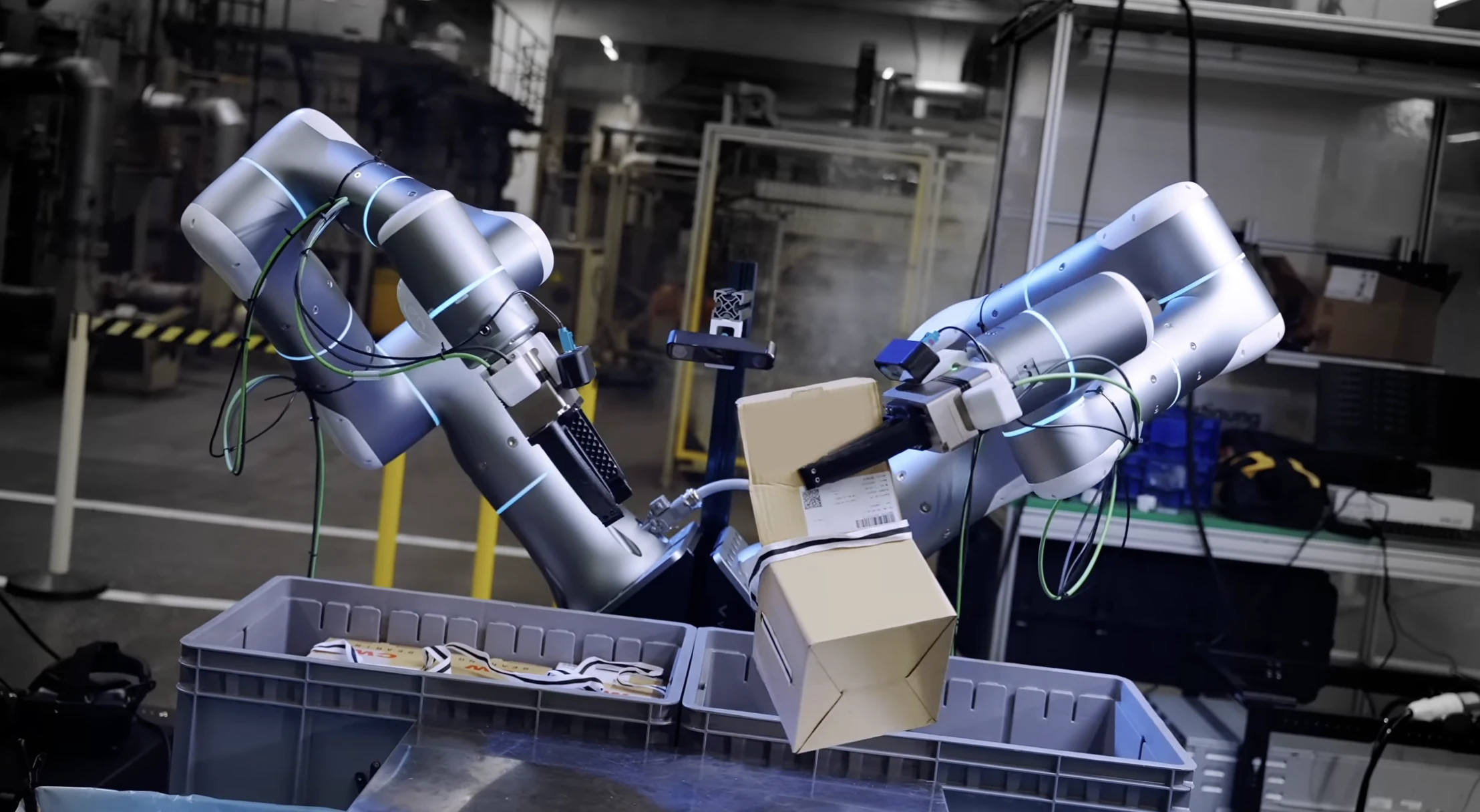
Rhoda AI is developing robotic foundation models that combine visual understanding, physical intelligence, and tactile sensing to help robots perform complex tasks across manufacturing and industrial environments.

An examination of how the UK's Cooperative Technologists network connects worker-owned technology businesses, shares resources, and uses democratic governance to build an alternative model for the digital economy.
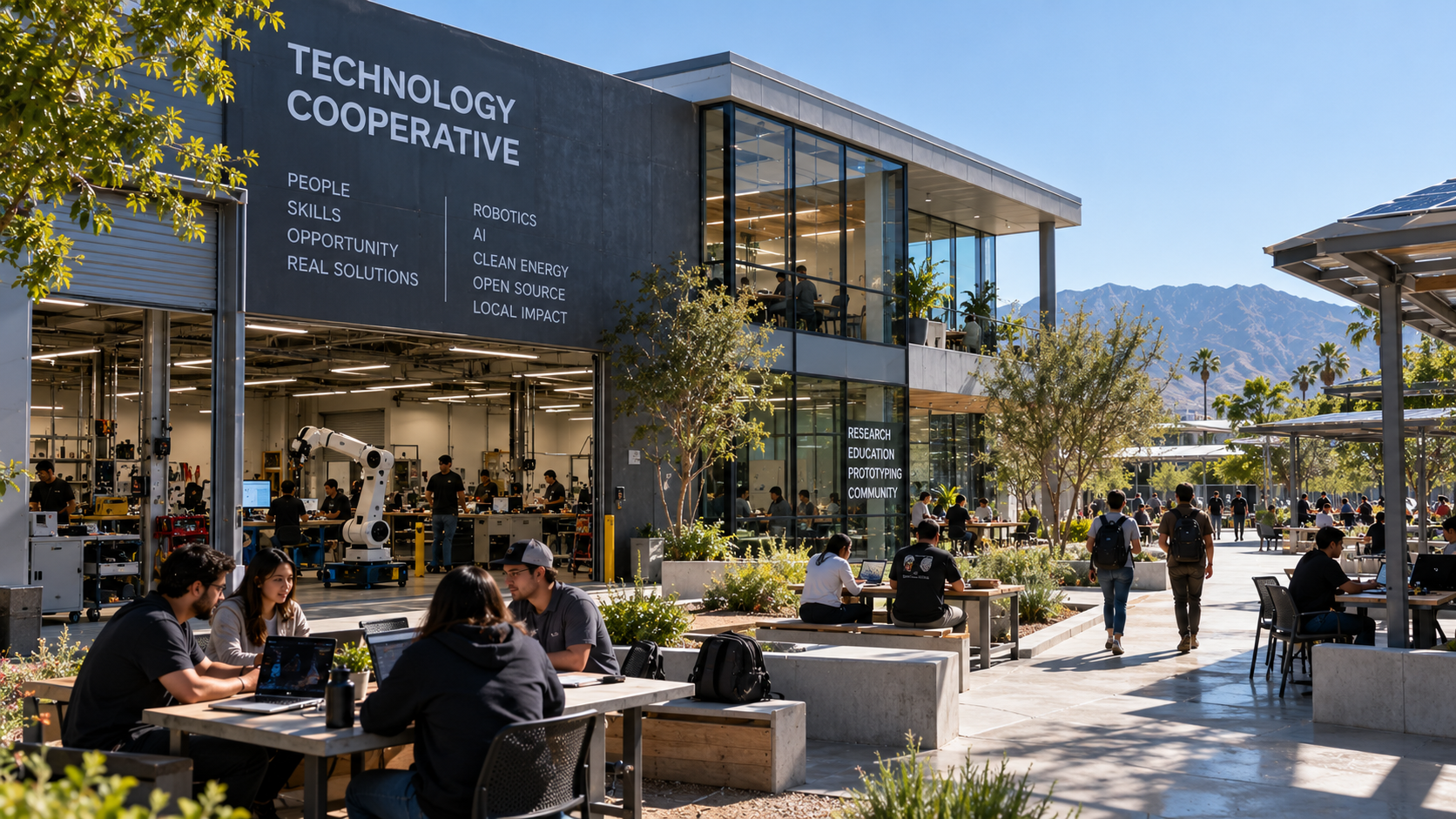
Exploring new models of democratic participation through sortition, rotating leadership, collective investment, and technology-enabled cooperative governance.

An exciting head-to-head competition where humanoid robots tackle real-world challenges, showcasing the latest advances in robotics, artificial intelligence, and autonomous technology.
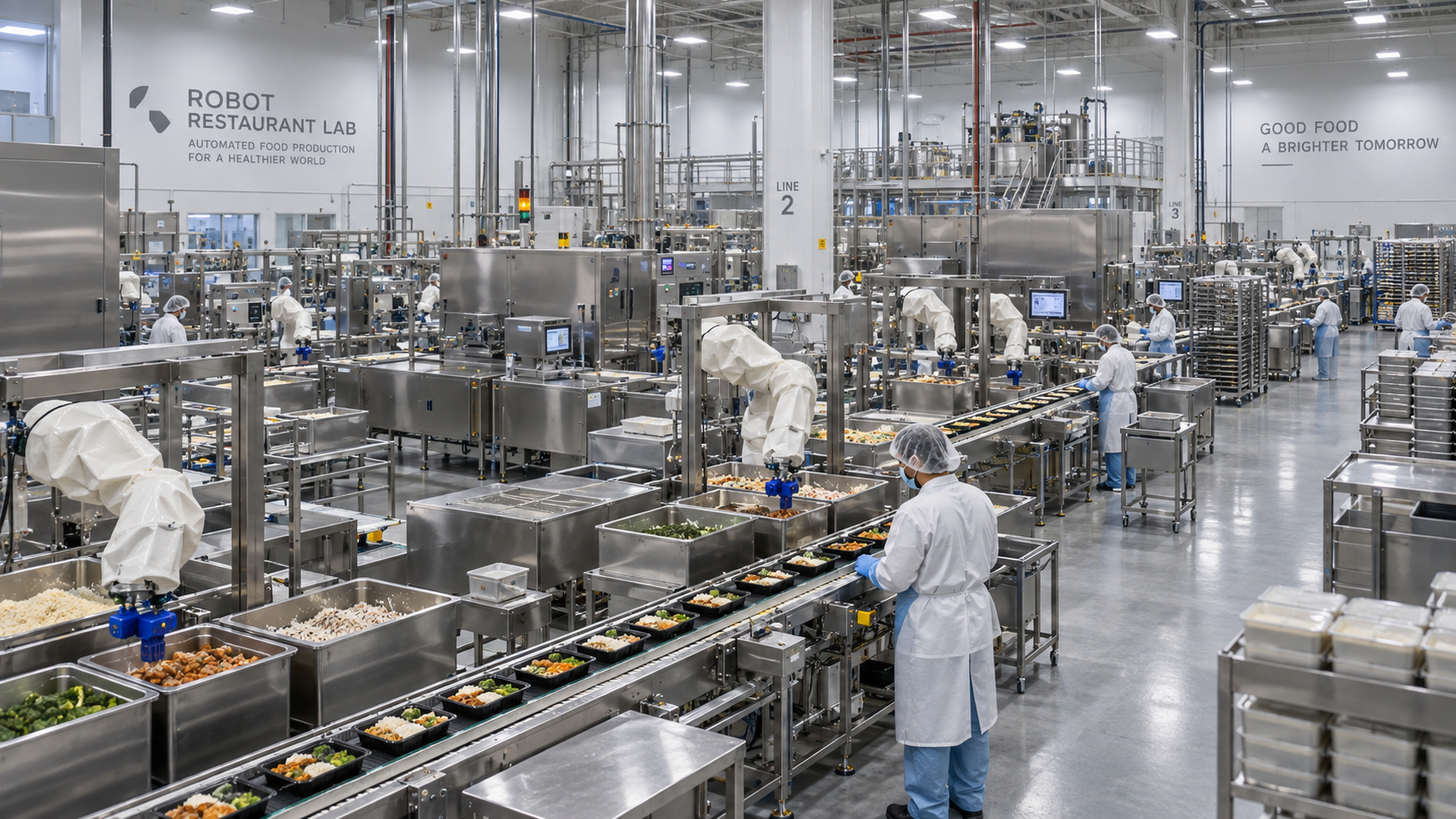
Developing highly automated food production facilities that combine robotics, industry expertise, and regional partnerships to reduce costs and supply prepared food at commercial scale.