
Operationsproduct
Bubble AI — Agentic Business Automation
A unified AI platform that connects intelligent agents, business communications, shared memory, and automated workflows to streamline operations across your organization.
80
Explore how Pickle Robot combines artificial intelligence, computer vision, and robotic manipulation to automate trailer unloading, streamline warehouse receiving, and reduce manual package handling.
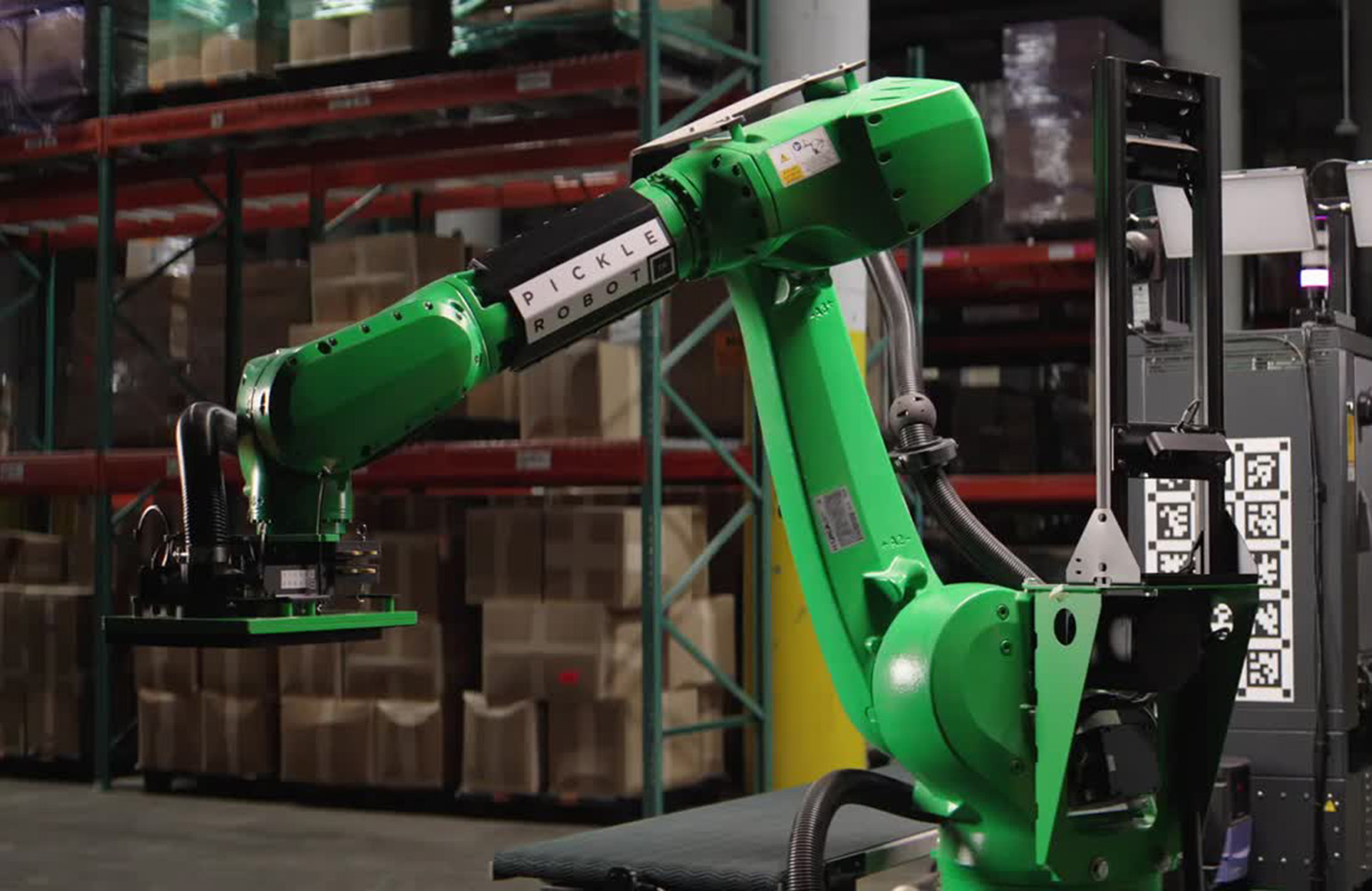
AI-powered robotic automation for modern warehouse receiving operations.
Pickle Robot is a warehouse automation company specializing in robotic truck unloading technology for logistics and distribution operations. Based in Cambridge, Massachusetts, the company develops AI-powered robotic systems designed to automate the handling of floor-loaded freight inside shipping trailers and containers. Its technology focuses on one of the most labor-intensive stages of warehouse receiving, where workers traditionally unload hundreds or thousands of packages by hand. By combining industrial robotic hardware with intelligent perception and control software, Pickle Robot provides an automated alternative for handling incoming cartons.
The company's flagship robotic unloading system is designed to identify, grasp, and transfer packages from inside trailers onto conveyor systems. Unlike conventional automation equipment that requires precisely positioned products, Pickle Robot's technology operates with cartons arranged in unpredictable stacking patterns. Its robotic arm uses a vacuum-based gripping system to retrieve packages of different dimensions and orientations, while its AI software continuously evaluates the surrounding environment. This combination allows the system to process mixed freight loads commonly encountered in parcel distribution centers, retail warehouses, and third-party logistics facilities.
Truck unloading presents significant challenges for warehouse operators because incoming shipments frequently arrive as floor-loaded cartons rather than palletized freight. Workers must manually remove packages from tightly packed trailers, often performing repetitive lifting and reaching movements throughout extended shifts. The physical demands of this process can contribute to worker fatigue, inconsistent unloading rates, and difficulties maintaining sufficient staffing during peak shipping periods. Automating trailer unloading offers an opportunity to improve receiving consistency while reducing reliance on repetitive manual handling.
Pickle Robot approaches this challenge by combining robotic picking with existing warehouse conveyor infrastructure. Rather than requiring operators to completely redesign their receiving operations, the system is intended to work within established loading dock environments. Its robotic arm retrieves packages from the trailer and places them onto a conveyor that transports them into the facility for further processing. This approach allows warehouse operators to automate a specific operational bottleneck while retaining their existing sorting, storage, and distribution systems.
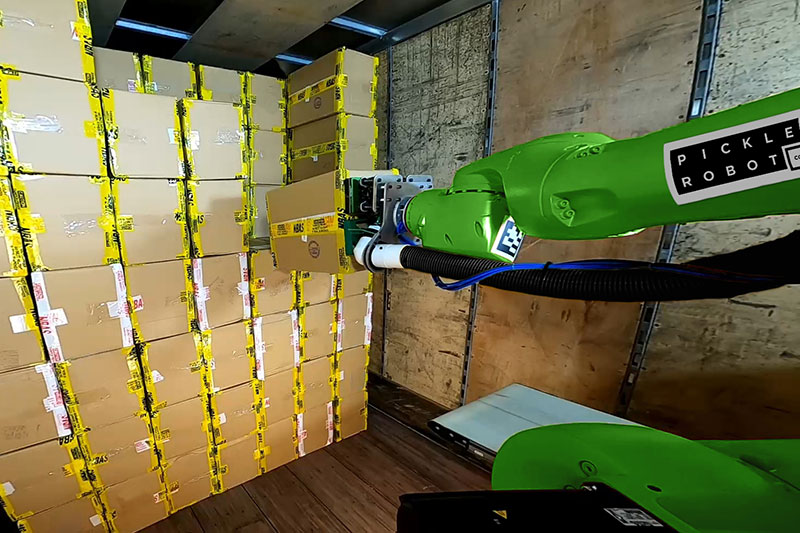
Pickle Robot uses artificial intelligence and computer vision to interpret the arrangement of packages inside a trailer. Its perception system analyzes carton surfaces, dimensions, and positions to determine which packages can be safely retrieved. Because floor-loaded shipments often contain irregular stacks, partially obscured cartons, and packages that shift during unloading, the robot must continuously update its understanding of the environment. Machine learning and robotic motion planning help coordinate these decisions, allowing the system to adapt its picking movements as each layer of freight is removed.
The robot uses an industrial robotic arm equipped with a vacuum gripping mechanism designed to secure cardboard cartons during transfer. After identifying a suitable package, the system positions its gripper against the carton, establishes suction, and moves the package onto a conveyor. Its control software coordinates arm movements, gripping actions, and package placement to maintain a steady unloading sequence. The system is designed to operate without requiring each carton to be individually programmed or presented in a predetermined position, making it suitable for the variability of real-world logistics operations.
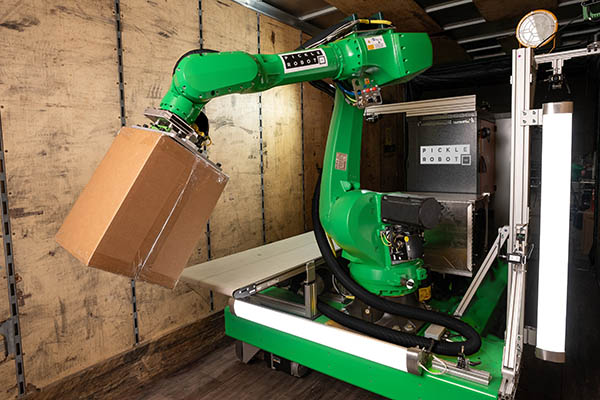
Pickle Robot's unloading system operates from a platform positioned at the trailer opening, with the robotic arm reaching into the freight compartment to retrieve cartons. As packages are removed, the system continues processing the exposed freight, adjusting its picking strategy to accommodate changes in the stack. Its operating software manages package selection and robotic movements while monitoring conditions that may require human assistance. This combination of automated operation and operator supervision allows the robot to handle routine unloading tasks while providing a process for managing exceptions.
The system transfers retrieved cartons onto a conveyor that connects the unloading operation with the warehouse's downstream material handling equipment. Once packages leave the trailer, they can proceed through existing scanning, sorting, and distribution processes. Integrating robotic unloading with conveyor infrastructure is particularly important for facilities that already operate automated sorting equipment but still depend on manual labor at receiving docks. By connecting these stages, Pickle Robot helps create a more continuous flow of incoming freight from trailers into the warehouse.
Pickle Robot's unloading technology is designed for distribution centers, retail fulfillment operations, third-party logistics providers, and facilities receiving large quantities of floor-loaded merchandise. These environments frequently handle shipments containing apparel, footwear, consumer goods, household products, and other packaged inventory. Because incoming cartons may differ in size, weight, and stacking configuration, automated unloading equipment must accommodate substantial variation between shipments. Pickle Robot's system is particularly suited to operations where consistent inbound processing is important for maintaining warehouse productivity.
The technology has been deployed in commercial logistics operations, including Randa Apparel & Accessories' fulfillment center in Fort Worth, Texas. In January 2025, Pickle Robot reported that its system had unloaded more than 1.5 million pounds of merchandise at the facility since beginning production operations in October 2024. Individual containers typically held between 800 and 1,200 cartons, with warehouse employees supervising the robot and managing downstream processes. The company has also worked with UPS on robotic trailer unloading applications, demonstrating the technology's relevance to both merchandise distribution and parcel logistics operations.
Pickle Robot's primary operational advantages include improved unloading consistency, reduced physical handling requirements, and more predictable receiving workflows. The company reports that its systems can unload certain trailers and containers of non-palletized merchandise in as little as 90 minutes, although actual performance depends on carton characteristics, loading configurations, and operating conditions. Its Dill Autonomy Engine combines machine vision, generative AI, and robotic control technology to improve package recognition and handling decisions. The system also collects operational data, including picking rates, unloading times, and package characteristics, allowing warehouse managers to monitor performance and evaluate receiving efficiency.
Beyond productivity, robotic unloading can improve working conditions by reducing repetitive lifting and prolonged physical activity inside shipping trailers. Warehouse employees can transition toward equipment supervision, exception handling, and coordinating downstream material movement rather than manually unloading every package. For logistics operators, the technology offers a targeted approach to automation that addresses a demanding warehouse process without requiring a complete facility redesign. As robotic perception and manipulation continue to improve, systems such as Pickle Robot demonstrate how artificial intelligence can support practical automation in existing warehouse environments.
A unified AI platform that connects intelligent agents, business communications, shared memory, and automated workflows to streamline operations across your organization.
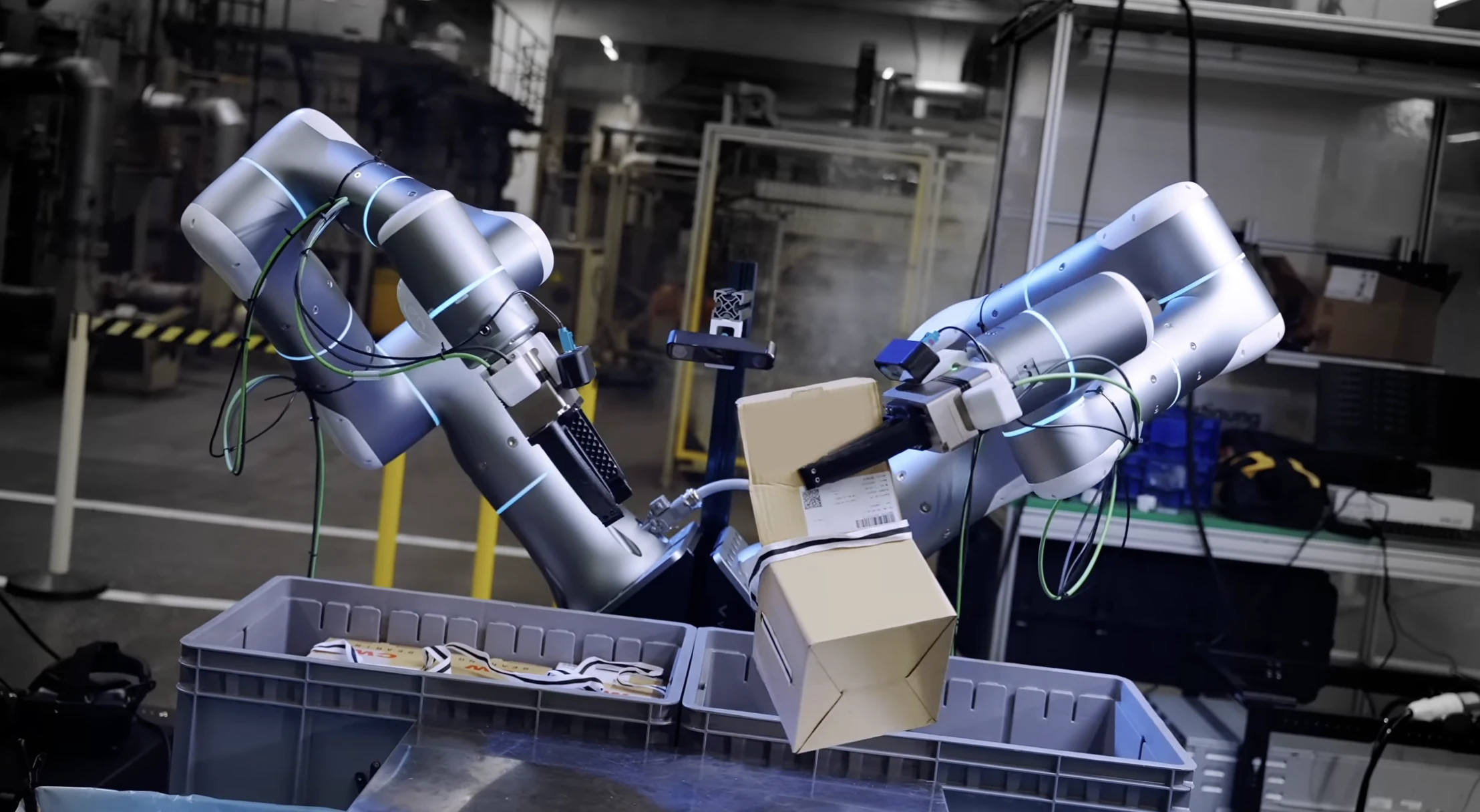
Rhoda AI is developing robotic foundation models that combine visual understanding, physical intelligence, and tactile sensing to help robots perform complex tasks across manufacturing and industrial environments.

An examination of how the UK's Cooperative Technologists network connects worker-owned technology businesses, shares resources, and uses democratic governance to build an alternative model for the digital economy.
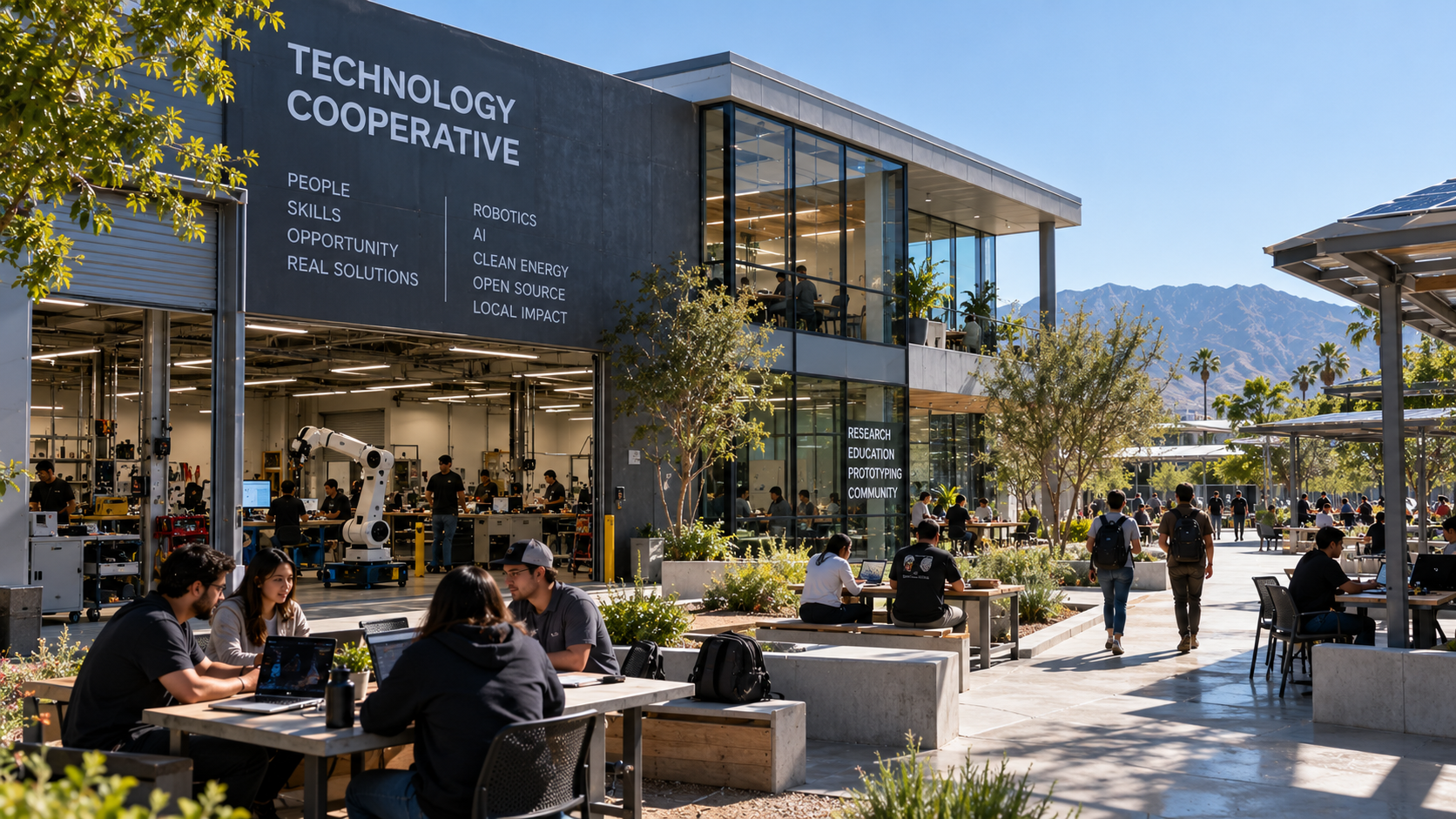
Exploring new models of democratic participation through sortition, rotating leadership, collective investment, and technology-enabled cooperative governance.
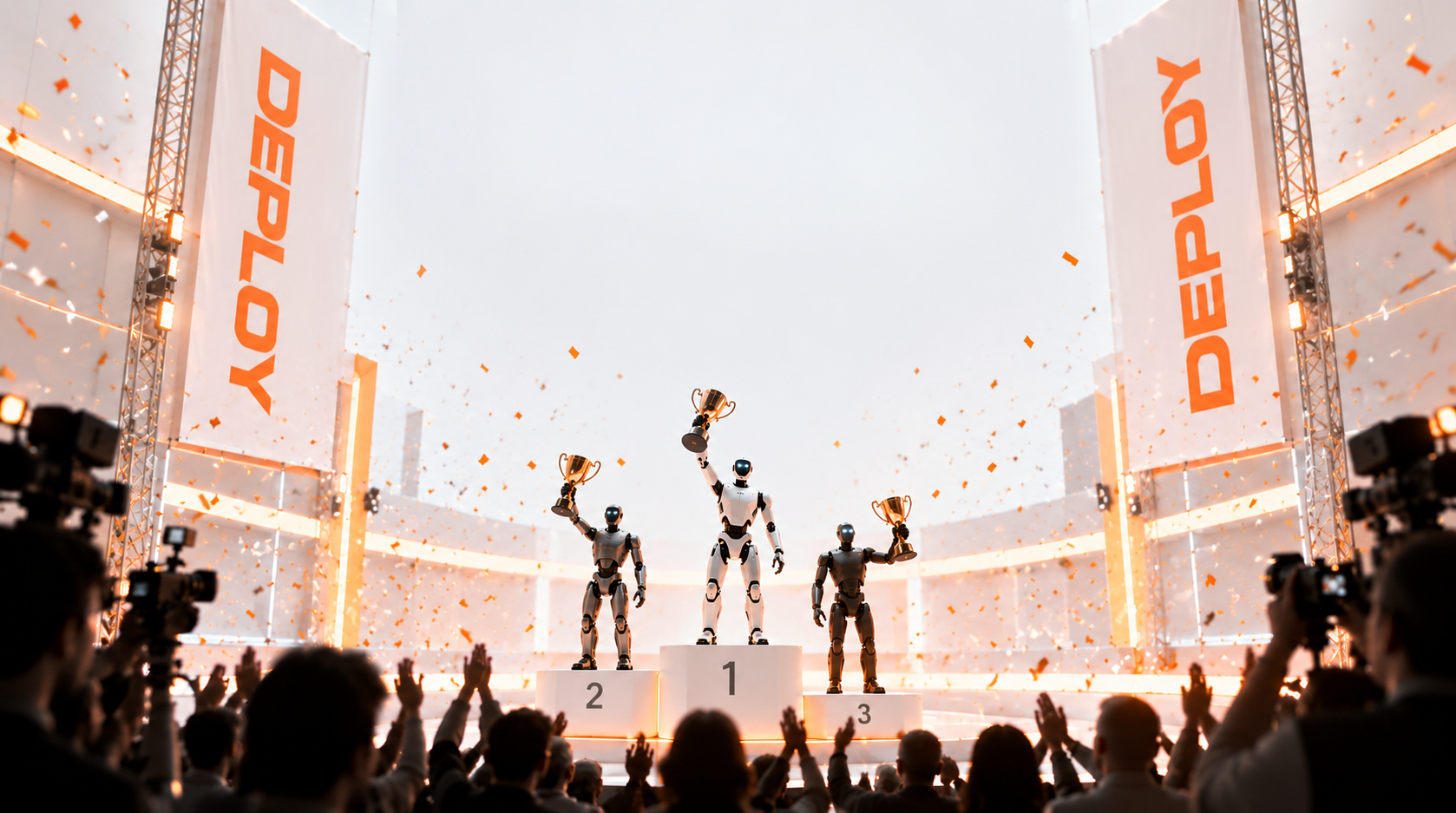
An exciting head-to-head competition where humanoid robots tackle real-world challenges, showcasing the latest advances in robotics, artificial intelligence, and autonomous technology.
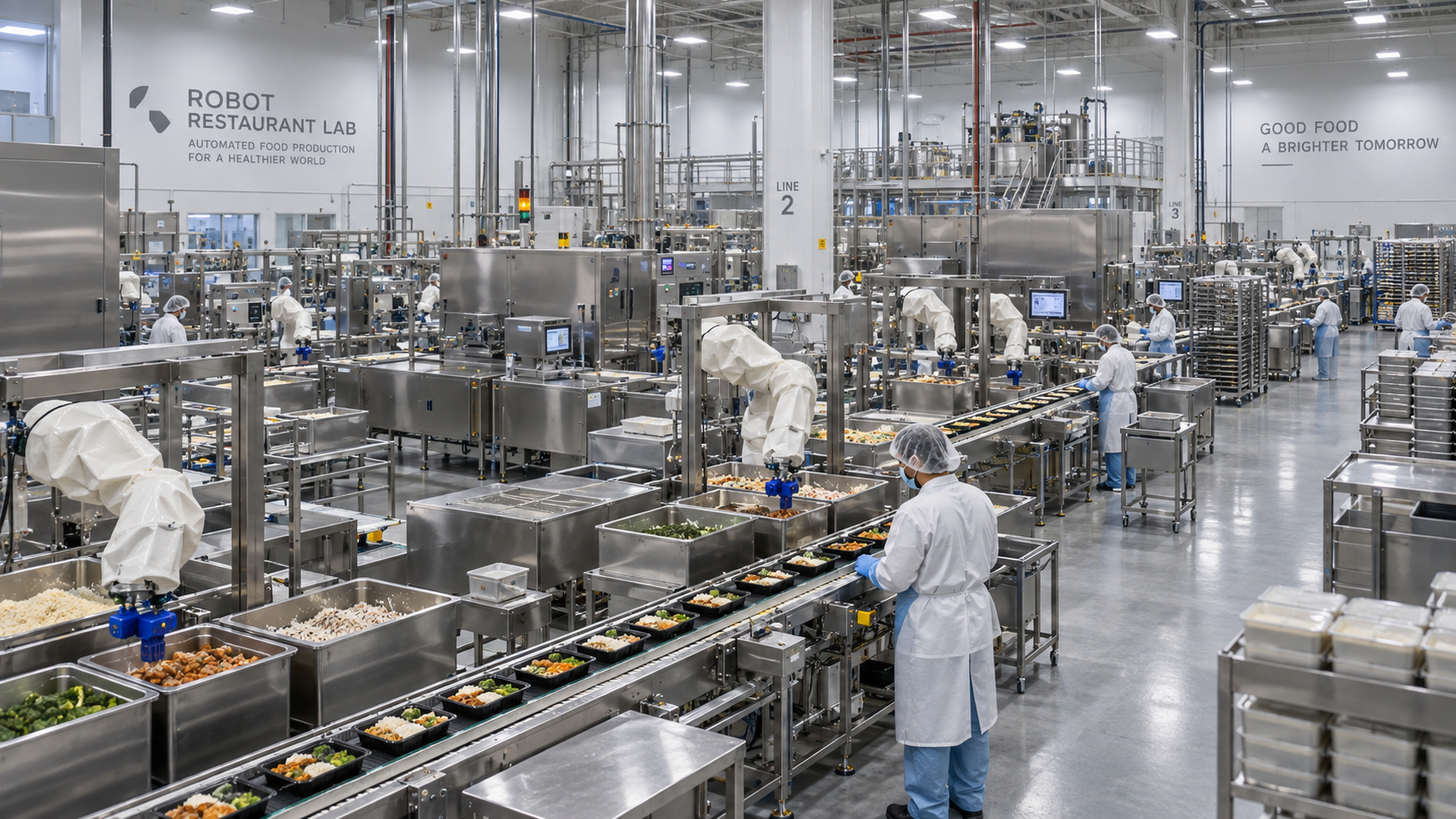
Developing highly automated food production facilities that combine robotics, industry expertise, and regional partnerships to reduce costs and supply prepared food at commercial scale.